Toronto Man Finds Woman With Ex-girlfriend's Name For Free Trip Around World

image

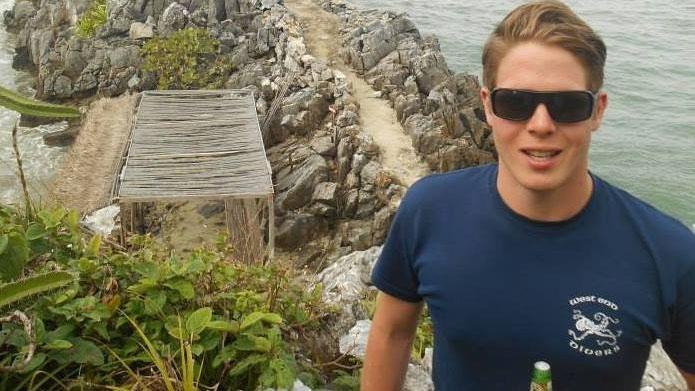
TORONTO -- A Toronto man who made headlines last month by offering a free round-the-world air ticket to a woman with the same name as his ex-girlfriend has found Ms. Right.


Jordan Axani, 28, and his then girlfriend, named Elizabeth Gallagher, booked heavily discounted round-the-world air tickets in May, but their relationship ended and he didn't want her ticket to go to waste. The ticket had a strict no-transfer policy, but since passport information was not required when booking, it can be used by any Canadian named Elizabeth Gallagher.

image 1

Axani posted his offer last month on the popular Reddit social media website, and received thousands of emails, including 18 from actual Elizabeth Gallaghers with Canadian passports

[readon1 url="http://news.yahoo.com/canada-man-finds-woman-free-trip-around-world-122836388.html"]Source:news.yahoo.com[/readon1]

American Alan Gross Arrives at Andrews Air Force Base After Five Years in Cuba

Alan Gross Jeff Flake
This handout photo from the Twitter account of Sen. Jeff Flake, R-Ariz. shows Alan Gross arriving at Andrews Air Force Base, Md., Wednesday, Dec. 17, 2014. The US and Cuba have agreed to re-establish diplomatic relations and open economic and travel ties, marking a historic shift in U.S. policy toward the communist island after a half-century of enmity dating back to the Cold War, American officials said Wednesday. The announcement came amid a series of sudden confidence-building measures between the longtime foes, including the release of American prisoner Alan Gross, as well as a swap for a U.S. intelligence asset held in Cuba and the freeing of three Cubans jailed in the U.S. Gross' wife Judy is at center. (AP Photo/Jeff Flake)

American Alan Gross, who was imprisoned in Cuba for more than five years, has returned to the United States.

The 65-year-old subcontractor with the U.S. Agency of International Development, arrived at Andrews Air Force Base outside Washington, D.C. late Wednesday morning, just hours after news broke of his release.

Arizona Sen. Jeff Flake, who travelled with Sen. Patrick Leahy (D-Vt.) and Rep. Chris Van Hollen (D-Md.) to the Caribbean island, tweeted a photo of Gross walking out of the plane at the air force base.

He followed it up with a photo of Gross reunited with his wife Judy Gross.

“Alan and Judy Gross. Together again. Just before leaving Cuba this morning,” Flake tweeted.

Gross was held in a Cuban prison for five years after he was arrested for helping Jewish communities on the island connect to the Internet.

His release was part of a swap for U.S. intelligence asset held in Cuba and the freeing of three Cuban jailed in the U.S.

The United States and Cuba have agreed to re-establish diplomatic relations and open economic and travel ties, marking a historic shift in U.S. policy toward the communist island after a half-century of enmity dating back to the Cold War.

B5Eia1kIYAEr7Sn

[readon1 url="http://latino.foxnews.com/latino/news/2014/12/17/american-alan-gross-arrives-at-andrews-air-force-base-after-five-years-in-cuba/"]Source:latino.foxnews.com[/readon1]

U.S. To Open Embassy in Havana, U.S. Official Says

2014-12-17T160241Z 1825280000 TM3EACH0UG501 RTRMADP 3 CUBA-USA-BANKING

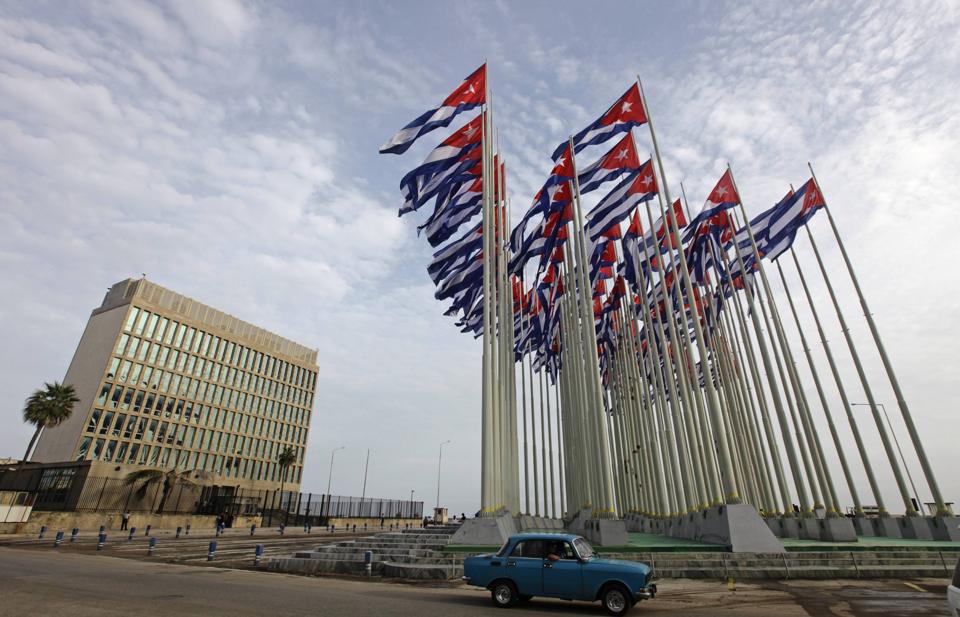
WASHINGTON (Reuters) - The United States plans to open an embassy in Havana, a U.S. official said on Wednesday before President Barack Obama's expected announcement on a policy shift with Cuba.

The United States currently has an interests section in Havana.

U.S. congressional officials reported Obama's changes are likely to include relaxed travel restrictions and expanded trade. CNN reported Obama plans to announce the resumption of U.S.-Cuba banking and an increase in allowed remittances.

[readon1 url="http://news.yahoo.com/u-open-embassy-havana-u-official-says-160634423.html"]Source:news.yahoo.com[/readon1]

Christmas in The Heart of The Desert

 10658052

  • For Vitamin D-challenged Canadians trip to southern sunshine is a remedy for the winter chills

The taxi arrived at the crack of dawn. Howling rains pursued us to the airport like angry bill collectors.

By breakfast, we were aboard the plane — and by noon sitting poolside in Scottsdale. We basked in the afternoon sunshine like hospital patients, working up an appetite for dinner with a few laps in one of the resort’s heated pools.

At 5 p.m., the sun sank in the western sky, a golden stone tossed into red-hot lava. Immediately it was winter again. We scurried over to the ice rink and sat down by the warmth of the fire pits to watch people skating on real ice.

Such is Christmas in the Arizona desert. For Vitamin D-challenged Canadians facing a four-month winter, an escape to southern sunshine is a sure remedy for the December chills.

Save for a family vacation once in Puerto Vallarta, all-inclusive resorts have never been a favourite of mine. The Princess, a Fairmont hotel in suburban Scottsdale just east of Phoenix, is not all-inclusive; but the resort features so many amenities the visitor might as well throw away the car keys and settle back to bask in the glow.

The Valley of the Sun enjoys 300 days of sunshine annually. No need for long flights to faraway Mexico or Hawaii when it’s three hours’ travel time to the desert. The local joke is that only Canadians swim at Christmas time, but when the air temperature is 25 degrees and the pool is heated, what’s funny is that the pool is not crowded.

We met Vancouver resident Daenna Van Mulligen, better known to her online fans as The Wine Diva. She comes every December to escape the rain. Two PGA-calibre golf courses lurk a shanked 9-iron across the hotel fence; and should wanderlust intrude, it’s no more than 15 minutes to a huge variety of desert hikes on local mountain trails.

Across town in Glendale (20 minutes away) you can catch an NHL hockey game at Westgate Center, or basketball in downtown Phoenix.

Downtown Scottsdale is only a 10-minute drive. It’s an arts and fashion district for dedicated shopaholics, with fine dining opportunities galore. Every week there’s a guided art walk, and in the arts district you’ll find hundreds of shops selling traditional, native and desert paintings, carvings, rugs, clothing, ceramics and more.

But why bother to wander at all? The warm desert sunshine is best experienced with a cold beverage sipped by the pool and a good book to read. Suddenly it’s a soft B.C. September day again. Lovebirds chatter and chirp in the palm trees above.

Thankfully, the pop music on the sound system is never Burl Ives or Dean Martin warbling awful 1950s-era Christmas tunes. It’s golden oldies, peace on earth of a different kind.

To accentuate the process of stress relief, it’s but a five-minute perambulation over to the Well and Being Spa, where those who have been busy stashing away their ill-gotten gains as a Christmas gift to themselves can afford to choose between dozens of spa treatments.

Tennis anyone? There’s a professional ready to instruct. For families, the Fairmont offers a kid’s club that will keep the little rugrats busy all day, or simply take the tykes to the family pool with its waterslides.

Call it the Wayne Gretzky effect, but outdoor skating rinks are popping up during the Christmas season all over the Los Angeles region (where the Great One played) and Phoenix (where he coached.)

At the famous Coronado Del Rio Hotel on the beach in San Diego on a recent trip, we witnessed skaters crowding a rink just a few metres from the Pacific Ocean.

In the Southern California wine country of Temecula, Old Town hosts a real ice rink in front of City Hall.

Even more pleasant than finding an ice rink in the desert is discovering that holiday light shows have become the newest attraction in the Southern U.S.

Downtown regions of many towns and villages in California and Arizona are awash with festive colour.

Christmas trees and holiday trimmings are found everywhere from malls to city streets.

The Fairmont hosts an electronic light show that rivals New York’s Times Square display.

Families make reservations and drive from all over the Valley of the Sun just to gaze in wonder at the half-million LED lights.

It may be endless summer down in the desert, but when the sun goes down it’s suddenly North Pole South.

WestJet runs daily flights from several Canadian cities to Phoenix’s Sky Harbour Airport, 15 minutes from Scottsdale, and Allegiant Air runs daily flights into suburban Mesa airport from Bellingham.

All told, there are more than 150 flights a week to the desert. Canadians bought up so much distressed property during the recession that we are welcomed with open arms.

In the winter months, the population of the Valley of the Sun swells from 4 to 6 million, and many locals swear most of the increase is due to Canadian snowbirds flocking to this oasis to escape the snow and cold back home.

Hey, when you can swim in the afternoon outside on many sunny afternoons and skate an hour later at night with almost no chance of rain, they are probably right.

[readon1 url="http://www.theprovince.com/travel/Christmas+heart+desert/10658051/story.html"]Source:www.theprovince.co[/readon1]

Google to Close Spain's Google News, Block Spanish News Reports From 70 International Editions

LON112-417 2007 101057 high

MADRID - In a decision that will reverberate around the globe, Google announced Thursday it will close Google News in Spain and block reports from Spanish publishers from more than 70 Google News international editions due to a new Spanish law requiring aggregators to pay to link content.

Google News in Spain will shut down on Dec. 16 — several weeks before a new Spanish intellectual property law takes effect Jan. 1 requiring news publishers to be paid.

That means people in Latin America, where Spanish news organizations have sought to boost their audiences, won't see news from Spain via Google News in Mexico or elsewhere. Also set to disappear are reports in English from Spanish publishers like Madrid's leading El Pais newspaper.

People who use Google's standard search in Spain and anywhere else around the world will still be able to find articles on their own from Spanish publications, because the law applies only to aggregators and not to individuals who do their own searches outside of Google News.

The decision by Google Inc. is the first shutdown since Google News debuted as an experimental project in 2002.

Richard Gingras, head of Google News, said the decision was made "with real sadness" because Google News is "a service that hundreds of millions of users love and trust, including many here in Spain."

Spain's AEDE association, which represents large news publishers, had lobbied for the law nicknamed the "Google Tax" and said that Spaniards and Spanish businesses will suffer as a result of Google's decision.

AEDE said the full impact of the move that will make news produced by Spanish media vanish globally will only become known after the shutdown but added that the law was needed to "effectively protect the rights of citizens and businesses."

A spokesman for El Pais said the newspaper did not plan to comment on Google's action and the publishers of three other large Spanish newspaper groups also declined to comment or did not respond to requests for comment.

Spain's Culture Ministry characterized Google's move as a legitimate business decision. The ministry also said the law doesn't apply to individuals and will protect the intellectual property of publications that spend money to create content without hindering freedom of information.

The new law did not specify how much publishers would have to be paid by Google or other aggregators, but the company said Spain's law is much stricter than similar legislation enacted elsewhere because it mandates payments even if publishers don't want them because they get traffic via Google News.

"This new legislation requires every Spanish publication to charge services like Google News for showing even the smallest snippet from their publications, whether they want to or not," Gingras wrote in a blog. "As Google News itself makes no money (we do not show any advertising on the site) this new approach is simply not sustainable."

Google News has long irked newspaper publishers and other content providers, who contend the service tramples on copyrights by creating a digital kiosk of headlines and story snippets gathered from other websites. Most criticism has likened Google to a freeloader, but there have been attempts to force the company to change its ways through the courts.

Google maintains it obeys all copyright laws while sending more people to websites highlighted in its News services. The company also allows publishers to prevent material from being displayed in Google News, an option few websites choose because the service is an important traffic source to sell ads.
Alejandro Tourino, a Madrid-based lawyer who specializes in media issues and has worked for The Associated Press on several legal cases, said Spanish news publishers may "have shot themselves out of the market. Time will tell."

After Germany revised its copyright laws last year to allow — but not force — Google News to make royalty payments, Google required publishers there to give their consent for summarizing content. Most did.

Google last year agreed to help French news organizations increase their online advertising revenue and fund digital publishing innovations to settle a dispute over whether the company should pay for news content in its search results.

The French news agency Agence France Presse sued Google for copyright infringement in 2005, a move that culminated in Google agreeing to a licensing agreement with AFP for an undisclosed amount. The Associated Press, another critic of Google News' tactics, reached a licensing agreement with Google in 2006.
Now Google no longer licenses material from AFP, AP or any other news service.

Google also had to respond to a ruling this year from Europe's highest court, which decided that Europeans have a right to scrub unflattering or outdated information from Google's search engine that pops up in a search of their names. That case started in Spain.

Under the new "Right to be Forgotten" rule, the company as of September had received more than 120,000 requests to take down 457,000 links. Google did not say at the time how many requests had been approved.


Wednesday 10th December 2014 International Animal Rights Day

header 11

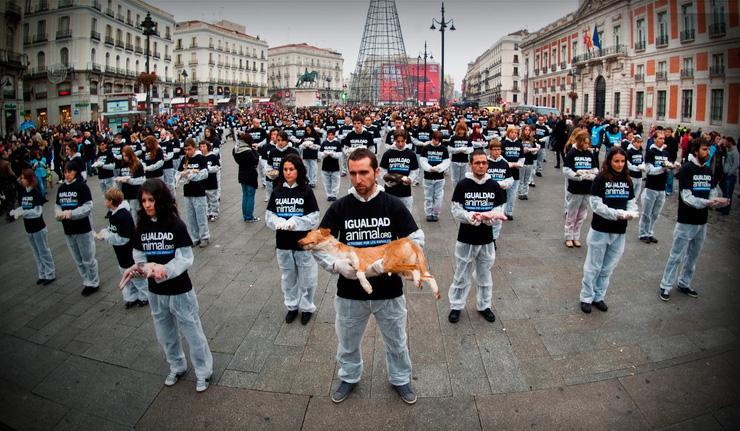
A day for events across the world, calling for fundamental rights to be bestowed upon non-human animals by 2048 (100 years after the Declaration of Human Rights on this date).

Groups are encouraged to hold candle-lit vigils outside local sites of animal abuse, campaign stalls or other outreach events to highlight links between human and animal rights.

Please unite with thousands of people around the world for the Annual International Animal Rights Day (IARD) on 10th December.

- Organise a candlelit vigil at a local place where the rights of animals are abused/ignored, such as offices and shops of companies, universities, government departments and charities that conduct, support or promote animal testing, factory farms, abattoirs, butchers, fast food outlets, greyhound stadia, racetracks, bookies, live export docks, bull-rings, hunt supporting organisations, or even at a prominent or historical site in the town centre. You will need: candles, lanterns, banners, warm clothes! If you have plenty of candles, lanterns, banners and posters etc. the vigils look very powerful and effective - even if there are only a few of you.

- Conduct a campaign stall

Inform the public that 'animal rights' is not scary, frightening and irrational, but a logical, well thought out, peaceful and sensible way to think. Send news releases to your regional media too. We will have leaflets, posters, petitions available.

- Write letters

Write to national, regional papers (including the freebies), magazines, comments sections of websites, online animal forums etc.

Anything you can do helps. Be part of history!

Why an International Animal Rights Day?

IARD is the focus for our long term campaign for the international acceptance of the Universal Declaration of Animal Rights, which states that humanity must respect all animals' basic moral rights to 'life, liberty and natural enjoyment'. Humans' ability to distinguish right from wrong demands that we act ethically towards other sentient beings.

The 10th December is the anniversary of the ratification of the Universal Declaration of Human Rights in 1948. Now, we're seeking to demonstrate the moral imperative of extending fundamental rights to all animals.

IARD strengthens the animal rights cause by unifying specific campaigns under a global banner and generating solidarity between compassionate people from Auckland to Aberdeen.

Everyone who signs up, writes letters to the media, conducts a candle-lit vigil or campaign stall, or spreads the message in other ways on IARD becomes a comrade with 1000s of activists worldwide in an historic movement for change.

Such peaceful and dignified actions promote the positive nature of animal rights. We are reclaiming our movement's image from the animal abusers who try to discredit us as aggressive and unreasonable. Every positive action helps make the world a better place!

International Animal Rights Day was established by Uncaged Campaigns, who have since moved on to other projects.

animalrightsday

Los Angeles Conflagration Destroys Buildings

8ce291d72b57a430670f6a7067007fb4

Los Angeles County firefighters battle a fire at an apartment building under construction next to the Harbor CA-110 Freeway in Los Angeles, early Monday, Dec. 8, 2014. The building was not occupied, the Los Angeles Fire Department reported. (AP Photo/Damian Dovarganes)


Officials say a massive fire in downtown Los Angeles closed down portions of two major freeways.
Los Angeles Fire Department spokesman David Ortiz says more than 250 firefighters were battling the blaze early Monday morning.

The Los Angeles Times reports (http://lat.ms/1wRwTBA ) that the fire could be seen for miles.
The fire was burning a building planned to be a tall residential structure. (AP)

Los Angeles Conflagration Destroys Buildings

Kate Lands With a Bump: Pregnant Duchess Arrives at New York Hotel Favored by Diana as Royal Couple Touch Down in The Big Apple

23DC80DF00000578-2864531-They ve arrived William and Kate stepped out of their SUV to scr-a-1 1418028372811

They landed at JFK airport at 5pm for 3-day trip and were raced to $14,000 a night Carlyle Hotel, where Diana stayed Attended a charity dinner with advertising mogul Sir Martin Sorrell last night William and five-months-pregnant Kate left their son George in the UK. Neither has ever been to New York Aides say Kate has expressed wishes to join William in climbing the Empire State Building today The royal couple will conclude their trip with a gala at the Metropolitan Museum of Art to support St Andrew’s University, where they first met The Duke and Duchess of Cambridge were greeted by screaming New Yorkers as they arrived in the city for a whirlwind royal tour last night.

 Kate, 32, who is five months pregnant, was wearing a coat by British maternity label Seraphine, the first time she has been seen wearing a high street pregnancy label during her second pregnancy. The couple were greeted at the luxury Carlyle Hotel, where William's late mother, Diana, Princess of Wales once stayed, by its general manager and around 200 members of the public. The hotel, where a suite can cost $14,000 (£9,000)-a-night, will be the royal couple's base until they fly back to the UK immediately after their last engagement on Tuesday night.

It's good to be here,' William said to staff as he walked through the front doors hand-in-hand with Kate. Neither the Duke nor the Duchess have ever visited New York before and they have been 'immensely looking forward' to exploring the city, aides said. A royal source told the Daily Telegraph: 'The Duchess has told us that if she is feeling up to it she would like to join her husband at the Empire State Building on Tuesday. Her programme has been put together to take into account for the fact that she is five months pregnant and had an illness for the first stage of her pregnancy.' William and Kate travelled with their entourage, which totals seven in all plus security, on a scheduled British Airways flight into JKF airport, which arrived 15 minutes late at 5pm. The costs will be met by British taxpayers. They were raced into Manhattan in an official police motorcade immediately to their hotel and were expected at a private fundraising dinner within the hour. Despite their delay, the crowd at JFK never slowed down with signs, balloons, British flags and tons of excitement. New York’s glitterati were today preparing to open their hearts — and their wallets.

And there was plenty of praise for Kate's purple coat, designed by British maternity firm Seraphine. A spokeswoman for Seraphine said: 'We're delighted to see the Duchess of Cambridge wearing our bespoke Marina coat and wish her an enjoyable stay in New York City.' Prince William and Kate have left their 16-month-old son, Prince George, at home as they launch a charitable charm offensive on the Big Apple. Within hours after touching down on a scheduled flight from London with their seven-strong entourage – including Kate’s hairdresser, Amanda Cook Tucker, who is being paid for by the couple privately – were out schmoozing some of the city’s wealthiest men and women at a private dinner.

Just thirty hedge fund managers and financiers were invited to dine, starting with cocktails at 6.30pm hosted by Sorrell’s high-powered wife, Cristiana, followed by dinner an hour later. Contrary to rumour, no-one has been charged for the privilege, but it is clearly expected that those present will lavish large donations on the Royal Foundation of the Duke and Duchess of Cambridge and Prince Harry, which supports causes as diverse as youth opportunity, the environment and injured service personnel. The fundraising will continue on Tuesday night with a gala at the world-famous Metropolitan Museum of Art to support a 600th Anniversary appeal by St Andrew’s University, where the couple first met. The extravagant £85,000-per-table event is being held at the museum’s Temple of Dendur exhibit, which was built in Egypt around 15 BC in dedication of the gods Isis and Osiris. After being saved from submersion during the construction of the Aswan Dam, the sandstone temple was given to the US in its entirety in 1965. All 800 tonnes of it was transported, block by block, across the Atlantic and rebuilt in the Met Museum. On the 450-strong guest list is Tom Hanks (whose daughter studied at the Scottish university), actress Mary-Kate Olsen, the chief executives of Citigroup (whose wife has already excitedly chatted to the local media about the designer dress she has specially commissioned for the occasion), Cartier and Bank of America, and William’s cousin, Princess Eugenie, who is currently working at an auction house in New York. Tomorrow will also see William fly to Washington where he will give a key-note speech the International Corruption Hunters Alliance conference, being held at the World Bank, about one of his biggest passions, halting the illegal trade in wildlife parts such as ivory and rhino horn. The prince will describe the illegal wildlife trade as ‘one of the most insidious forms of corruption and criminality in the world today’. He has also been invited to the White House to meet with President Obama and his Vice-President, Joseph Biden.

Tuesday will see the couple pay their respects at the National September 11 Memorial Museum before attending a star-studded event to mark British creative talent in New York. William will also attend a prize-giving at the Empire State Building, accompanied the Mayor of New York, Bill de Blasio. Mr de Blasio famously played the Lorde’s anti-monarchy song Royals on the night of his election victory and has talked about smashing the ‘status-quo’, but seems happy to accompany the second in line to the throne. British ambassador to the US, Sir Peter Westmacott, said of the visit yesterday: ‘This is a very exciting moment for us, we are all thrilled. ‘There is a long history of very successful and appreciated royal visits to this country going back to the original state visit in 1939, which went so well. ‘When I speak here to people in the United States about the Royal Family they often hark back to the moment during the Second World War when the Queen stayed in London and trained to be an army mechanic….her extraordinary devotion to duty having been on the throne for more than 60 years. ‘This is the embodiment of a very lasting and close relationship between the Royal Family and this country. ‘It’s the first time that the Duke and Duchess have set foot in either New York or Washington.

‘We confidently hope this will be a very happy and enjoyable visit. Things are looking set fair. British Consul General in New York, Danny Lopez, added: ‘Overall it has been incredible to witness the level of excitement the visit has created. People have been falling over wanting to lend their support to the events we are hosting. ‘Frankly I’ve been here for a few years now and the levels of anticipation in their Royal Highnesses arriving here has been absolutely phenomenal.’ One Manhattan banker and socialite, Euan Rellie also described the royal couple as ‘fantastic ambassadors’. ‘They have been the best thing for the Royal Family in years and they’ve yet to put a foot wrong.’ That, of course, could yet happen when the couple pop into an NBA match at the Brooklyn Nets arena on Monday night, where the so-called ‘kiss cam’ is something of a rite of passage for any visiting celebrity. Everyone from the Obamas to Beyoncé have been captured smooching on screen after being picked out from the audience and their image displayed to the cheering (or booing) crowd. With royal protocol in mind, it’s unlikely they will say yes — but if they do, then Cambridges will truly have conquered New York.

PHOTOS GALLERY


Powerful Quakes Rattle Panama, Costa Rica, Guatemala

sismografo.jpg 1718483346

Panama and Costa Rica were shaken Saturday by magnitude-5, 4 and 6 earthquakes, while Guatemala had a magnitude-4.7 temblor with its epicenter in Mexico. No victims were reported nor any serious material damage.

In Panama, a magnitude-6.4 quake at 12:21 p.m. local time hit the western part of the country and was felt powerfully in Chiriqui province on the Costa Rican border, the National Geosciences Institute at the University of Panama reported.

The temblor occurred in the Pacific Ocean at 38 kilometers (24 miles) southeast of the city of Puerto Armuelles, located some 550 kilometers (342 miles) from the Panamanian capital, according to the Geosciences Institute.

The Sinaproc emergency management service said that no fatalities nor injured have been reported, and on its Twitter account noted that preliminary reports "indicate that no buildings have collapsed" in Chiriqui, though the situation is still being checked.

Local online media posted a photo showing products on the floor that had fallen from supermarket shelves in Chiriqui province, while local television showed the front of a building in David with minor damage.

Costa Rica at 11:21 a.m. suffered a magnitude-6 quake with its epicenter in the Pacific Ocean, 65 kilometers (40 miles) south of the Laurel community in Puntarenas province near the Panamanian border, the National Seismological Network, or RSN, said.

The earthquake was felt strongly on Costa Rica's Pacific coast, in the southern part of the country and in the Panamanian towns of Bocas del Toro and Chiriqui, and with less force in San Jose, the Costa Rican capital, the RSN said.

Costa Rican authorities reported no material damage nor people affected as a result of the quake.

Guatemala was shaken Saturday by a magnitude-4.7 quake with its epicenter in southern Mexico, with no victims or material damage reported, the Conred emergency management service reported.

Conred said that the epicenter of the temblor was in southern Mexico, some 68 kilometers (42 miles) west of the border with Guatemala at a depth of 10 kilometers (6 miles), and that no victims or material damage has been reported as a result of it.

Typhoon Hagupit hits the Philippines

nip-1-philippines

More than half a million people flee Typhoon Hagupit as it makes landfall in the Philippines

Typhoon Hagupit hit the Philippines on Saturday, after more than 600,000 people had fled its path in what was one of the world's biggest peacetime evacuations ever.

The storm caused gusts of up to 137mph as it moved west towards the archipelago and threatened widespread destruction, just 13 months after a "super typhoon" devastated the region. Last year's typhoon killed more than 7,000 people and displaced more than four million.

The incoming storm has a front of almost 400 miles and had begun to cause heavy winds, rain and blackouts but appeared to weaken as it moved towards the nation's eastern provinces. However, international weather bureaus gave conflicting assessments of the likely route.

"Ruby's lashing will be severe," Manuel Roxas, the interior secretary told government radio, referring to the local name for the typhoon.

"The wind feels like there's a huge electric fan blowing air from the Pacific – let's be alert. Let's evacuate to prevent any harm to your families."

Authorities said about 616,000 people had fled coastal villages and landslide-prone areas and taken shelter in churches, schools, gyms, town halls and community centres. Other reports stated the number of people evacuated could be closer to one million.

Many of those evacuated were survivors of Haiyan, the devastating typhoon in November last year, which wiped out farming and fishing communities and destroyed more than one million homes.

Scientists said Haiyan was one of the worst storms to ever make landfall; tens of thousands of families still live in tents and makeshift housing.

The latest typhoon, named Hagupit, had already caused a small landslide, heavy rain and strong winds and is set to trigger 15-foot storm surges.

Despite being downgraded to category three, two levels below "super typhoon", it is due to bring torrential rain and potential flooding and could cause widespread destruction over the next three to four days.

"I'm scared," Jojo Moro, a survivor of Haiyan, told Associated Press. "I'm praying to God not to let another disaster strike us again. We haven't recovered from the first."

Teresina Aban, a 58-year-old housewife at an evacuation centre in eastern Samar province, told Reuters she was afraid she would lose her house.
"I am afraid and scared," she said. "We're prepared but still fearful, we haven't finished repairing our house, it still has tarpaulin patches and here comes another storm."

AccuWeather Global Weather Center said more than 30 million people would feel the impact of the typhoon, almost a third of the nation's 108 million people. Manila, the capital, was unlikely to be seriously affected, though some southern suburbs may be at risk.

"Typhoon Hagupit is triggering one of the largest evacuations we have ever seen in peacetime," said Denis McClean, from the United Nations Office for Disaster Risk Reduction.

Hagupit approached the coast on Saturday at speeds of about 8mph, compared with Haiyan's speed last year of about 25mph.

However, aid agencies warned that some evacuation centres were unsafe and unlikely to withstand the onslaught of the coming typhoon.

"A damage assessment of designated evacuation centres in typhoon-affected areas indicated that in some places – less than 10 per cent of evacuation centres were likely to withstand future typhoons," said Refugees International in a statement.

Filipino families seek refuge at a school used as an evacuation center as they prepare for Typhoon Hagupit in Legazpi, Albay province, eastern Philippines
"While the hope is that large-scale evacuations will help save lives, there's little doubt that Hagupit will bring a great deal of fear and suffering to thousands of Filipinos who already lost everything to Haiyan."

Hundreds of domestic flights were cancelled across the country, ports were closed and inter-island ferry services were suspended. The military and police were patrolling cities such as Tacloban, where there was widespread looting in the aftermath of last year's disaster.

"The soldiers will help our police counterparts in maintaining peace and order, and prevent looting incidents," said Colonel Restituto Padilla Jr, a military spokesman.

But the two main agencies tracking the typhoon, the United States military's Joint Typhoon Warning Centre in Hawaii and the Philippines weather agency, gave different assessments of the storm's path.

The US agency predicted a northern route that could reach as far as the southern outskirts of Manila, while the national agency predicted a more southern route cutting through the central islands. About 47 of the country's 81 provinces are believed to lie in the path of the storm.

"The threat of flash floods and landslides are likely in hazard-prone areas especially along river banks and mountain slopes of the affected areas," said Weather Philippines, a weather monitoring website.

However, aid agencies said lessons from last year appear to have been learnt and much of the population in high-risk areas had evacuated.
"There has been a tremendous amount of learning from last year," said Greg Matthews, from the International Rescue Committee.

"There have been reports from our field officers and partners that people are evacuating themselves. They are aware of the situation."

Some aid agencies were reporting that small numbers of residents were choosing to remain in villages to try to brave the storm.
"In the end it's their decision," Jacqui Symonds from CARE Australia told ABC News.

"Most people are heading to the evacuation centres and following the advice of the government. But there are some who choose to stay in their homes if they feel that they're strong enough and ... feel protected enough."

The Philippines, an island nation that has warm ocean temperatures and is exposed to the western Pacific Ocean, is particularly prone to typhoons and has about a 20 a year.

Much of the population lives in low-lying poor coast villages, where weak construction and inadequate infrastructure have increased the risk of serious damage to people and properties.

Benigno Aquino, the nation's president, told his disaster agency heads in a televised address this week: "Let's prepare for everything. I will not be very patient with excuses after this event. Failure on the priorities is unforgivable."


image

Roland Iten Introduces The World's Most Expensive Belt Buckle: The Calibre R822 Predator

Roland-Iten-R822-Predator 3Q

You may ask why Roland Iten has named his latest mechanical belt buckle the “Predator.” And the answer you would probably receive is, “Because it eats up every other belt buckle out there.”

You may also ask why I am writing about a belt buckle in the first place when I am a timepiece specialist. The answer to that question is equally easy: because Roland Iten’s “Calibres” are not only made using many of the same components that comprise a complicated timepiece, their level of sophistication broadly resembles a high-quality, Swiss timepiece.

Above and beyond the spectacular price tag and high-carat-weight diamond setting, which I will come back to shortly, the latest in Iten’s line of belt accessories is outfitted with a few other extraordinary elements.

It allows the wearer to quickly and easily change out the actual leather belt.

Its ergonomic, deployant-style design (think wristwatch strap) allows the wearer to very easily close the belt by inserting the end into the buckle so that the double tang effortlessly finds the belt holes.


And, like all Roland Iten belt buckles, it allows the wearer to loosen and tighten the buckle as needed (like after a big meal or when sitting down in a car for a long drive) using only one hand. No need to worry about accidental embarrassment: security pushers prevent inadvertent release.

[readon1 url="http://www.forbes.com/sites/elizabethdoerr/2014/12/05/roland-iten-introduces-the-worlds-most-expensive-belt-buckle-the-calibre-r822-predator/"]Source:www.forbes.com[/readon1]

Medellin, Colombia, Once Notorious Drug Haven, Now Known For Its Dazzling Christmas Display

Medellin Christmas Lights  erika.garciafoxnewslatino.com 2

Medellín for Christmas vacation? Sí, sí!

The city once wracked by drug violence has undergone a massive social and economic transformation, and it's now known in tourist circles for spectacular Christmas light displays that veil churches, buildings, parks and even the Medellín River with glittering cascades of color.

The spectacle can be seen in neighborhoods around the city every night until Jan. 12 from 6 p.m. to 1 a.m. The display draws an estimated four million visitors. The scene feels like a carnival, with crowds of families on foot gazing in awe, street vendors and long lines of cars and tour buses streaming slowly by.

The displays change each year and are created by EPM, a state utility company that derives much of its power from hydroelectric sources. The company, which also produces light displays in the Colombian cities of Cali and Quimbaya, held an open call for ideas for the light shows, resulting this year in more than 1,500 suggestions. The lights can be seen primarily in eight areas of the city: Cerro Nutibara, La Playa Avenue, East Avenue, Carabobo, San Juan, Junin, 70 North Street and Las Palmas. Each area's display has a different theme, for example, animals, symbols of peace, flowers and Christmas trees.

Residents are quick to remind visitors that perceptions of the city as a center of drug violence are outdated. After all, Colombia's most notorious outlaw, drug kingpin Pablo Escobar, was killed more than 20 years ago. While it's possible to find tour guides offering "Escobar tours" that include a stop at the building where he was ambushed by police, tour guide Andres Munera prefers to focus on more positive themes, from the Christmas lights to excursions to nearby coffee farms and nature reserves.

Munera, 43, a native of Medellín, started his business, Land Venture Travel, in 2010, and says about 50 percent of his customers are from the U.S. After all, "it's just a three-hour flight from Miami," he said. He credits Alvaro Uribe, who served both as Medellín mayor and Colombia's president, with helping to change Colombia's reputation and says life in Medellín has been transformed by everything from libraries and parks to assistance for entrepreneurs.

Despite economic and social strides in Medellín and elsewhere, challenges remain. The taxi industry in the capital, Bogotá, is plagued by robberies, and Medellín has recently been in the news over reports of underage prostitution.

But tourism in the country is on the rise. In 2013, about 1.7 million people visited Colombia, more than three times the number that visited in 2002. About 20 percent of 2013 arrivals or 343,891, were from the United States, up slightly from the previous year. Tourism from the U.S. is expected to grow with the recent addition of direct flights on the national airline, Avianca, from New York.

Munera says the improved quality of life, along with social media and word of mouth, is helping persuade tourists to come.

"We don't do Pablo Escobar tours because that evil man was the worst thing that has ever happened to Medellín and the entire country," Munera said. "We prefer to focus on the positive present than on a painful past."

Gallery

[readon1 url="http://latino.foxnews.com/latino/lifestyle/2014/12/05/medellin-colombia-once-notorious-drug-haven-now-known-for-its-dazzling/"]Source:latino.foxnews.com[/readon1]