





Reality TV series.
Janice Chatterton,Hacienda San Angel owner, right, hosted friends and neighbors at her Gringo Gulch villa this past week for a new reality TV series.

 Vallarta Today - Puerto Vallarta's Only Daily English Newspaper - Vallarta Daily News
The Newspaper Of The Bay
Vallarta Today - Puerto Vallarta's Only Daily English Newspaper - Vallarta Daily News
The Newspaper Of The Bay
Janice Chatterton,Hacienda San Angel owner, right, hosted friends and neighbors at her Gringo Gulch villa this past week for a new reality TV series.
Thanks to DIF, VOSH and Rotary Club
More than 2,000 People Benefit with New Glasses.
Thanks to the coordinated efforts of Sistema DIF (Social Services), the Rotary Club of Puerto Vallarta Pitillal and the international association VOSH, more than 2,000 people here benefited during a week-long program of lens adaptations and vision examinations.
Attending Vallartans of all ages were 20 specialists in opthalmology care from Chicago, Illinois, offering their services free.
Congratulations to all who took part in this program.
by Sjöblom, Andreas
You might have seen his sand sculptures by the Malecon. You might have even seen him sitting next to them in the sand, with his long hair and bearded face, resting after a hard day's work. You might have seen all that, but you probably still haven't seen the man behind it all.
This is he: Juan Guillermo Corbera Aleman, a 28 year-old from Mexico City. One day, about five years ago, Juan found himself sitting in school, halfway through his degree in Anthropology (he already had a law degree), unhappy and thinking "What I am doing here? I'm always dreaming about being somewhere else, about seeing the world. So why don't I just do it?"
He came here six months ago, on December 24th. He was really on my way to Los Cabos to try to sell some silver. But as I was walking down the Malecon with my backpack seeing if I could maybe sleep on the beach, something caught my attention. It was these wonderful sand sculptures."
Impressed by what he saw, Juan walked up to the sculptor and asked if he could watch him and maybe learn from him. The man agreed, but only if he was willing to work. Juan started working that same day, and two weeks later he made his first sand sculpture.
Picture, Sculptor Juan Guillermo Corbera Aléman, pictured here, has found a ready-made studio – on the beach.
Photo by
On June 1st, 1942, the Mexican Navy Vessel "Tabasco" took off from the port of Veracruz, carrying a crew of exclusively Mexican-born sailors under the command of Captain Rafael Izaguirre Castañares in compliance with a mandate of the 1917 Mexican constitution.
This served to honor the crews of the ships "Potrero de Llano" and "Faja de Oro" sunk by German submarines on May 13 and 20, 1942. Mexico was at war against the Germany-Japan-Italy axis.
Later, during June and July, Mexico would suffer the additional loss of ships"Tuxpan," "Las Choapas," "Amatlán" and "Oaxaca" as part of World War II.
But on this June 1st, 2007, President Felipe Calderón Hinojosa, accompanied by Secretary of State, Francisco Ramírez Acuña; Communications and Transportation Minister, Luis Téllez and Navy Secretary Mariano Francisco Sainez Mendoza and other federal, state and city authorities celebrated the Mexican Navy Day with various activities:
The First Navy Search and Rescue Station of Mexico, as well as the two new docks for international cruise ships here were officially inaugurated.
Then the President and his entourage boarded the Mexican Army Vessel A.R.M. Usumacinta for the ceremony that honors both, merchant and navy sailors fallen in the line of duty laying a wreath on the waters of the bay.
The president then registered three new Polaris II interceptor ships and took the oath from their crews; Calderón then inspected the air, land and surface army units for search and rescue and was present to overview a very spectacular display of excercises and drills by these units.
The ExpoMar 2007 (which was on display for a week, ending yesterday) exhibit was officially inaugurated with a ceremony organized by the Communications and Transportation Ministry.
Aiming at making Vallarta a city of arts and culture, with the support of the city government and the Centro Universitario de la Costa (CUC), the University of the Arts project was presented to the local media by professors Adriana Quinto, Philip Beamish, as well as Nina Janik and Claudio Giovannelli. Also present were Juan Carlos Peralta Cabrales, Puerto Vallarta's municipal Social Communication Director, and Jorge Vargas Moreno, CUC's Extension Coordinator.
The objective of this project is to turn Puerto Vallarta into a breeding ground for artistic expressions, generating professionals in the various fields of art, while offering the general public with the cultural spaces that promote these disciplines mainly among Vallarta's youth.
This way the region would benefit from an established school of arts in which, as stated by Adriana Quinto, the first stage will include careers on contemporary dancing, classical ballet and scenic production, with durations depending on the academic level; beginner, intermediate and advanced; for the formation of a great artistic movement for the city.
The University of the Arts could start its courses next September and later integrate other disciplines, such as music and theater. Besides CUC and city Hall the University seeks the participation of the local society as well as private enterprise for a greater coverage and difussion of culture.
P.V. city hall's head of Social Communication mentioned the city's interest and total support to this important project that will generate many more artistic talents and will provide the city with quality performances.
Finally, it was announced that the project will tentatively be located in the former facilities of Ignacio Jacobo Regional Prep School, on Francisco Villa in Col. Versalles.
Representatives of CUC (Coastal Campus of the University of Guadalajara) and Puerto Vallarta civic officials meet Wednesday to propose a University of the Arts here.
by Rincón-Gallardo,Eduardo
What is news is some of this stuff will be staying in the bay area.
Yes, we will have the first prototype rescue station in Mexico, totally specialized to that effect, with state of the art radio and satellite communications and twelve divers from the Navy's Commando School.
The station is fitted with two Swedish all-weather Norsafe vessels, these vessels are practically unsinkable, they can tip over and right themselves. Equipped with all electronic navigation gear. Its 6 cylinder Volvo Penta engine will move them at 30 knots on a range of of 135 nautical miles, which means covering the whole bay without refueling. Their design is meant for a crew of three, Pilot, first officer and diver, a fourth crew member may be added depending on the purpose of the mission, a diver or a doctor or nurse. Each vessel has a total capacity of 10 persons. They are orange and look very sportslike and efficient.
Although not confirmed as yet, the Norsafes may be joined by a McDonnell Douglas MD 902 Explorer helicopter, now parked on the navy's soccer field, with an operating ratio of 2:15 hours, 8 passengers plus 550lbs of cargo. Its pulley hauls a rescue ring or a stretcher and it can be operated remotely by the pilot or the diver. It features a technology that creates high pressure on one side and low pressure on the other side of the tube that connects the cockpit with the rudder. A combination that does away with the rear propeller that kept the helicopter from turning in the opposite direction of its main propeller. It also features two 550hp Pratt & Whitney turbines.
by Prof. Munguia, Fregoso, Carlos
Puerto Vallarta's official historian
The fine sands of Los Muertos Beach extend from the end of Francisca Rodríguez Street -Hotel Marsol- all the way to the rock formations known as Las Pilitas and El Pulpito. During the last century the beach was used as the embarcation point for the metals produced by the Cuale and San Sebastián mines: "The gold from the mines,in plaques and lingots, was carried over that road, and there, on Los Muertos Beach, awaited the arrival of the ships that woould transport it to its destination."
Las Pilitas is the group of rocks at the end of the beach where the bronze sculpture by Zamarripa, El Caballito, stands. This figure of a small boy riding upon the back of a seahorse, has become one of the symbols of Puerto Vallarta. El Púlpito is a rock promontory, fifty or sixty feet high, that extends into the water and whose sheer face rises straight up out of the foam from the waves continually breaking against its base. According to tradition, don Guadalupe Sánchez Torres, the founder of Puerto Vallarta, sat on the top of El Púlpito and cried when he received the news that the port had been reduced in status from an international port to a coastal trade port on May 10, 1924. Three days later don Guadalupe died at the age of 93.
When the Fierro brothers established an air route between Vallarta and Guadalajara in 1934, their landing strip was a long, flat dirt strip that started at the Landeros' orchard ( today the Hotel Molino de Agua ) and ended at Los Muertos Beach. One day shortly after beginning operations, one of the planes, ,just after lift-off, plunged into the water a short distance from the beach. Since the water was not very deep where the plane went down, some sailors who were also very good divers, were able to tie ropes to the plane and it was hauled out of the water. Unfortunately, one of the passengers lost his life in the accident. This was the first accident for the Fierro brothers. In 1941, they had another one in which one of the brothers ,Arturo, lost his life.
At the end of World War II, one of the landing craft ,an LST used by the U:S: Navy for landing troops, ran aground at Las Pilitas. There had never been any war manuevers in the bay but every once in a while North American coastal patroll boats would put into the bay just in case there were Japanese submarines in the area. The proximity of the Gulf of California made them nervous because of the possibility of an invasion by way of the gulf.
The landing craft was never removed. There it sat, its landing ramp lowered, at times completely covered by sand, and at others, completely exposed. For many years children played war games on it until time, salt and sand eroded it until not a trace was left.
On the hills east of the beach lived the fishermen who, every morning before sunrise, would come down with sails and oars over their shoulders,to go fishing. One of them, " El Gaviota", had a "chirito" - a dug-out canoe - that, for a few pesos,he would rent to the young boys learning to be sailors.
At the foot of the hills there were several "palapas" - palm-frond huts - such as Cloro's or Murillo's where coconuts, soft drinks and the occasional glass of "raicillla" were sold. Farther to the south the leafy manzanilla trees provided shade for most bathers but some unfortunate swimmers developed a severe rash from being near the tree.
Los Muertos Beach is the most popular beach in Puerto Vallarta. Up until the 1960's, it was the favorite place of the families of Vallarta for their Sunday picnics. They would gather in the shade of a palm-frond lean-to and eat the tacos they had brought from home in straw baskets or the tacos that they bought on the beach. adorned with a little shredded cabbage and seasoned liberally with "Tomatlán" sauce.
While the adults, sitting in beach chairs or reclining on woven palm mats, chatted, the children, under the ever-vigilant eyes of their parents, would play in the bay's crystalline waters. During those years, the only water that ran into the bay was the water from the palapa belonging to Cloro because of the showers that were there. The water came by gravity-flow from Las Canoas (up the River Cuale)and was only used to rinse the salt and sand off the bathers. Instead of the unpleasant odors of gasoline and sun-tan lotion, the beach was fragrant with the smells of salt air breezes and fish-on-a-stick grilling over an open fire.
At the end of the 1950's when more tourists began to come to Puerto Vallarta, the authorities tried to change the name of the beach. The suggested names were Las Delicias and Playa del Sol but tradition won out and to this day it continues to be Los Muertos Beach. Many people ask about the origen of the name of the beach, a name that, oddly enough, native Vallartans associate with happy childhood memories, not with funereal events.
According to Doña Margarita Mantecón de Garza, the name preceeds the founding of the Las Penas ranch. In her book, The First Centennial of Puerto Vallarta, she states that this was the place where the gold and silver ore was brought from the Cuale Mines by mule drivers to be loaded onto ships. On one occasion, when the ship's crew was preparing to move the ore from the beach to the waiting ship, they were set upon by a band of Indians who slaughtered the sailors with machetes and left the beach covered with the unburied dead. It was several days later that some mule drivers arrived, found the dead sailors and buried them right there on the beach. Ever since then the beach has been known as Los Muertos Beach.
Another version claims that pirates or smugglers set up an ambush and, when the ore-laden mule drivers appeared, they killed them all and stole the gold they were transporting.
The hypothesis that is probably closest to the truth is the one put forth by several archaeologists such as Dr. Isabel Kelly, who visited the site in 1938, and, more recently, Dr. Joseph Mountjoy. They believe that, originally, the area surrounding Los Muertos Beach was an Indian burial ground and when the first settlers began to build their palapa huts there, they dug up human bones and ceramic shards.
As further confirmation of this theory, in 1960, when the foundations for the Marsol Hotel were being dug, a perfectly polished, green soapstone vase was uncovered. The vase could have been a funeral offering for an important person.
Even Doña Margarita confirms this theory in her book when she mentions that one afternoon Don Guadalupe Sanchez and his brothers went to Los Muertos Beach and "upon arrival they quickly began to excavate and found human remains, idols, and gold (?), but they ran away when they heard noises and whistling sounds coming from the bushes and they thought that it was the Indians that guarded their buried treasures". Whatever might have been the reason, the beach continues to be called Los Muertos, and even though it has undergone many changes in the last 30 years, it continues to be the favorite.
The hills are no longer covered with palapa huts, they have been replaced by modern hotels and condominiums. Leafy manzanilla trees and wild tabachines no longer grow along the edge of the beach and ones glance no longer glides freely over the sand until it reaches el Púlpito. Now it becomes entangled in the wild profusion of multi-colored beach towels, innumerable palapas and the bikinis covering the bronzed bodies of the tourists. Even though the beach is no longer what it once was, it is still one of the most popular beaches in town.
Puerto Vallarta is a Mexican resort city. Situated on the Pacific Ocean's Bahía de Banderas, the city is a popular destination for tourists, including students on spring break.
The 2005 census reported Puerto Vallarta's population as 177,830 — and about 5 million overnight stays by tourists — making it the fifth-largest city in the Mexican state of Jalisco.
The city is located at 20°40′N, 105°16′W. The municipality has an area of 1,300.67 km² (502.19 sq mi) adjacent to the southwestern tip of the state of Nayarit. It includes the northern suburban town of Ixtapa, which is not to be confused with the better-known tourist resort of Ixtapa in Guerrero.
Shipping traffic consists of cruise ships, which arrive almost daily (in season), and occasional visits by U.S. Navy frigates. The Mexican Navy maintains a base at the port, as well as a well-known naval hospital in the city center, which is now a Naval Museum.
Vallarta is considered the jewel of the state of Jalisco. Tapatios, or residents of the state capital of Guadalajara, visit for weekend trips, or vacations such as semana santa and Christmas; the city is used as as a local getaway. Like many resort areas, the city's attraction lies in its relaxed atmosphere and natural splendor, offering tropical plants and sinuous rock formations.
Some English language speakers call the city P.V. for short, due to the difficulty some have in pronouncing the double "L" in "Vallarta", (IPA pronunciation: [puɛrto væ'jɑrtə]). When speaking, the name is often shortened to "Vallarta."
History
Unlike Cancún (another leading Mexican tourist destination), Puerto Vallarta was a traditional village before gaining worldwide recognition as a travel destination.
The village was originally founded on December 12, 1851, by Don Guadalupe Sánchez Torres, who named it "Las Peñas de Santa María de Guadalupe" ("the rocks of Saint Mary of Guadalupe"). The name was eventually truncated to "Puerto Las Peñas" ("Port Las Peñas"), meaning "Port of the Rocks" or "Rocky Port." The original reason for the port was to enable the transshipment of silver from nearby mines.
In 1918, the village was elevated to municipality status and renamed after former state governor Ignacio L. Vallarta. In 1963, it became famous worldwide after director John Huston decided to make a movie version of Tennessee Williams's play The Night of the Iguana in what was then a quiet fishing village.
During the filming, the paparazzi had a field day covering Elizabeth Taylor's scandalous affair with Richard Burton, as well as the constant tension between Huston and the film's four stars. The subsequent publicity helped to attract foreign investors in the 1970s, which resulted in the massive expansion of Puerto Vallarta to its current size.
Today, there is a statue of Huston in the park on La Isla Rio Cuale in the center of the city. A nearby plaque dedicated on the 25th anniversary of the film's release honors Huston's contribution to the city's fame.
Puerto Vallarta's outer jungle areas, is also the location where the movie Predator (starring California governor and former actor Arnold Schwarzenegger) was filmed.
Free encyclopedia
Population (2005) 177,830 (city)
220,368 (municipality) hab
Altitude 7 m (23 ft) msl
Coordinates
- Latitude:20º 40' N
- Longitude: 05º 16' W
Mayor Lic. Francisco Javier Bravo Carbajal
Political party
Time zone: UTC -6
Demonym Vallartense
Postal code
Area code 322
Website: www.puertovallarta.gob.mx
City Hall Promoting Concession of 'Los Muertos' Dock
The city's administration intends to request the local Port Authority to authorize the concession of the dock on "Los Muertos" beach in order to revitalize the activity of tourism vessels in the area.
Mr. Enrique Tovar, Tourism Sub Director for the city, disclosed that the city's tourism officials met last weekend with Mayor Javier Bravo to propose the concession project.
This could act as a complement to the efforts to boost the economic activity of the area, with a better use of its infrastructure, such as the new parking facility under Lázaro Cárdenas' square and the extension of the malecon, which is expected to be further enlarged.
Tovar mentioned that the participation of the area neighbors with the City Hall is paramount, as there are zones where urgent works are needed and the municipality's resources cannot meet the total of works required.
by Eduardo Rincón-Gallardo
Pascuala is a baby orca (also called killer whale), that was stranded in San Blas north of Puerto Vallarta, after having been entangled in a fisdhing net a month and a half ago.
Many feared for her life, as she, just a few days old, could only survive on her mother's milk, besides being injured to an unknown extent, unable even to swim and come up to breathe without help.
With the dedicated care of the local people of San Blas, biologists and veterinarians and staff from Vallarta Adventures' Dolphin Center in Nuevo Vallarta, Pascuala (as she was baptized by the people of San Blas for having been stranded during the week of Easter, Pascua in Spanish) has made a very fortunate recovery.
At a time there were efforts to transport her to the Sea World in San Diego, as there is no other facility better equipped and qualified to deal with orcas and that would have been the safest path to follow.
However, such procedure requires the authorization of the Mexican government and the govenrment will not approve so readily as the move could help unleash an unwanted traffic of animal species.
When I first saw her she was kept in a small inflatable tank where she was aided to move around and come up to breathe around the clock. Her skin was badly bruised and she seemed unable to move her tail or fluke. She had definitely lost weight and her survival was very questionable.
The next time I visited her she had been placed in a larger pool and was being fed a milk-like formula high on fats by means of a funnel attached to a slim hose into her mouth. Her weight had stabilized at 185 kg.
(about 400 lbs.) and she measured 2.45m. Dolphin Center head Fernando Miranda would routinely put on his scuba gear and swim with her so she could best learn to use her resources and the pool capacity.
Three weeks later, Pascuala is about a month and a half old, she weighs 202 kg. (444 lbs.) and measures 2.56 meters. She was swimming all about the pool with more energy than ever before. When I came near her pool she approached the edge and let me caress her soft but firm skin. She also appears to be in the process of growing teeth, we will know pretty soon.
I have no new pictures to show you because of restrictions preventing Pascuala to be used to promote commercial activities. The government has not issued a final resolution on where her future home is to be so no facility is yet being built to house her.
She is a gentle creature who has become completely dependent on human company.
We got her entangled in our nets and now we are entangled in a situation we do not seem to find the right solution to.
Let's have a closer look at nature, there is lots to be learned.
Scuba-Duba-Doo
Best known as the Mexican Riviera, its Pacific Coast boasts some of the most beautiful beaches in the world. But a lot of the best scenery is beneath the ocean waves. Tours Company in Puerto Vallarta has an excellent dive center with local knowledge, equipment and experience to ensure a super underwater encounter.
PADI 5 Star IDC Dive Center in Puerto Vallarta offering Learn to Dive Classes and Professional Scuba Lessons for all levels of PADI Certification. They skipper scuba diving trips to some of the most popular dive sites in the calm, clear waters of Banderas Bay as well as to many of the more challenging dive sites in the Mexican Pacific.
Get your scuba on! Over 60 types of colorful tropical fish inhabit the waters off the shores of the Bay of Banderas. The scuba diving excursions will help you see them all and then some.
"It was amazing," exclaims Ryan Busse, a scuba dude from Omaha, Nebraska, "We saw a stingray cut across our path, then we swam over an old boat and just looking down, seeing all the different fish was really cool."
This part of the Pacific offers spectacular and exhilarating dive sites and you can arrange to see all of them from Los Arcos to the Marietas Islands, each offers a unique perspective.
No worries! Both experienced and first-time scuba divers will explore the sea under the guidance of a certified staff, so with their knowledge and training, you are always safe.
"The dive master I had was absolutely phenomenal, the people on the catamaran were very, very good, it took away my fears and apprehensions about diving for the first time," says Catherine Froman, who learned how to dive on a previous visit, "I felt comfortable, relaxed and it was a wonderful experience."
The lively staff adds a personal touch on every trip and you'll take home knowledge of the ocean depths as well as memories.
"After the dive they took us back up on the boat and they asked what kind of fish did you see and they pointed them out and told us what we saw," says Ryan, "I have never had that type of experience before, where they told us what we were seeing and what the fish were called so we could go home and tell our friends, it was a really good experience."
Family trips, private dives, dedicated dives are just some the packages on Vallarta offers.
Historic Record of 19th-century Mexico Has New Home
For avid sun worshipers, the oceanside resort town of Puerto Vallarta is prized for its inviting beaches and its Mexican charm. For movie buffs, Puerto Vallarta is famed as the setting of the 1960s John Huston film "The Night of the Iguana." And for connoisseurs of history, Puerto Vallarta
is significant because it was named after one of the most important Mexican statesmen of the 19th century.
Ignacio Vallarta served as governor of the state of Jalisco (Puerto Vallarta's home state) and chief justice of Mexico's Supreme Court during a lifetime of distinguished public service. He helped write the nation's constitution in 1857 and was minister of foreign relations under President
Porfirio D¡az.
"Ignacio Vallarta's life and career is a microcosm of Mexico's political history in the 19th century," says Dr. Susan Deans-Smith, an associate professor in University of Texas's Department of History. It was because of the enthusiastic support of experts like Deans-Smith and the generosity of the Laredo National Bank that Vallarta's papers now reside at the University's Benson Latin American Collection. The bank purchased the papers from an antiquities dealer and placed them on permanent loan with the Benson Collection.
Originally, the papers had been in the hands of Vallarta's
two grandsons, who brought them to the United States in the mid-20th century.
The Vallarta Papers consist of about 18,000 documents, including letters, reports and messages, mostly dated between 1868 and 1893. Among the more significant items are signed letters from Benito Ju rez, Mexico's president from 1861 to 1872. The papers provide a rich source of information on
U.S.-Mexican relations, including reports on Mexico's foreign debt, recognition, investments, and political and military activities along the Texas-Mexico border.
"They give us a much more detailed look at the political and economic atmosphere of the times than anything we've seen so far," says Dr. Donald Gibbs, bibliographer at the Benson Collection. "They're going to fill in a lot of gaps in our knowledge" of 19th-century Mexican history.
Benson exhibit curator Ad n Benavides said the papers are a welcome addition to the existing collection, which contains some of Vallarta's speeches and writings.
"He was a highly regarded and truly brilliant man," Benavides said. "He could read English, Italian, French, and Latin, and he knew a great deal about U.S. and German law, Roman law, and western European law. His views set a high standard in the formation of Mexican law at the end of the
19th century."
Gary Jacobs, president of Laredo National Bank and a UT Austin alumnus, said the collection is important because it provides an important historical perspective on the bicultural history between the United States
and Mexico.
"Our bank, which was founded in 1892, has always had an American home and a Mexican heart," says Jacobs, who is a member of the Mexican Center Advisory Committee at the University.
The papers will be a valuable resource for scholars and students interested in 19th-century Mexican history. Their new home, the Nettie Lee Benson Latin American Collection, is one of the world's premier research libraries for the study of Latin America and Spanish-speaking peoples in the United
States. With holdings dating back to the 15th century, the Benson Collection maintains important materials for all countries of Latin America with special concentrations on the countries of the R¡o de la Plata, Brazil, Chile, Peru, and Central America.
Sheila Allee
Office of the Vice President for Resource Development - P.O. Box 7458 - Austin Texas 78713; 512/471-5424
Updated 2003 October 10
- Thanks to Galeria Vallarta's Barbara Peters for bringing this to our attention.
While ALMA (Aerolíneas Mesoamericanas) reports occupancies of nearly 75% in the first four months of the year, and is increasing its operations to four flights from Guadalajara to Puerto Vallarta this month.
Their flights are now as follows:
Puerto Vallarta to Guadalajara 8:35 a.m. Monday to Saturday
Puerto Vallarta to Guadalajara 11:55 a.m. Daily
Puerto Vallarta to Guadalajara 5:30 p.m. Daily
Puerto Vallarta to Guadalajara 7:35 a.m. Sunday to Friday
The local PV airport also reports an increase in domestic tourism arrivals thanks to the new participation of low cost airlines.
ALMA has bettered its financial projections and launched new flights from Guadalajara to four new domestic destinations, Tampico, Reynosa, Veracruz and Villahermosa. It is also planning to soon start flying to Tuxtla, Gutiérrez and Mérida and to one undisclosed destination in the USA.
In less than a year ALMA has moved 400,000 passengers and positioned itself as the low cost airline with the most frequencies according to Héctor González Weeks, ALMA's Commercial Director.
For its part Interjet, is offering its flights to and from Toluca (alternate airport to Mexico City) at 2 x 1 from June 1st to the 17th. They plan to fly around noon Mondays, Wednesdays, Fridays and Sundays to Toluca starting June 1st and can be reached at 01 800 01 12345 or at www.interjet.com.mx
Viva Aerobus is offering tickets from Puerto Vallarta to Monterrey, at 499 pesos in May and 599 pesos in June; all these tickets have to be bought before May 31st.
And Aerolitoral, subsidiary to Aeromexico, keeps operating 84 flights a week between Puerto Vallarta and Guadalajara as follows:
Flight From Leaves To Arrives
2204 Vallarta 08:35 Guadalajara 09:20
2122 Vallarta 11:10 Guadalajara 11:55
2328 Vallarta 14:50 Guadalajara 15:30
2326 Vallarta 16:25 Guadalajara 17:10
2124 Vallarta 18:45 Guadalajara 19:30
2296 Vallarta 21:00 Guadalajara 21:45
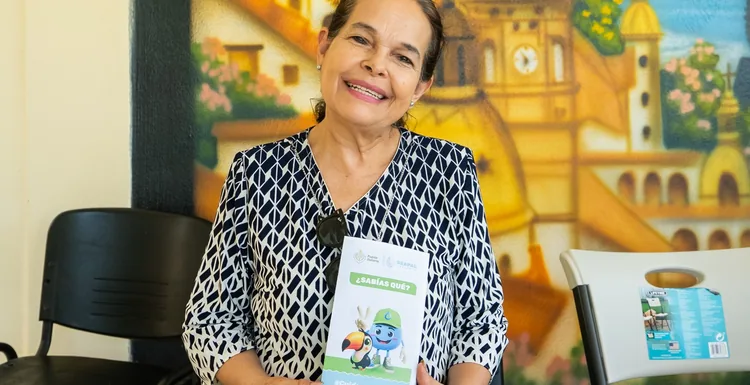
SEAPAL Vallarta
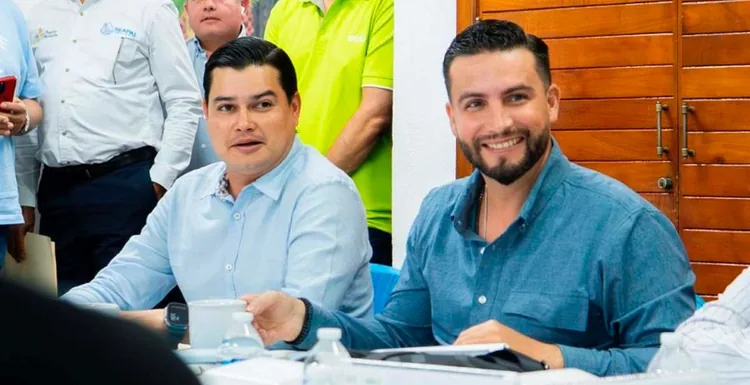
SEAPAL Vallarta

SEAPAL Vallarta
A rainy-season storm over Puerto Vallarta. File photo: Jet’s Private Boat Tours.
Vallarta Shores overlooks Los Muertos Beach and Banderas Bay from Puerto Vallarta’s Romantic Zone. Photo: Vallarta Shores.