







Uber-type services and new collaborative economic trends such as carpooling are gaining strength in Mexico, changing the panorama of transportation and mobility and - in turn - bringing criticism from taxi associations.
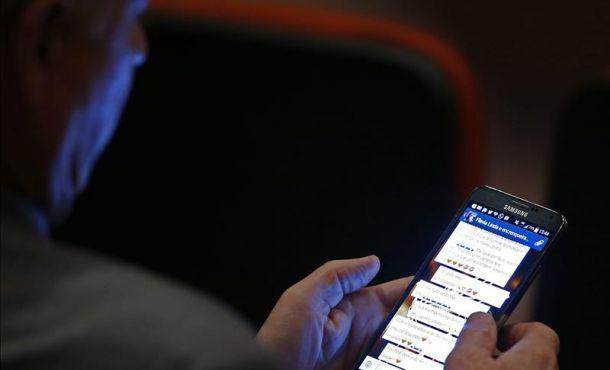
Instead of walking to the nearest taxi stand or making a telephone call requesting a cab, users can call a taxi just by pressing a button in an app.
It's a service that is gaining popularity and which companies like Uber and Cabify are using to deal with transport problems.
In contrast to other apps involving taxis, the firms in question base their service on private individuals and their vehicles, people who have never obtained an official chauffer's license.
In response to the trend, the Organized Taxi Drivers of Mexico City group on Dec. 10 filed a legal complaint with the capital district attorney's office against the municipal transport secretary, Rufino H. Leon Tovar.
They accused him of failing to deal with the problem posed for them by Uber, Cabify and "those responsible for individual transport of passengers in the city without (being awarded) a concession" to do so, claiming that they are violating the Transport Law, which prohibits the use of private vehicles for business purposes, the spokesman for the taxi drivers' group, Daniel Medina, told Efe.
The complaint is also directed at local representatives of Uber and Cabify, to whom Mexico City cabbies claim they are losing approximately 10 percent of their income, Medina said.
However, the CEO of Cabify Mexico, Edgardo Rivera Torres, one of the defendants in the case, told Efe that "we've met with the local authorities and they've told us that we're not a substitute for the taxi service; our customers use (cabs) every day for certain needs and they use us for others."
What they offer is a "private drivers" service that "is not (covered by) current regulation, and they don't need a permit to provide their services."
A less controversial growing transportation alternative is the service proposed by Tripda, which has just been launched in Mexico after finishing its test phase.
With Tripda, users can publish announcements of their upcoming car trips and offer seats in their vehicles in exchange for the price they set.
Thus, "the cost of gasoline is shared," the head of Tripda in Mexico, Oscar Rosado, said, adding that the service is aimed particularly at "millennials" (the 18-30 age group), because of their consumption tendencies: "They're always connected to the Net, they have a more open feeling about ecology and less connection with material things."
Tripda provides travel between cities, but also on routes that are being developed within municipal areas, because "there are routes in the (capital) that, due to distance and time, are considered long distance in other countries," and also "70 percent of the cars on the road have just one passenger, wasted space that affects all traffic here."
In Rivera Torres' opinion, the opposition from the traditional transport sector is natural: "It's going as in any industry in which there is a revolution in service. Nobody accepts the change passively."
"What I really believe is that it's the future. A trend on the global level that can't be ignored. Customers are not being manipulated or hypnotized. They're looking for something that they're not getting (elsewhere)," Rivera Torres said
[readon1 url="http://latino.foxnews.com/latino/news/2014/12/25/uber-carpooling-shake-up-transport-in-mexico/"]Source:latino.foxnews.com[/readon1]
Uber, Carpooling Shake Up Transport in Mexico
- Details
- By Isabel Reviejo
Typography
- Smaller Small Medium Big Bigger
- Default Helvetica Segoe Georgia Times
- Reading Mode