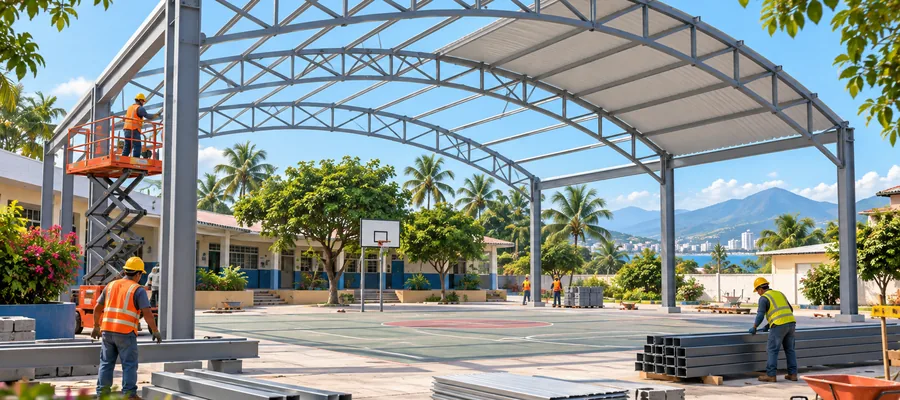








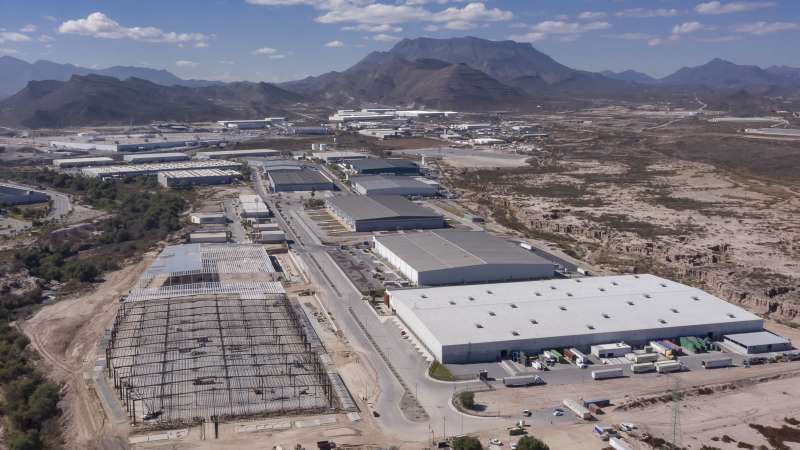
The Aguascalientes industrial investment surge, detailed in our main piece, is part of a broader pattern that has been reshaping central Mexico's industrial geography over the past three years. The nearshoring narrative that Mexican officials and investment promotion agencies have used to attract manufacturing capital is now materialising in the form of industrial parks under construction, logistics infrastructure under development, and supply chain investments that are moving from memoranda of understanding to ground-breaking ceremonies.
What Nearshoring Actually Looks Like on the Ground
Nearshoring, at its simplest, is the relocation of manufacturing or service operations from distant locations, typically Asia, to countries geographically closer to the end market. For US manufacturers and their supply chains, Mexico's combination of USMCA trade preferences, competitive labour costs, established industrial clusters, and physical proximity to US consumption centres makes it the primary nearshoring destination in the Western Hemisphere.
The ground-level reality of nearshoring is industrial park occupancy, site selection decisions, and infrastructure investment. When a German automotive component supplier decides to establish a manufacturing facility in Aguascalientes to serve its Nissan customer, that is nearshoring. When a Taiwanese electronics manufacturer opens a Querétaro plant to supply a Texas-based customer under USMCA rules of origin, that is nearshoring. When a US medical device company establishes Monterrey production to shorten its supply chain to US hospitals, that is nearshoring.
Central Mexico, the corridor running through Aguascalientes, Guanajuato, Querétaro, San Luis Potosí, and Jalisco, has historically been Mexico's most concentrated industrial region and is the primary beneficiary of current nearshoring activity. The region's established automotive and electronics clusters, skilled labour force, and logistics connectivity give it natural advantages over newer industrial regions further south.
Infrastructure as the Binding Constraint
The pace of nearshoring investment is not primarily constrained by demand. Global companies are actively seeking to diversify supply chains away from single-country concentration in Asia, and Mexico is on the short list of credible alternatives for North American-facing production. The binding constraints are on the supply side: industrial land with adequate utilities, reliable energy, skilled labour, and logistics connectivity.
Energy reliability has emerged as a particularly significant concern. Mexico's electricity grid, managed by the state utility CFE, has faced capacity constraints and reliability questions in some industrial corridors. Manufacturers that require uninterrupted power for precision manufacturing or temperature-controlled processes are particularly sensitive to this risk, and it has influenced some site selection decisions.
Water availability is a related constraint in water-stressed central Mexico. Industrial parks that invest in water treatment and recycling infrastructure, as San Marcos Valley is doing, are not simply adding amenity; they are addressing a fundamental site viability question for potential tenants in sectors like electronics, pharmaceuticals, and food processing.
What the USMCA Review Means for Investment Decisions
The USMCA's formal review in 2026 introduces uncertainty into the investment calculus for companies considering Mexico manufacturing commitments. The agreement's rules of origin, which determine what share of a product's content must come from North American sources to qualify for preferential tariff treatment, are central to many nearshoring investment cases. Changes to those rules in the review could significantly alter the economics of specific manufacturing investments.
Most analysts expect the USMCA to be renewed rather than substantially renegotiated, given its broad support among US manufacturers and its role in underpinning North American supply chain integration. But the negotiating process itself creates uncertainty, and companies making long-horizon manufacturing investments are incorporating USMCA outcome scenarios into their risk analysis.
For states like Aguascalientes that are competing aggressively for manufacturing investment, the message to potential investors is consistent: state-level advantages in labour, infrastructure, logistics, and security exist independently of federal trade policy outcomes, and the depth of the regional industrial ecosystem reduces the risk associated with any single policy variable.
Frequently Asked Questions
Q: What is nearshoring and how is it different from offshoring?
A: Offshoring is the relocation of production to a distant country, typically to access lower labour costs, as in the mass migration of manufacturing to China and Southeast Asia from the 1990s onwards. Nearshoring is the relocation of production to a geographically proximate country, prioritising supply chain responsiveness, reduced logistics costs, and lower geopolitical risk over maximum labour cost reduction. For US manufacturers, Mexico is the primary nearshoring destination.
Q: Which states in Mexico are the main beneficiaries of nearshoring?
A: Central Mexico's industrial corridor, Aguascalientes, Guanajuato, Querétaro, San Luis Potosí, and Jalisco, has historically attracted the largest share of manufacturing investment. Monterrey and Nuevo León in the northeast are a secondary concentration, particularly for automotive and logistics. Northern border states including Chihuahua, Coahuila, and Baja California also continue to attract significant manufacturing investment through maquiladora structures.
Q: Why is energy reliability a concern for nearshoring investors in Mexico?
A: Mexico's electricity grid has faced capacity constraints and reliability questions in some industrial corridors. For manufacturers requiring continuous, reliable power, including electronics, automotive components, and pharmaceutical production, grid reliability is a critical site selection criterion. Industrial parks that invest in backup generation capacity or private energy supply infrastructure address this concern directly.
Q: What are USMCA rules of origin and why do they matter for manufacturing investment?
A: Rules of origin specify the minimum share of a product's content that must originate in USMCA member countries, the US, Mexico, and Canada, for the product to qualify for zero-tariff treatment under the agreement. They are central to many nearshoring investment cases because they determine whether manufacturing in Mexico can access the US market tariff-free. Changes in the rules during the 2026 review could alter the economics of specific investment cases.
Q: How long does it typically take for a new industrial park in Mexico to become fully occupied?
A: Timelines vary significantly by location, sector, and market conditions. In active nearshoring corridors like central Mexico, well-positioned industrial parks with complete utilities and logistics access can achieve meaningful occupancy within two to three years of opening. Parks in less established locations or without complete infrastructure take longer. The pre-investment in utilities and access infrastructure that San Marcos Valley is undertaking is designed to compress the time between park opening and tenant move-in.