







When industrial development and manufacturing investment accelerate in a region, retail investment tends to follow, and the relationship works in the other direction too. Costco Wholesale's announcement of a $100 million expansion in Aguascalientes, creating one of the brand's largest Mexico properties, is as much a statement about the consumer market being created by industrial investment as it is about retail strategy. Understanding why Costco is building there, and what it is betting on, illuminates the broader economic dynamic reshaping Aguascalientes and cities like it.
The Aguascalientes Costco Project
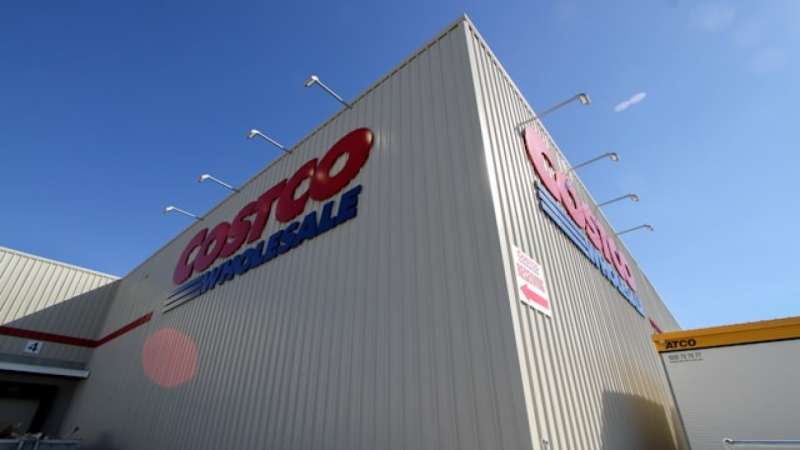
Costco Wholesale has announced a $100 million, MX$1.8 billion, investment to develop a new large-scale facility adjacent to its existing Aguascalientes branch at Boulevard Aguascalientes Norte 802. The combined site will encompass 90,000 square metres upon completion, making it one of the largest Costco properties in Mexico. Current operations will continue without interruption during the nine-month construction phase, according to Patricia Quiles, Legal and Real Estate Director of Costco Wholesale Mexico.
The project is slated for completion in late 2026, with a tentative September opening. It is the first of several Costco expansions planned for Mexico in 2026. As of early January, Costco operates 43 locations in Mexico, with the intention to reach 47 by year-end. Locations under consideration or in development include Mexico City, Querétaro, and Nuevo León, notably, all cities in Mexico's industrial heartland.
Why Costco Is Expanding Where It Is
Costco's membership warehouse model is built on a specific value proposition: large quantities at low unit cost for members who have the storage space, the disposable income, and the shopping behaviour to exploit bulk pricing. This model skews toward middle and upper-middle income households, precisely the consumer segment that grows when industrial employment expands and wages rise.
Aguascalientes's 159,000 automotive industry jobs, and the broader employment base created by the state's industrial ecosystem, have generated a substantial middle-class consumer market in a city that, by Mexican standards, has above-average formal employment rates and wage levels. This consumer base is exactly the segment Costco's model requires, and its sustained growth has made Aguascalientes a logical expansion location.
In its 3Q25 earnings report, Costco recorded revenue of $61.96 billion, an 8 percent year-over-year increase, with Mexico contributing to its international segment performance. The company's decision to invest $100 million in a single Aguascalientes expansion, among the larger single-property investments in its Mexico portfolio, reflects confidence in the market's medium-term trajectory.
What Retail Investment Signals About Industrial Cities
The co-occurrence of industrial park construction and large-format retail investment in Aguascalientes is not coincidental. Manufacturing investment creates formal employment. Formal employment generates household income. Household income sustains consumer spending. Consumer spending justifies retail investment. Retail investment adds amenities that make a location more attractive to manufacturing workers and their families, reinforcing the cycle.
This dynamic is visible across Mexico's industrial corridor. Querétaro, which has experienced significant nearshoring investment in automotive and aerospace, has seen corresponding growth in its retail and hospitality infrastructure. Monterrey, Mexico's most established industrial city, has a mature retail ecosystem that reflects decades of formal manufacturing employment. Aguascalientes is at an earlier stage of this cycle but moving along the same trajectory.
For investors and businesses assessing Mexico's industrial cities, the presence of expanding large-format retail, particularly from quality-sensitive international operators like Costco, is a useful proxy for the health and growth trajectory of the local consumer market. It is difficult to justify a $100 million single-property investment in a market that is not growing, and operators of Costco's calibre conduct rigorous market analysis before committing capital at that scale.
Frequently Asked Questions (FAQs)
Q: How large will the new Aguascalientes Costco facility be?
A: The new development will create a combined site of 90,000 square metres when added to the existing adjacent branch. This will make it one of the largest Costco properties in Mexico. The project involves a $100 million investment and is scheduled to open in September 2026, with a nine-month construction timeline.
Q: Why is Costco expanding in Mexico rather than in the United States?
A: Costco sees Mexico as a growth market with significant untapped potential. With 43 locations in Mexico compared to hundreds in the US, the penetration rate relative to the addressable consumer market is considerably lower. Growing middle-class populations in Mexico's industrial cities, where formal employment and household incomes are rising, represent the consumer segment most aligned with Costco's membership model.
Q: What does Costco's Mexico expansion plan look like for 2026?
A: Costco intends to reach 47 Mexico locations by year-end 2026, up from 43 at the start of the year. Beyond Aguascalientes, new locations are under consideration or in development in Mexico City, Querétaro, and Nuevo León, all major urban centres in Mexico's industrial and commercial heartland.
Q: How does industrial employment growth relate to retail investment in Mexico?
A: Industrial employment, particularly formal manufacturing jobs, creates household income at scale. As formal employment expands in industrial cities, middle-class consumer spending grows, justifying retail investment from operators who require a sufficient density of qualifying households to support their business model. Costco's expansion in Aguascalientes reflects this relationship between industrial development and consumer market maturation.
Q: Is Costco's membership model well suited to the Mexican market?
A: Costco's model works best for households with storage space, above-average disposable income, and a preference for bulk purchasing. This profile is most common in Mexico's formal-sector middle class, concentrated in industrial cities and major urban centres. Mexico's Costco membership base has grown consistently, indicating strong model-market fit within this demographic, though the model is less accessible to lower-income households or those in informal employment.