





Best Puerto Vallarta Beach Resort Is Named Velas Vallarta By Excited Travelers
 Velas Vallarta is one of the top luxury resorts in Puerto Vallarta,

 Vallarta Today - Puerto Vallarta's Only Daily English Newspaper - Vallarta Daily News
The Newspaper Of The Bay
Vallarta Today - Puerto Vallarta's Only Daily English Newspaper - Vallarta Daily News
The Newspaper Of The Bay
Velas Vallarta is one of the top luxury resorts in Puerto Vallarta,
 Diamante has already established itself as a great "traditional" golf destination in the bustling, oceanside resort town of Cabo San Lucas, Mexico, and Tiger Woods Design is thrilled to be able to add another very distinctive 18-hole golf course to the property.
While the existing Dunes course is reminiscent of a classic Scottish links course, the Tiger Woods Design course will remind golfers of the old-style California courses that Tiger grew up playing. Golfers of all skill levels will have several options to navigate each hole, and proper strategic decision making will be rewarded. The existing arroyos that traverse the site and well-placed fairway bunkers will provide ample risk-reward opportunities off the tees. Players will often have to make a decision as to whether to try to carry a hazard resulting in a better approach angle or take the safer route leaving a longer shot to a green. Natural, irregular contours on the wide fairways along with high-faced, greenside bunkers will further enhance the course's old-style look and feel. With 18 truly unique green complexes, the end result will be a memorable and enjoyable golf experience that complements what is already so special about Diamante.
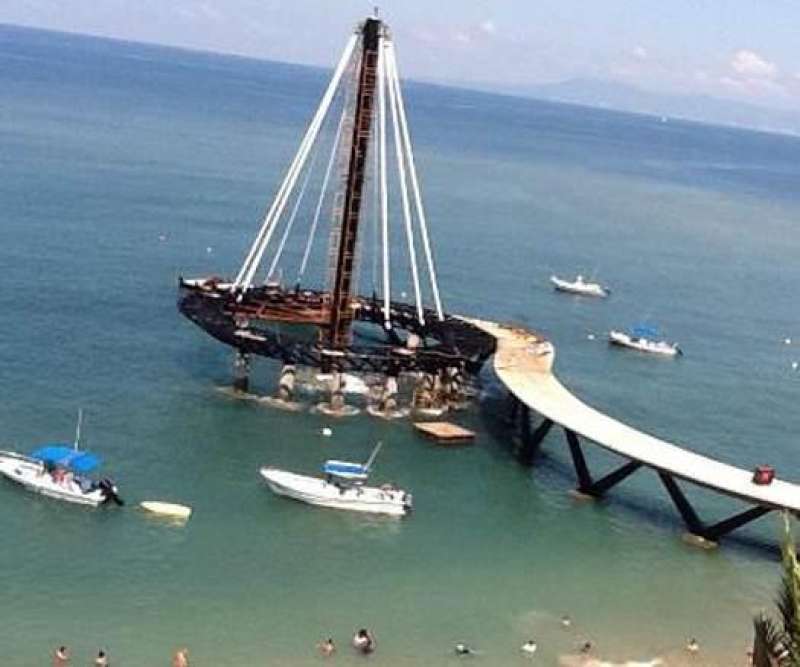
PUERTO VALLARTA, Jalisco (OEM-Informex.) - The so-called "Spring of the Dead" the government of Jalisco built on the waterfront of the city, and those who promote this tourist destination in another of the attractions of this city.
 Mazda Motor Corp. will expand its relationship with Toyota Motor Corp. now that it has an agreement with the auto giant to build models intended for the North American market at its Mexican factory once the facility begins operations.
The Mazda plant, currently under construction in Guanajuato, Mexico, will begin producing about 50,000 sub-compact Toyota vehicles starting around the summer of 2015, Toyota and Mazda said in a joint statement.
The Mexican plant is slated to go onstream in the January-March quarter of 2014 with an annual output capacity of 140,000 vehicles employing around 3,000 people. Mazda intends to boost the facility's capacity to 200,000 vehicles when it begins building Toyota subcompacts so that it can produce 50,000 vehicles other than its own. Mazda expects a jump in profitability through procurement of common parts with Toyota.
Its deal with Toyota is good for both companies, but Mazda stands to benefit more, said Noriyuki Matsushima, a Tokyo-based analyst at Citi Research.
Mazda will not only save on the capital investments required for the new factory, but the additional production for Toyota will lower the plant's fixed production costs per vehicle, he said. Toyota will benefit by shifting production of subcompact cars to Mexico from Japan, wjere exports aren’t profitable at current exchange rates.
Globally, Toyota plans to launch 21 new hybrid models by the end of 2015 and will make further efforts to expand its hybrid-vehicle product lineup and sales territories, the automaker said.
More than 80% of Canada's hybrid vehicle sales are Toyota and Lexus hybrids, the automaker said.
 Looking to counter Carlos Slim’s telecommunications giant América Móvil, Mexican operator Grupo Iusacell and Telefónica said they will enter a network sharing deal.
 Credit Suisse analysts says it is cutting its rating on Desarrolladora Homex (HXM), Corporacion GEO (CVGFY) and Urbi Desarrollos Urbanos SAB (URBI.MX) to underperform from netural given the potential downside to its target prices and an uncertain outlook on when these firms will abe to pare back investments and deplete its land reserves through sales.
While the country is seeing strong housing demand, Credit Suisse sees a potential value trap, noting that the demand is not turning into profits because of the business model these firms are using.
These business models were based on developing low-cost affordable housing by accessing cheap, raw land–something that is not easy to come by anymore. Homebuilders are now dealing with high cost of living because they have to go further out to areas with little commercial support, analysts write.
“We believe better locations would significantly improve the attractiveness of new homes, but large homebuilders seem to have overinvested in inadequately located land – creating a value trap. They need to transform their business models but at this point it doesn’t seem they have found the right strategy,” analysts write.
While Homex is diversifying away from its core Mexican housing business to prisons and infrastructure, analysts say the market may be disappointed by delays in the construction of those prisons.
As for GEO, inconsistent free cash flow results and growth makes the analysts believe more work is needed.
And while Urbi’s decision to slow growth may stem the cash drain, analysts say it will not necessarily create value and they see no catalyst for upside at the moment.
 By day, Sergio Martinez labors in a modern air-conditioned factory a few miles from the Texas border,
 Leaders of trade and investment promotion agencies from around the world converged on Mexico City November 5-6, 2012 to hammer out strategies for cooperation that will help drive a global economic recovery. Representatives of G-20 member countries, multilateral organizations and leading businesses joined in the event activities, which took place at the Four Seasons hotel over the course of two and a half days. In all, 22 agencies from 18 countries took part in the meetings, according to event organizers.
The G-20 Trade & Investment Promotion Summit (TIPS) was held as part of a series of follow-up events to the summit of heads of government of G-20 member countries organized in Los Cabos, Mexico, in June of this year. The G-20 is an organization composed of 20 leading developed and emerging economies, including that of the European Union. The group was launched in 1999 as a forum for consultation and cooperation by finance and banking officials on policy matters affecting international economic stability. The presidency or chair of the G-20 rotates annually. Mexico, as chair for 2012, hosted the Los Cabos meeting of heads of state and took the lead in organizing subsequent events to pursue the group’s agenda to promote healthy economic growth. Mexico’s own investment and trade promotion agency, ProMéxico, acted as host and facilitator during the activities of the November summit.
The formal activities of the TIPS opened with an inauguration and plenary session featuring presentations on key topics to be addressed during the meetings. This session was followed by two days of roundtable work meetings and presentations in a format designed to maximize exchange of ideas and experiences among the participants. Specific themes of roundtable sessions included:
In addition to the working roundtables, presentations during plenary sessions featured topics such as the emergence of global value chains, the value of joint trade and investment promotion and benchmarking for trade promotion, among others. The roundtables and plenary sessions were led by representatives and specialists from multilateral organizations such as the World Trade Organization (WTO), the United Nations Conference on Trade and Development (UNCTAD) and the Organization for Economic Cooperation and Development (OECD), as well as from country agencies such as UK Trade and Investment (UKTI), the Australian Trade Commission (Austrade) and the Instituto Español de Comercio Exterior (ICEX).
Within the context of the overall themes of cooperation and the importance of facilitating trade and investment, a number of topics received particular emphasis at the meetings. Among the most cited was the growing importance of global value chains (GVCs) in shaping the environment for modern international business. As defined in the event program, GVCs mean that goods and services cross borders multiple times before reaching consumers in their destination market. WTO Chief of Staff Arancha González commented extensively on this topic in her opening remarks, referring to the concept of “trade in tasks” as opposed to trade merely in finished goods. As manufacturing production chains have become ever more globalized in recent years, for example, more and more products are incorporating materials and value-added processes provided in multiple countries over the course of the production process. This evolution is creating products and services that González called “made in the world,” rather than the conventional notion of goods made in one country for export to another.
The rise of GVCs has important implications for numerous areas of both national and international trade policy. Among these, as the WTO’s González emphasized, is the increasingly counterproductive nature of protectionist trade and investment policies conceived in a prior industrial era. In the context of GVCs, attempts to “protect” a particular domestic industry may result in inhibiting the importation of goods or components requiring locally provided added value, or investment in production or service infrastructure that would generate local jobs and technology transfer. As OECD Chief of Staff Gabriela Ramos added in her concluding comments, in the context of GVCs, it is important to relinquish the simplistic idea that imports are the enemy and exports are the friend, as now all may be equally necessary to a country’s healthy economic growth. Speakers remarked that improving the quality of factors such as education and training, social safety nets, infrastructure and environmental protection is key to the success of GVCs, and as such the global production chains optimally will serve to boost these aspects locally.
Throughout the sessions, particular attention was given to the role of small and medium enterprises (SMEs) and the need to incorporate them into GVCs. The WTO’s González urged the assembled promotion agency representatives to help provide SMEs with quick and accurate information to support their internationalization efforts, and UNCTAD Investment and Enterprise Director James Zhan called on multilateral agencies to boost capacity building among SMEs to help incorporate them into the supply chains of multinational corporations.
At the conclusion of the intense two days of meetings, participants expressed enthusiasm for the potential advances that could be achieved by the commitments to cooperation and best practices discussed. In his concluding remarks, Pro Mexico’s Carlos Guzmán presented the following challenges to trade and investment promotion agencies going forward:
 In Jalisco, the price of beef to the consumer registers an increase of at least 20%, in the last days. The cause is the increase in livestock exports, particularly to Turkey and Jordan, where livestock was involved Jalisco.
Salvador Alvarez Moran, treasurer of the National Confederation of Livestock Organizations (CNOG), said the export of cattle and calves, improving producer income, since the live animal has been almost 40 pesos per kilogram to sale abroad, and over 30 pesos for domestic sales.
The price increase is to offset positive impacts of livestock nutrition inputs, and losses that were taken by the drought environment of recent months.
For dairy producers, the situation was urgent, as has been the pressure to sell cows in production, which for the dairy herd of Jalisco has brought losses of 20% of their bellies, around 180,000 cows unless have in inventory.
Now you have a serious challenge in the recovery of cows sold, as this is only feasible with the capitalization of the stables, which is difficult for a number of producers.
The CNOG contemplated that in the next six years is perfected Incentives Program Livestock (Progan) and increase the incentives for each head of cattle.
[readon1 url="http://www.vallartatoda.com"]Source:vallartatoday.com - Translation by Suyapa Ajuria Nov. 12, 2012[/readon1]

With discounts of up to 75 percent off pieces of the line 2012 and 65 percent in mattresses in General, in pieces ranging from 999 pesos, Super Mattresses joins promote the success, on Friday 16 , Saturday 17 and Monday 19 10 am to 8 pm, and Sunday 18 eleven to 19 hours. Super promotions Mattresses in the success will be the cheapest four days of the year in which customers can buy their products with promotions to six months interest card participants Bancomer, Banorte, Banamex and American Express, or using your credit Fonacot
[readon1 url="http://www.vallartatoday.com"]Source:vallartatoday.com - Translation by Suyapa Ajuria Nov. 12, 2012[/readon1]
 Mexico's top cement maker Cemex said on Thursday that it was pleased with the way its U.S. business was evolving but acknowledged it is still far from fully recovering.
"We are cautious and we are far from a full recovery in the U.S. business but the trend is certainly in the right direction," Maher Al-Haffar, Cemex's vice president of corporate communications and investor relations, said in an interview.
One of the world's biggest cement companies, Cemex was hard-hit by the collapse of the U.S. housing market soon after paying about $16 billion to buy Australian peer Rinker. It has been working its way out of debt obligations for the past three years.
The company, which recently wrapped up a $7.2 billion refinancing package that gave it much-needed room to push back looming debt payments for up to four years, said it expects its U.S. business to post positive operating earnings before interest, tax, depreciation and amortization (EBITDA) this year.
"The U.S. is making a very nice come back: volumes are growing nicely, prices are growing nicely, and hopefully we will not have a double dip as a consequence of politicians not being able to deal with the fiscal cliff," Al-Haffar said.
"Fiscal cliff" refers to a combination of U.S. government spending cuts and tax rises due to be implemented under existing law in early 2013 that might tip the economy back into recession
Cemex forecast last month weaker consolidated volumes for 2012 hurt by Europe's tepid performance.
[readon1 url="http://www.vallartatoday.com"]Source:www.vallartatoday.com- Translation by Suyapa Ajuria Nov. 11, 2012[/readon1]
 Netherlands-based APM Terminals plans to invest $2 billion to expand the containers terminal of the Mexican Pacific port of Lazaro Cardenas, a project that will create 3,000 direct jobs, officials said.
APM Terminals, a unit of Grupo Maersk and one of the largest firms in the world, said it will invest $900 million in the first stage of this expansion, the Economic Development Secretariat of the western state of Michoacan said in a statement.
State authorities and company executives laid the cornerstone for the expansion of the terminal, which will make the port of Lazaro Cardenas the port of choice for importing products from Asia to Mexico and the U.S. East Coast.
The state’s development secretary, Ricardo Martinez, said the terminal will operate the unloading of giant new-generation freighters, the world’s biggest.
During the first stage a container yard covering some 43 hectares (106 acres) and a 650-meter (2,100-foot) wharf will be built.
The new complex also includes an administration building, warehouse, access gates, and a modern railroad terminal next to the wharf that will allow an ever-greater volume of intermodal cargoes.
At the ceremony, APM Terminals CEO Tiemen Meester said that the company’s investment reflects confidence in the future of the Mexican economy.
During the construction phase, the project will immediately create 900 direct jobs in the area.
APM Terminals, which also operates the port terminals of Ensenada and Manzanillo, reported $4.7 billion in revenue and $649 million in net income in 2011.
 In 2011 Latin American stock exchanges fared worse than the S&P and the Dow Jones Industrial Average. Most analysts agree that 2012 will be a volatile year.
Getty Images
Last year was a turbulent one for stocks around the world. First, an earthquake in Japan led to anxiety and economic losses. Then, the Standard & Poor’s downgraded the U.S. credit rating. Next, Congress deadlocked over a debt ceiling discussion in Washington. And finally, the debt crisis intensified in the euro zone.
Yet the S&P 500, the main index of broad market performance, closed the year flat (technically, it fell 0,003 percent). The Dow Jones Industrial Average, one of the most closely watched benchmark indices, meanwhile, gained 5.5 percent in 2011.
In Latin America, though, most stock markets didn’t fare as well as Wall Street. While the region’s major economies continued to grow last year, their main stock indexes slid in 2011. Brazil’s Ibovespa declined 18 percent, while Mexico’s IPC fell almost 4 percent.
Investors in other Latin American countries also avoided stocks, which are considered risky assets. As the Colombian economy grew by 6 percent last year, its Colcap stock index ended 14 percent down. Argentina, Chile, and Peru’s stocks also finished the year lower.
Looking ahead, Latin America’s economy is forecasted to expand only by 3.7 percent in 2012, down from over 4 percent last year, according to the United Nations Economic Commission for Latin America and the Caribbean. Only Brazil - where a boost in investment is expected ahead of its hosting of the 2014 World Cup and the 2016 Olympics - is estimated to grow faster in 2012 than it did last year.
Also, the European crisis might begin to take a toll on Latin America, whose economies (and stocks) rely heavily on exports of commodities. Most economists think that the euro zone is heading into recession, which would put pressure on Latin America.
Still, the region is likely to outperform the developed world in 2012. And China - with its already robust economy expected to grow at 9 percent - will remain a large market for Latin American commodities.
While corporate profits are likely to push share prices higher, Europe hasen’t solved its currency crisis, Americans have no clue who their next president will be, and uncertainty still reigns in the Middle East, where the Arab Spring lives on.
Not surprisingly, most analysts agree 2012 is set to be a volatile year.
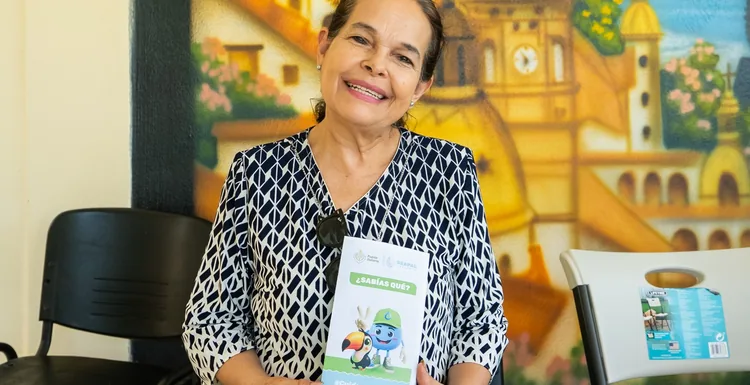
SEAPAL Vallarta

SEAPAL Vallarta

SEAPAL Vallarta

A rainy-season storm over Puerto Vallarta. File photo: Jet’s Private Boat Tours.

Vallarta Shores overlooks Los Muertos Beach and Banderas Bay from Puerto Vallarta’s Romantic Zone. Photo: Vallarta Shores.