





Vallarta Hat Dance and the Sombrero
 Everyone who visits Puerto Vallarta knows that a sombrero is a large Mexican hat.

 Vallarta Today - Puerto Vallarta's Only Daily English Newspaper - Vallarta Daily News
The Newspaper Of The Bay
Vallarta Today - Puerto Vallarta's Only Daily English Newspaper - Vallarta Daily News
The Newspaper Of The Bay
Everyone who visits Puerto Vallarta knows that a sombrero is a large Mexican hat.
 The hashtag #TMSRivieraNayarit enjoyed a very wide reach on social media with over 72 million impressions; since then there have been several articles published in specialized media in Mexico, the US and the UK; trends and statistics favor the Destination.
 A fun-filled weekend is expected with some 300 classic and souped-up Volkswagen vehicles on exhibit before more than a thousand people during this family-oriented event.
 Fathers’ Day (Día del Padre) is celebrated to honor fathers and male parental figures in Mexico on the third Sunday of June. It is also observed in other countries
Like Mothers’ Day and Children’s Day in Mexico, Fathers’ Day is a family-centric observance. Cards, chocolates, artwork, t-shirts, and other presents are given to fathers and father-like role models on this day. Father’s Day community activities, including fun runs, are held in some cities. Most schools have special events, such as pot-luck lunches, hand-made artwork on display, children singing songs, or school plays.
Fathers’ Day is an observance and not a federal public holiday in Mexico.
There are some suggestions that the idea of Father's Day may stem from the pagan sun worship. Some branches of paganism see the sun as the father of the universe. The June solstice occurs around the same time of year as Father's Day so some people see a link between the two.
The modern Fathers’ Day origin is believed to have come from the U.S. – some say it was first celebrated in Washington on June 19, 1910, while others believe it was celebrated in West Virginia on July 5, 1908. Regardless, the popularity of Fathers’ Day has spread to countries such as Mexico.
 The workshop will focus on turtle camp staff, students, biologists, teachers, volunteers, hotel staff and other individuals that come in contact with the sea turtles or are interested in learning more about the conservation of the species.
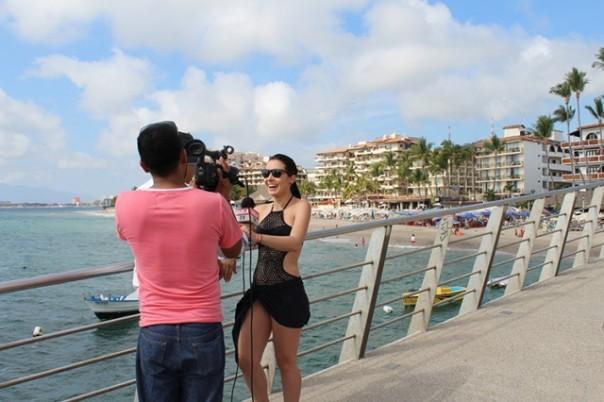
Puerto Vallarta, Jal. - Puerto Vallarta was honored to welcome and host Ariadne Díaz, distinguished and successful actress and model, who chose our port for a photographic and video production for the prestigious magazine “Hola Mexico Edition”.
Ariadne and his production team were welcomed at the White Heron and the Mousai hotels, which were two of the settings for the photo shoot. Members of Puerto Vallarta’s tourism trust accompanied and guided the production team.
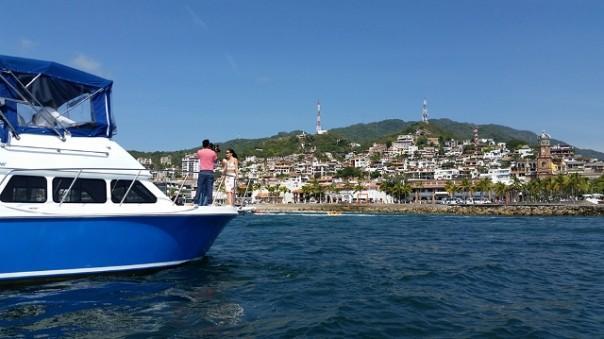
For the photo shoot, the actress walked around the city’s main tourist sites; strolled through the downtown area, came up to the lighthouse on Matamoros Street, toured part of the Bay in a boat -watching Puerto Vallarta from the sea- visited the South area beaches and admired the Sierra Madre mountains; just to name a few places where she was seen. It was obvious she and the crew members were delighted with our region’s splendor.
Production began at hotel Garza Blanca, and it continued at the romantic zone on Basilio Badillo, and adjacent streets known by their Bohemian atmosphere. It was in these areas where Ariadne, besides posing for great shots, had the opportunity to greet some of her fans, who respectfully, but very enthusiastically, greeted her and took pictures. Ariadne addressed her fans with the gratefulness and charisma that distinguishes her.
Later she went to the Marina and boarded a boat. The photo shooting continued, having the center of Puerto Vallarta as the background. Right before sunset they were taken to Hacienda San Angel; a beautiful boutique hotel whose owners provided their facilities for part of the photo shooting. Beautiful site, since they have a wonderful terrace from where you can see, in all its glory, Our Lady of Guadalupe Parish.
The photo shooting session concluded at the hotel Mousai, where the sunset became part of the stage, offering a great set of lights that enhanced Ariadne Diaz’s gorgeousness.
Once more Puerto Vallarta was bejeweled with visitors who help to promote tourism. Puerto Vallarta is proud to host such distinguished visitors, and to facilitate the background for both, photographic and film or television productions. Thanks to Ariadne Díaz, for her visit, and for giving Puerto Vallarta such a great name. Thanks also to the production team for their great work. We consider them distinguished guests and we would be delighted and eager, to welcome them back.

[readon1 url="index.php?option=com_sobipro&pid=1&sid=703:mar&Itemid=212"]Source:www.VallartaToday.com-by MAR Translation Services[/readon1]


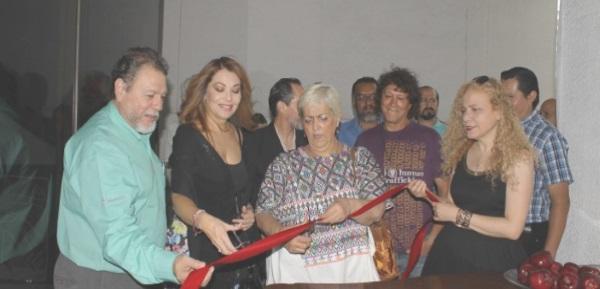
With the Commitment to help potential Art buyers and Art Collectors, the first "Art Collectors Assistance" summit was formally inaugurated this past weekend, at Ananda Ganesha Gallery, located in 2208 Mexicaltzingo Street. Martha Venegas Trujillo, General Director of Tequila’s Rout, A. C. was present at this event. Venegas Trujillo announced a possible collaboration with the Tequila Museum and the promotion of art work exhibited at this event.
Maricela (Ganesha) Machuca, Art Promoter and architect of this concept, welcomed the attendees and encourage the artists to involve themselves in monitoring their art work, by providing potential buyers with an explanation of their work, and to participate more with the galleries.
"Very often we leave our work at the gallery and we forget about the buyers. We do not engage ourselves on giving due attention to collectors or to potential buyers." To Ganesha Machuca, this event consists of mainly that: bringing both sides together (the gallery and the artist) in this dynamic, so that both may appreciate each other’s work. The gallery provides space for the exhibit and, as an aggregated value, promotes itself with the art work. The artist lets everyone know the endeavor put on the creation of his work: time involved, complexity, things they had to give up in order to make it to the exhibit and get his work appraised.
Doctor Oscar Lomeli, host and owner of the Holoclínica Inhome and who donated the space in the Gallery, was thankful for the initiative of presenting art collectors to the artist themselves, to learn firsthand about their motivations, to hear from them what they were trying to capture and compare it with the interpretation of art collectors and possible buyers. "This will be your home from today forward. We have even a forum where your work can be auctioned. This is a place where you will be able to exhibit your work and where your work will be appreciated, and what it is good for the spirit is also good to your health, so welcome home,” he said.
On the other hand, Carmen Alarcón Collignon, Art Specialist, emphasized that this is an initiative of great value, because it allows collectors to interact with the painter, "where (both) are aware that there are both equals, the difference is in the type of language used by the author to communicate with society, a language that is not directed to any
one specific but which is expected to be translated by the perception and vision that the spectator has of it," he said.
Finally Martha Venegas Trujillo, announced that work is being done for Tequila Museum to host artwork exhibits of the type hosted on this occasion. "It will be an honor for us to exhibit this quality of art work in the Tequila Museum. We are already in talks to keep this exhibit with us; we have the space for it. It is encouraging to be able to somehow, contribute to the promotion of these art manifestations. It is a pleasure to assume this commitment.” She went on to announce that Maricela Ganesha Machuca was in charge and responsible for the selection of works to be displayed.
It should be noted that the art work presented, was done by artists of the kind of Tamys Leal Barceló, Lewis Kant, Ricardo Ramírez, Jose Luis Malo, Gustavo Plascencia, and Homer Regla. Also Riky Grana, Javier Córdova and Juan José Ramos, among others. Only two artists will not be present at the event: Gustavo April Bernal (Colombian) and Yoel Diaz Gálvez (Cuban).
[readon1 url="index.php?option=com_sobipro&pid=1&sid=703:mar&Itemid=212"]Source:www.VallartaToday.com-by MAR Translation Services[/readon1]
Cinco de Mayo (fifth of May) is an annual celebration held by Mexicans in the United States and in Puebla, Mexico. It is known there as El Dia de la Batalla de Puebla which means The Day Of The Battle Of Puebla. It is not to be confused with Mexican Independence Day, which is Sept. 16.
In 1862, the United States was involved in the civil war. The south was in need of a good exterior ally. At this same time, the French Army under General Laurencez was moving across Mexico.
For nearly 50 years, since the defeat of Napoleon, the French Army was considered to be one of the greatest military forces.
In 1862, the French Army with forces from Queen Isabella II of Spain and Queen Victoria of Great Britain landed at Veracruz. The goal was to collect a debt owed to them by Mexico from Mexican President Benito Juarez.
With intentions to intercept custom payments in exchange for the debt, the three Army forces seized the custom house at Veracruz.
Efforts began to work out an agreement with Spanish and Great Britain diplomats and Juarez. When an agreement was reached, the armies of Spain and Great Britain departed.
The French Army meanwhile stayed and headed for Mexico City.
In their march toward Mexico City, the French Army met heavy resistance near Puebla. A small army of Mexican militia estimated at 4,500 men under the leadership of Mexican General Ignacio Zarangoza Seguin stopped and defeated the French army of 6,500 soldiers.
The Puebla victory was short-lived. When Napoleon III heard of the defeat, it gave him an excuse to send 30,000 more troops to try and invade Mexico.
A year later, the French army managed to take over Mexico City and install Maximillian as the ruler of Mexico.
Maximillian’s rule lasted from 1864 to 1867. By that time, the American Civil War was over and the USA began providing more political and military assistance to Mexico in an effort to force the French out of Mexico, which also led to the execution of Maximillian.
As for General Ignacio Zarangoza Seguin, he was a Texan born March 24, 1829, in the city of Presidio de La Bahia, now known as Goliad. A replica of his home is located across the narrow street that runs by the old Spanish Mission La Bahia.
His parents were Miguel Zaragoza and Maria de Jesus Valdez Martinez Seguin.
Following the independence of Texas in 1836, the family moved to Matamoros where he Ignacio began his education. Ten years later, he moved to Monterrey.
For a time, Ignacio considered the priesthood but eventually followed in the footsteps of his father who was an infantryman.
He attempted to enlist in the Army during the United States intervention from 1846 to 1848 but was rejected.
Then in 1853, Zaragoza entered the Nuevo Leon army as a sergeant. Later he moved up in rank to captain.
During the term of Benito Juarez as president of Mexico, Zaragoza was recognized for his loyalty and patriotism by being named the Minister of the Army and Navy. He served in this position until 1861. It is during that time when he led the small army group to a victory at Puebla.
Shortly after his famous victory Zaragoza came down with typhoid fever leading to his death at age 33. He was buried in San Fernando Cemetery in Mexico City.
On May 9, 1862, then Mexican President Juarez declared Cinco de Mayo a national holiday. Mexican citizens celebrate the day with Mexican food, music, festivals and colorful costumes and dress. In Mexico, however, it is no longer a national holiday, though public schools throughout Mexico are closed that day.


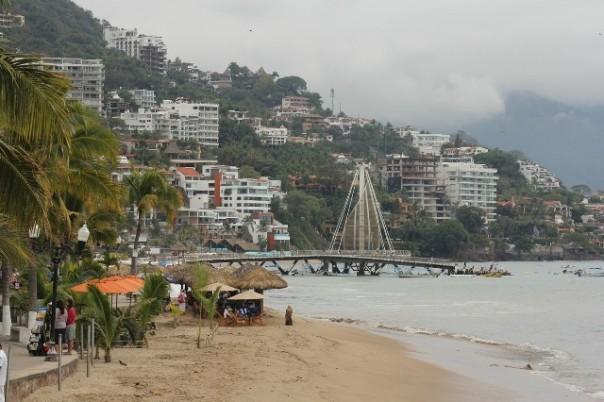
Puerto Vallarta, Jal. - City Hall is promoting the initiative of the "Declaration of protection of Puerto Vallarta’s emblematic zone". With this declaration, city authorities are seeking to have greater control in the preservation of the identity and the cultural heritage of the city.
Although there already are some regulation in place, such as "The bylaws of the Historical Center Trustees" and the "Visual image regulations", proposed by the private sector, Jesús Anaya Vizcaíno, city official, considered that there are no concrete procedures to prevent and to penalize the deterioration, lost, damage or transformation of the city cultural heritage.
The emblematic zone is the historic and romantic area, where one can appreciate the Muelle de los Muertos, City Hall, Plaza de Armas, arches, Lázaro Cárdenas square, our Lady of Guadalupe Parish, the Malecon and the Rio Cuale island; which are unique elements of Puerto Vallarta’s identity.
As per above Declaration, they seek:
Assisting, consulting, supporting, and generating a Management Guide of the protected area which should include the strategies, programs, actions, specifications and general criteria and instruments in order to ensure the preservation of the protected area and to facilitate its preservation, and by reflecting the partial plan of urban development, as well as suitable rules, such as controlled development to avoid the discretion in the authorizations of intervention, promotion, and the issue of regulations concerning the Municipal Cultural Heritage.
[readon1 url="index.php?option=com_sobipro&pid=1&sid=703:mar&Itemid=212"]Source:www.VallartaToday.com-by MAR Translation Services[/readon1]

Children’s Day (El Día Del Niño) is celebrated as a tribute to children in Mexico on April 30.

Smile - it's Children's Day in Mexico!©iStockphoto.com/JBryson
Schools host special events inviting parents to celebrate and share Children’s Day with students. Parties are held and children take part in activities like face painting, story-telling, art workshops, and plays.
Children’s Day is a national observance in Mexico.
Children’s Day has been celebrated annually in Mexico since 1925. Children are recognized as an important part of society so the day focuses on the importance of loving, accepting and appreciating children.

The history of Puerto Vallarta has several dates in April, worth calling to mind.
The authorization to build the church of Las Peñas, the construction of the first swinging bridge over the Cuale River, the formation of the Administrative Technical Committee for the Drinking Water and Sewer Services for Puerto Vallarta (SEAPAL) and the first FM radio transmission of Estereo Sol, XHFM.
One of the most important constructions of Puerto Vallarta, which has given the town part of its personality, is the church of our Lady of Guadalupe.
In the book written by city historian, Carlos Munguia Fregoso, “Panoramic History of Puerto Vallarta and the Bay of Banderas”, he states:
“The Construction of the church of Las Peñas was authorized in 1895 on lands donated by the Union in Cuale, choosing the priest of San Sebastian to bless and place the first stone, -Assuring that by way of a formal donation of land for said church, sacristy and the priest’s quarters would be secured-. This was the start of what is now the parish of our Lady of Guadalupe”.
Presently, our Lady of Guadalupe’s church, is the most important icon of this tourist destination as well as its main church.
On April 11th of 1927 the first Cristero movement in Puerto Vallarta took place, headed by Benigno Verduzco and Father Francisco Ayala.
Carlos Munguia illustrates this in the following quote from his book:
The reforms of the Constitution of 1917 were not rigorously applied at first. Venustiano Carranza, the President of the Republic, put together two bills to modify articles 3 and 130, but Congress did not take them into account. When General Plutarco Elias Calles became President of the Republic on December 1st, 1924, he tried to strictly enforce the anti-religious laws strictly and even proposed some persecutory measures. The consequences were immediate. The clergy, voicing the existing discontent, ordered the suspension of religious practices in all the country as a sign of protest. Catholics formed the Defender of Religious Liberty League. The Popular Union of Jalisco and Mexican Youth Catholic Action joined them. As no peaceful solution to the problem was found, the armed revolution known as the War of the Cristeros began. The rebellion spread rapidly throughout Jalisco and the neighboring states under the direction of Anacleto Gonzalez Flores, Jesus Degollado and Enrique Goroztieta, who was named the first head of the liberating army. Father Francisco Ayala headed the Cristero Rebellion movement in Puerto Vallarta and felt the rebirth of his spirit in the fight for a just cause when the conflict exploded.

The swinging bridge, a journey of movement through reality
The first swinging bridge over the river Cuale was inaugurated on April 5th, 1932. This novel element of Vallarta’s urban landscape at that time, meant the connection to the fruit and vegetable gardens south of the Cuale river, in the area which is now Colonia Emiliano Zapata. Although the original bridge is no longer there, there are still several of them over the Cuale river.
This type of bridge was seen originally a couple of years before over the Mascota river at Paso de El Guayabo, built by a North American company that produced and exported bananas in what is today the Municipality of Ixtapa.
The Administrative Technical Committee for the Drinking Water and Sewer Services for Puerto Vallarta (SEAPAL), was created by the State Congress on April 8th 1978 with Decree number 9608.
Good morning Puerto Vallarta, you are listening to “Estereo Sol”
The first FM commercial radio station, XHFM, Estereo Sol, began in 1978. Puerto Vallarta, for the first time, was able to listen to music and commentaries about the town.




(Courtesy of People magazine)
At 50, the star challenges the idea that older actresses fade away into meaningless roles
Bullock doesn’t have much on her plate this year — she’s the voice of Scarlett Overkill in the new “Minions” movie and her other film, “Our Brand is Crisis,” isn’t scheduled to come out until 2016. She’s not exactly on anyone’s radar, so what’s up?
The “most beautiful” and "sexiest man alive” designations have little to do with attractiveness and everything to do with the agenda of Hollywood publicists. Elaine Lui of Lainey Gossip provides some of the most insightful coverage when it comes to the process of figuring out who wins these sorts of covers and why, which are awarded with the cooperation of the star in question. This apparently is why Ryan Gosling has never been named Sexiest Man Alive — he’s turned it down repeatedly. When Chris Hemsworth was named Sexiest Man Alive last year, Lui noted that Hemsworth had been fairly absent from the public for most of the year but the cover provided some income for his “fame-bank.”
So what’s in it for Bullock? At 50, Bullock is the oldest woman to ever win the “most beautiful” title. She is well into territory where many an actress begins a slow — not necessarily voluntary– fade-away, and the roles being offered are for sexless, cranky old-lady types or sexless mother figures.
In 2011, the New Yorker published an essay by Tina Fey that also made it into her book, “Bossypants.”
“I have a suspicion — and hear me out, because this is a rough one — that the definition of ‘crazy’ in show business is a woman who keeps talking even after no one wants to f— her anymore,” she wrote. She, Patricia Arquette, and Julia Louis-Dreyfus starred in a sketch about the same subject on the season three premiere of “Inside Amy Schumer.”
Will being deemed “most beautiful” in the eyes of People be enough to rebrand Bullock and prolong her career? That’s essentially what her 2009 role in “The Proposal” was supposed to do. Much of the buzz surrounding that movie was about how extraordinary it was that a woman in her mid-40s was dating a younger man.
As a calculated move, it makes sense to accept People’s honor, and the accompanying article focuses on Bullock’s real-life role as the mother of a young son. She’s not in “Something’s Gotta Give”/”It’s Complicated” territory yet, but she’s also not a girl-next-door type, either. She’s not coolly aloof in the way that Tilda Swinton is. Her closest contemporary is four-time designee Julia Roberts, whose last three roles were doctor,stressed-out mom, and an evil, princess-hating queen.
Bullock being named shines some attention on the dearth of quality roles for real, adult women over the age of 40. Looks like Meryl Streep’s decision to fund a screenwriting lab for older women is coming right on time.
“Real beauty is quiet,” Bullock told People. “Especially in this town, it’s just so hard not to say, ‘Oh, I need to look like that.’ No, be a good person, be a good mom, do a good job with the lunch, let someone cut in front of you who looks like they’re in a bigger hurry. The people I find most beautiful are the ones who aren’t trying.”
For better or worse, Bullock is very much trying, but she has the added burden of making it look effortless. That’s her job.
|
People magazine has named Chris Hemsworth the “Sexiest Man Alive”
for 2014, cheering the Australian actor’s rise as hammer-wielding hunk in the “Thor” films.
Chris Hemsworth and his wife, Elsa Pataky, arrive at the Foxtel MCN 2015 Upfronts event in Sydney.


 Mr. Robert “Bob” Barnett, Regional Federal Benefits Officer Of the U.S. Embassy, Mexico City and Kelly Trainor, U.S. Consular Agent Vallarta invite the U.S. Citizen Community Residing in the Municipality of Bahia de Banderas, Nayarit and Puerto Vallarta, Jalisco to a Town Meeting to discuss Social Security & Veterans Benefits.
There will be two meetings on Tuesday, April 28, with the 9:00 am meeting in english and the 10:30 am meeting in spanish.
The venue will be Paradise Plaza in Nuevo Vallarta in Offices L-17 & L-18, directly across from the U.S. Consular Agency offices.





 How to resolve AdBlock issue?