nuevo vallarta foto

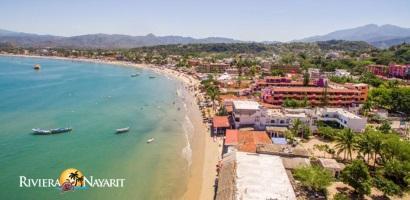
Nuevo Vallarta has become the twin destination for Puerto Vallarta, yet has its own personal charm. Ultra-modern hotels surround the extensive beaches, offering remote, yet accessible paradises where one can stay and relax, whilst taking a boat trip on the lagoon, sometimes accompanied by dolphins.

The fishing villages of Las Animas, Quimixto, Majahuitas and Yelapa are found along the southern coast of the Bay of Banderas. All of which offer a seductive invitation for boat trips to tropical beaches.

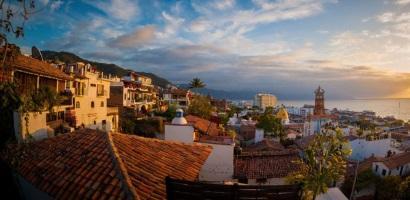
In Vallarta, you'll always find something new to while away your time in some enjoyable form.


REPORT

41Enchiladas, homemade salsa, fish tacos, deviled shrimp, green chile ribs, and deep, dark mole like only a Mexican grandma can make – these are just a few of the traditional dishes Chef Miriam Flores teaches in her popular Puerto Vallarta cooking classes.

book0716

For those of you in La Cruz, you noticed that Friday was promotion day at the Elementary School (grades 1-6). For many students completing grade 6, they and their families will choose not to continue the child's schooling, even though the government has mandatory education through grade 8.

If you're a regular reader of these Amigos blasts, you know about Carmen Tapia. As a retired bilingual Reading Recovery teacher from Tucson, she has volunteered her time and energy in working with the La Cruz elementary school students. Carmen's goal is that children in the first and second grade, will be able to read and write Spanish at grade level by grade three.

Through donations from her former Tucson elementary school, and through the generosity of those who have read about Carmen and her work, she has acquired library books, rugs, chairs, tables, individual white boards (she needs more), and the list goes on. But in this struggling rural school, there is little furniture and books provided by the government. There is so much more to do.

Carmen is beginning to make change, but it takes significant dollars and materials to help not only her classroom, but those classrooms of the other teachers. There are over 400 students in the AM session, and 200+ in the PM session. Teachers try to do their best, but they have no books and no materials to work with - they rely on the kindness of others.

And as you may know, there are children coming into Carmen's classroom during recess - just to read books from her library. Even some of the fifth and sixth grade students want to visit Carmen's classroom, the library. Carmen wants to keep the books and room clean.

When she meets the children at the door, each one of the children knows the rules, and shows that they have washed their hands before they enter the room. And children take off their shoes if they are sitting on a rug.

Here are Carmen's words:

Library Books

I would like early chapter books that have some drawings intertwined with the story, they will be a good addition for the coming school year, these early chapter books would ease the transition into higher level reading for the children who have passed to third grade or higher.

I would like Fables with some kind of drawing that would introduce them to a new genre while providing a moral teaching and good values for students to reflect upon.

Reading Program

I’m a retired teacher from the State of Arizona with a Reading and Writing Endorsement as well as Reading Recovery training. In November 2014, as a volunteer, I started a Reading and Writing program at the elementary school in La Cruz de Huanacaxtle, Nayarit, Mexico.

This is a school with a low socioeconomic level population where some of the parents can’t read or write. The goal of the program is to target first and second graders with a two-year intervention program which will get them reading and writing at grade level by third grade.

This year 41% of the second graders reached this goal or higher, the more successful students started the program knowing only 33 letters of the alphabet in November 2014 and exhibited conduct problems; they finished second grade in June 2016 reading at fourth grade level with better than average behavior.

To get better results we need specific tools to help us increase our success rate. Next school year we are faced with 10 students coming to second grade that do not know the alphabet.

To be successful, our program needs books for teacher instruction. These are leveled books in packs of 6, each title specifically uses guided reading. Each packet gives us pre- and post tests to measure success.

The cost of this collection from Scholastic is $2,135.95 US Dollars.
Guided Reading en Español.
Complete set.
Levels 1-12; Supplementary Collection…..$2135.95
item # NTS966911
ISBN 9780439669115
Scholastic The Teacher Store

Thanks for caring for the education of our less advantaged students.

How can you help?

If you can bring books for the library to La Cruz, great!
If you can mail books to an Amigo to bring down - please let us know.
If you can donate money for Carmen to purchase the Scholastic Collection or purchase library books - that's all wonderful.

Any help is appreciated.

If you'd like US Tax Credit, please donate through Banderas Bay Charities, Inc.

If you'd like Canadian Tax Credit, please donate through Canadian Children's Shelter of Hope Foundation.

If you'd like Mexican Tax Credit, please donate to Amigos de La Cruz de Huanacaxtle, A.C. We do have donatario status.


VALLARTASOURCE


REPORT


tumblr ncij94cDTO1rnvzfwo1 1280

TURN ON TALK RADIO, cruise around the internet, pick up a newspaper — you would think there’s nothing more to Mexico than psycho narcos, dirty government, and illegal immigration. Throw in Donald Trump, and the country’s PR just can’t catch a break. Mexican art? Didn’t that peak with Diego Rivera? And how about Mexican literature?

Ask anyone at the next dinner party you attend to name a prominent Mexican literary novel — it can’t be a work by Carlos Fuentes, and make it clear that Malcolm Lowry’s lugubrious Under the Volcano doesn’t count. Those versed in translations du jour might list Roberto Bolaño (although he was actually Chilean) or Valeria Luiselli (the latter has cred even though she’s half Italian). Now, mention Laura Esquivel’s Like Water for Chocolate. Ah, yes. That will likely get some relieved nods. The book not only sold millions worldwide, but it was also made into a sexy, award-winning movie, ensuring its memorability even for those who have not read it.

But we’re talking about Literature with a capital L, and Like Water for Chocolate contains recipes. We know where novels with recipes go: The WFG (Women’s Fiction Ghetto). Especially a bittersweet story like this one. It’s true. The book is bittersweet. It’s the sweet, I believe, that made it a best seller and a book club favorite. But it’s the bitter, I’m certain, that makes Esquivel a significant writer.

Laura Esquivel can be extremely playful. She delights in life’s small pleasures (warm tortillas, a stolen kiss), and her satire and sense of the absurd are laugh out loud funny — these qualities make her an indulgence to read. But she is also a rough writer who does not play nice with her characters. Her latest novel may be her roughest yet — this is saying a lot since her body of work is liberally doused with episodes of infanticide, rape, and murder. Pierced by the Sun happens to contain all three.

For the book’s protagonist, a Mexico City policewoman named Lupita, the hardships began when she was a young girl. She was raped by her stepfather, and soon after, she started drinking. “Alcohol became her best ally, her passport to freedom. It gave her access to a world where the fear of being seen, of being touched, of being raped again did not exist.” Unfortunately, the drunkenness that “offered her an excellent alternative to being herself without actually dying” catapulted her into prison after she killed her toddler son in a horrible, tragic accident.

Years later, having served her sentence, Lupita is a recovering alcoholic working for the Iztapalapa district police force. When the delegado of her district is very publicly assassinated, she is the only one to see the face of a man who might be the killer. But how did he do it? The delegado’s throat was slashed, no one was standing close to him when it happened, and there is no weapon. There is only Lupita’s gut instinct as she remembers the man waving to the delegado at the exact instant of the attack. Aggravating the anguish of holding the dying delegado in her arms, Lupita wets her pants — a humiliation captured by TV news cameras.

Judging from all of Esquivel’s books, she respects body fluids, she reveres the four elements, and she finds particular satisfaction in bringing them together to explore greater cosmic unities. The night of murder, as Lupita washes her pants, stained with her urine and the delegado’s blood, she thinks, “This combination of fluids would travel through the drain in unison and the water would contain the memory of them both.” This saddens her because she “didn’t want to remain in the water’s memory under such conditions.”

This sort of musing is common for Lupita. She is rooted in domestic traditions and the Earth’s balance. The connection between the two is another recurring motif for Esquivel, and it’s used in a very literal way when the delegado is killed. Two hours earlier, Lupita noticed a deep crease on his collar. Holding him as he dies, she observes that the wrinkle is gone. She knows he hasn’t had time to go home and change his clothes, and she is sure this wrinkle situation is important. It is doubtful that anyone else would have made this observation, but for Lupita, it was “as if removing wrinkles were her way of setting the world straight […] Ironing was an act of annihilation.”

Each chapter heading in the book offers a description of Lupita, and many of them play with her deep-seated enjoyment of stereotypically feminine activities: “Lupita Liked to Iron,” “Lupita Liked to Knit and Embroider,” and “Lupita Liked to Dance.” But Esquivel makes it clear that there are many sides to womanhood, because Lupita also “Liked to Protect” and “Liked to Deduce.” The most appealing aspect of this device is how Esquivel gives all of Lupita’s activities equal value, using each one to explore a different facet of an enormously complex woman.

She cries “for all the corn that would never grow because farmers got paid more for their crops if they planted opium poppies.” She cries “with rage over the approval of an energetic reform that opened the doors for foreign investors to take over Mexican oil.” She is a cynic and at the same time she desperately wants to believe there is a politician honest enough to save her country from thugs, electoral fraud, the cartels, and gringo drug addicts. As she slowly begins to discover that the delegado is not the honest someone she thought him to be, she hits the bottle again.

Many readers will not like Lupita. The police captain in charge of the murder investigation thinks her crudeness is refreshing, and while this may be true in a certain sense of the word, she is a mean drunk and a pain in the ass, and she makes poor decisions, over and over again. Even knowing how crummy life has been for her, it’s hard not to find her frustrating. It’s to Esquivel’s credit that she never tries to redeem Lupita. Instead, she grants Lupita’s intimate pain a dignified place to find rest in the universe.

One of the book’s most moving moments comes when Lupita recalls holding her dead son through the night:
As moonlight had entered the room through a window that was right behind her head, Lupita carefully observed how her own shadow drew a half-moon shape on her son’s face. As the night wore on, she had all the time in the world to observe how that shadow changed […] She thought that maybe Galileo Galilei had lost a child in his arms just like her, on a night just as sad as this one, and thus had discovered that only a round shape that comes between the sun and the moon can project a circular shadow, providing irrefutable proof that the earth is round and that it orbits the sun.

In many ways, Pierced by the Sun feels like the final volume in an unofficial trilogy that encompasses three of Mexico’s most transformative struggles. Esquivel’s Malinche fictionalizes the life of Hernán Cortés’s legendary Aztec mistress (considered one of indigenous Mexico’s greatest betrayers) during the Spanish conquest, and Like Water for Chocolate juxtaposes an embattled love story with the revolution of the early 20th century. Focusing on the country’s current war on drugs, Pierced by the Sun gives readers modern Mexico in stark relief.

The more Lupita learns (or the reader learns, which is not always the same thing), the more she discovers that the source behind the delegado’s murder is the battle between two opposing worlds — traditional shamans and corrupt politicians. At stake is a sacred ground containing the remains of a pre-Hispanic pyramid. Lupita uncovers a conspiracy to build a mall on this land for street vendors whose real industry is the drug trade, and whose lucrative underground business provides healthy kickbacks for local public servants.

It would be too much of a spoiler to describe how Lupita makes her discoveries and why she finds herself recovering from near death in the mountain state of Guerrero in a utopian, agrarian community. What matters is that this portion of Pierced by the Sun is the muscle of Esquivel’s beliefs. Along with novels she is the author of a small collection of essays, Between Two Fires: Intimate Writings on Life, Love, Food, and Flavor. The cover makes it look like a pleasant little book of kitchen anecdotes. Once again there are recipes, but this is no cookbook. It is a manifesto, its
philosophy best summed up in her essay “At the Hearth”:

The arrival of a new revolution is imminent, and I don’t think this time it will be from the outside in, but the opposite. It will entail the reclaiming of our rituals and ceremonies and the establishment of a new relationship with the land and the planet, with everything sacred.

Mexico, in fact, has a rich and varied literary scene, and Laura Esquivel is arguably its best-known female novelist outside its borders. So three cheers for all those recipes in her first novel, because they brought her to the world’s attention. Whether she is writing about the ancient Aztecs or Mexico City in the 23rd century, Esquivel reclaims cooking, childbirth, romantic love, respect for the rhythm of crops, traditional medicine, and everything else she believes underpins a healthy society. And with each new book she writes, our understanding of (and appreciation for) her homeland expands.

Like its protagonist, Pierced by the Sun is short, dense, odd, tough, gritty, crude, tender, and inexplicably divine. Is it Esquivel’s greatest achievement? Probably not. But it is essential to the bigger picture her work paints. With Lupita, she gives us more than just a complex woman. She gives us Mexico today.

At one point we learn of Lupita, “She had been convinced of her own worthlessness for so many years that she irrevocably placed herself below others, thus obeying an unconscious desire to feel insignificant.”

This could describe the role unfairly parceled out to Mexico on the world stage right now. But Esquivel shows us, through the simple elegance of stories that take place in kitchens, bedrooms, bars, beauty shops, and cornfields, that it’s so much more than that. Better yet, she offers hope — both for Lupita and for the country she so fiercely loves.


VALLARTASOURCE


REPORT


jala0716

For the first two weeks of August, Jala in Nayarit will present the annual La Feria del Elote (Corn Festival), a tribute to the pre-Hispanic heritage.

Located a short distance from the coast communities, Jala and Xalisco prepare a wide variety of events all with the purpose of celebrating the Corn Festival.

Said to be the home of the Guinness World Book of Records’ largest corncob, the yearly Corn Festival in Jala is a traditional and very popular local festival that honors the first harvest of corn each year.

Corn is the most important crop in the area, and some ears measure as long as 20 inches; of course the longest and largest win prizes.

The corn variety that is grown in this region is called "Jala Breed"; it is original of Nayarit and the maize plant can reach a height of 6 meters. It is an endemic species, adapted to the soil and climatic conditions of the region, where an infinity of microclimates coexist.

The food stands, mainly with corn prepared in different ways and processed products based on this grain, are set on the streets and offer a real experience to the palate.

The local cuisine, traditions, culture and the town’s colonial architecture play honorary roles and are also great reasons to attend.

Historically, pagans began celebrating earlier, but since the event is also a religious occasion that celebrates the Virgin of the Assumption on August 15, nowadays the event lasts two weeks and features regional expos, sports competitions, jaripeos (bull riding), dancing and performances in public places, fireworks, and many other family-friendly activities.

The Festival activities begin on the first of the month and conclude on August 15 with the celebration of the Virgin of the Assumption (Virgen de la Asunción).

This festival is the ideal excuse to visit Riviera Nayarit, to enjoy its traditions, culture and most typical gastronomy.

Visit Jala and Xalisco during August for a great experience in learning more about our country and one of our traditions.

       
map0814      cornA0814 


VALLARTASOURCE


REPORT

cult0716

Puerto Vallarta has a new scenario for culture and the arts with the opening of Platform 322 (Plataforma 322), a space located at Lucerna 153 in Colonia Versalles, dedicated to the promotion of activities of dance, theater, performance, music and any other manifestation of this type and can be presented with 120 people comfortably seated.

The coordinator of activities in the new forum, Melissa Castillo Caviedes, reported that the space is open to proposals from creators but for now will host the 'scenic billboard' which is the successful series of cultural activities that have been conducted for four years in the Cecatur theater.

She indicated that the "scenic billboard" has allowed us to reach hundreds of people interested in cultural activities and contributed to the formation of new audiences over the years in giving space to expressions of dance, theater, music and many other arts that they have been able to develop finding new channels of expression.

Platform 322 activities will begin this weekend. On Saturday July 9 there will be two activities: the first is a montage for children entitled "El Mundo de Luna" with the Versus dance theater company at 6:00 pm. A little later, at 9:00 pm, the duet "Los del Sur" composed of musicians Javier Núñez and Gustavo Fernández will present the recital of "Bicentennial of Independence Argentina."

Amanda Morales, director and choreographer of Versus dance, commented that "El Mundo de Luna" is a work that deals with the great imagination of Luna, the protagonist. "After hearing the news that the president condemned all flies and blowflies to jail for interrupting his speech shamefully, Luna creates three stories of how this situation can have different outcomes."

With techniques of dance and theater, puppetry and improvisation the Versus company develops a work full of color, music, movement and fun. This project, she explained, was selected as recipient of the scholarship program of Stimulus Creation and Artistic Development Jalisco 2013. This activity has a cost of 60 pesos for children and 100 pesos for adults.

Javier Nunez, of the "Los del Sur" duet said the project began in 2005 with the need to sublimate a simultaneous and shared memory that originates in music as a medium. The repertoire consists of songs by contemporary composers of Argentine music such as Carlos Gardel, Fito Paez, Charly Garcia and Gustavo Cerati. The show has a cost of 100 pesos.

Platform 322 will also offer a summer course from July 18 to August 12, 9:00 am to 2:00 pm, for children eager to learn through fun experiences. There will be activities in music, dance, theater, painting, juggling, storytelling and movies will be made. For more information, telephone (322) 225-4125 or visit Platform 322 on Facebook.


VALLARTASOURCE


REPORT

visitas estero el salado 54243caaa1965

Estero El Salado invites you to join them and come aboard "La Aventurera" for a guided tour of our estuary.

We offer schools, locals and visitors the opportunity to experience and enjoy one of the most productive ecosystems with conducted guided tours of about an hour and a half on board "The Adventurer."

During the tour you can enjoy the sighting of the fauna that inhabits the Estero. Each tour offers new and different discoveries so we suggest you come back and experience the tour again and again.

We are located in the center of Puerto Vallarta on Avenida Francisco Medina Ascencio, and our entrance is just across the street from the Naval Hospital. You can get here by public transportation or if you are driving we have plenty of on-site parking.

The tours through El Salado estuary are led by a biologist, traveling about one kilometer on the “La Aventurera” boat from which visitors will be able to observe the great diversity of wildlife, the 3 species of mangrove and their main features. You can also climb the watch tower, from which you can view all the Protected Natural Area.

Duration of the tour is 2 hours and take place on Tuesdays, Wednesdays, Thursdays and Fridays at 9:00 & 11:00 am and 1:00 and 3:00 pm. Saturday tours are 9:00, 11:00 and 1:00.

We recommend that you wear comfortable clothes and footwear, a cap or hat, biodegradable insect repellent, bring a bottle of water, camera and/or video.

For more information and reservations, telephone (322) 201-7361 or 175-7539 (also active with whatsapp). Email is This email address is being protected from spambots. You need JavaScript enabled to view it..

Not only is this a fun adventure where you will have the opportunity to meet with different species of birds, crocodiles and iguanas, your donation helps to preserve our natural habitats of Estero El Salado.

elsalado0712


VALLARTASOURCE


REPORT

enjoy0815

If you are looking to improve your Spanish skills or simply polish what you have already learned … Please be informed that Enjoy Spanish is organizing a series of Spanish language classes in Puerto Vallarta, Mexico again! This unique comprehensive class will cover all grammar concepts (all tenses and modes, prepositions, pronouns, and everything in between) from the beginner to advanced level, with a strong emphasis on conversational skills.

This course, complementary to your experience in Mexico, is a catalyst to achieving Spanish proficiency!

We are offering:

Programs A (Intensive) / July, August, September 2016

4-week intensive packages for July, August & September 2016, beginning the first Monday of each month and ending the last Thursday of each month. Classes will be held four times per week from Monday to Thursday from 9:00am-12:00 noon (12 hours per week, 48 hours total). Location of classes: 305 Mina st., Downtown of Puerto Vallarta.

• Group class with a maximum of 8 students
• 4-week package (12 hours weekly / 48 hours total)
• Class Monday-Thursday from 9:00am-12 noon
• Total cost per student: $420.00 USD or equivalent in Mexican pesos.

Programs B (Semi-intensive) / July, August & September 2016

4-week intensive packages for July, August & September 2016, beginning the first Tuesday of each month and ending the last Thursday of each month. Classes will be held three times per week, Tuesdays, Wednesdays and Thursdays from 3:00pm-5:00pm (6 hours per week, 24 hours total). Location of classes: 305 Mina st., Downtown of Puerto Vallarta.

• Group class with a maximum of 8 students
• 4-week package (6 hours weekly / 24 hours total)
• Class Tuesdays, Wednesdays and Thursdays from 3:00pm-5:00pm
• Total cost per student: $240.00 USD or equivalent in Mexican pesos.

Programs C (Semi-intensive) / July, August & September 2016

4-week intensive packages for July, August & September 2016, beginning the first Tuesday of each month and ending the last Thursday of each month. Classes will be held three times per week, Tuesdays, Wednesdays and Thursdays from 1:00pm-2:30pm (4.5 hours per week, 24 hours total). Location of classes: 305 Mina st., Downtown of Puerto Vallarta.

• Group class with a maximum of 8 students
• 4-week package (4.5 hours weekly / 18 hours total)
• Class Tuesdays, Wednesdays and Thursdays from 1:00pm-2:30pm
• Total cost per student: $200.00 USD or equivalent in Mexican pesos.

Enjoy Spanish is the #1 rated Spanish language school in San Francisco (as reviewed on Yelp), and is now expanding to Puerto Vallarta.

The classes will be held by our teacher and representative of Enjoy Spanish, Javier Navarro from Guadalajara, Mexico and our teacher Alain Patiño from Venezuela. They are great teachers with high knowledge of the language and with a very interactive and dynamic style of teaching.

Please visit us at Enjoy Spanish to learn more about our methodology and style of teaching, and our school and also please be welcome to visit our Facebook page: “Enjoy Spanish in Puerto Vallarta”

If you have any questions, please feel free to e-mail us at This email address is being protected from spambots. You need JavaScript enabled to view it.. Note: Please provide your level in the Spanish language in order to organize the groups properly.

Come and Enjoy Spanish with us!


VALLARTASOURCE


REPORT

jazz0716

  • The Jazz Foundation will host an extension of the great Jalisco Jazz Festival.

The Puerto Vallarta Jazz Foundation has established itself as a major cultural center in its first year of life and has managed to strengthen strong links with the finest exponents of jazz in Mexico with the Festival of Riviera Maya and now with the Jalisco Jazz Fest.

The Jazz Foundation continues to celebrate its first anniversary of life. The "Jazz Club on the Beach" announces that it will host an extension of the Guadalajara Jazz Festival during the month of July.

The Jazz Foundation has made an important work to promote jazz linkage between the local and foreign community, and begins to reap what it has sown over the year.

The extension of Jalisco Jazz Festival is no minor thing. TJF will host a pair of concerts: The first will be with Sara Valenzuela and "The Outsiders" on July 8 and July 9, to make way for "Federico Sanchez" and the band "Guacamole" (Veracruz), on July 28 and July 30.

Speaking of jazz in Mexico means talking about Sara Valenzuela, a woman who over many years has put up the name of this genre, both in her work as vocalist and musician, broadcaster and cultural promoter. Sara Valenzuela, with Gilberto Cervantes, will give life again to the Jalisco Jazz Festival.

As usual, the festival not only offers interesting concerts where musicians from different parts of the country will share the stage with international artists, but also a number of educational exchanges and talks with clinics for musicians and assistants. This year's edition of Jalisco Jazz Festival will be held in the city of Guadalajara from July 28 to August 7, premiering major venues such as the Palace of Culture and Communication (Palcco) scheme. But the best part is that the Jazz Festival will get its feet wet in the waters of the bay and move to the best forum in the city, The Jazz Foundation.

After the successful opening ceremony where awards are given to all local and foreign musicians who have sown the seeds of jazz in the city and includes a special recognition of "Cuates y Cuetes" which was the prelude to the Jazz for years in Puerto Vallarta.

You won't want to miss the Jalisco Jazz Festival and the celebrations of the first anniversary.

The Jazz Foundation is located in Downtown Puerto Vallarta on the Malecon at Allende 116. Telephone is (322) 225-7894. For more information, visit The Jazz Foundation on Facebook.


VALLARTASOURCE


REPORT