Started selling bulbs cost 40 cents but will make $ 1
In 1877 he invented the phonograph
While at school said it was not good for studies, he became a prolific inventor
 MEXICO CITY (17/OCT/2012.) - In Valencia, Spain still exhibiting signs of outbreak that invented the American scientist Thomas Alva Edison, who died on October 18, 1931, and since Sept. 1 have prohibited production in the European Union.
In a text published on the web site "lift-emv.com" recalls that the inventor is first turned a light bulb on October 21, 1879 in his lab, that would change the history in the world for over a century .
In Valencia you can see traces of publicity that highlighted the benefits of this lighting system, but because it wastes 95 percent of the energy consumed in the European Union was not produced since 1 September.
Thomas Alva Edison was born on February 11, 1847 in the state of Ohio, son of Samuel Ogden Edison and Nancy Matthews, who emigrated from Amsterdam, Holland, to 1831 and settled in New Jersey.
His grandfather John fought during the War of Independence of the United States in favor of the British and finally took refuge in Nova Scotia. Then moved to Bangham, Canada, but a rebellion in 1837. Samuel joined the insurgents and fled to the United States.
According to information published in their lives portals "wikipedia.com" and "biografíasyvidas.com", in 1840 the Edison established a lumberyard in Milan, Ohio. Nancy had seven children, three of whom died at the seventh was called by an ancestor Thomas Alva Alva after the captain Bradle.
In 1855 Edison went to school, but his teacher called him a "sterile and unproductive." His mother managed to awaken their intelligence and the miracle happened when I gave the book "School of Natural Philosophy" by Richard Green Parker.
Thomas was fascinated by the book and wanted to perform all experiments. Aided by his mother, he installed a small laboratory be convinced inventor. At 12 he considered making money with his inventions.
In 1859 he began selling newspapers in the morning train running from Port Huron to Detroit, and vegetables, butter and blackberry. There he met the reading room of the Youth Association and read every book in the lower shelf.
He tried different experiments from scientific books. An empty wagon used as a laboratory and put a hand Tamper with a friend the "Detroit Free Press". The result was the "Grand Trunk Herald", pulling 400 copies weekly.
Then Edison served as telegrapher and in his free time researching. In Boston built an apparatus for recording votes and offered it to Congress, where it was deemed so perfect that was accepted.
The inventor swore to be innovative, practical and cost effective. Formed a partnership and went to work. He perfected the telegraph machine and invented an apparatus for transmitting the oscillations of securities.
In addition, he helped build the first typewriter and gave practical application to your phone through the adoption of the carbon microphone. His name became known, his inventions already reported benefits.
He bought equipment and hired workers, who were paid by the piece, giving positive results. At age 29, when he bought land in Menlo Park, New York, built a new workshop and home. He married in 1871 to Mary Stilwell.
Locally focused on a new device to record sound vibrations, an old idea but no one had been able to reproduce. In 1877 created the device and everyone heard a song he had sung one employee minutes before.
Thus was born the phonograph. But it was not all victories, many of its investigations ended in failure, but always kept trying. In 1879, the challenge to achieve and maintain a light bulb long time.
Edison found carbonized bamboo filament and displaying his pragmatism, set up a workshop for manufacturing the same bulbs, and began selling at 40 cents, although it will cost more than a dollar.
This increased demand and managed to produce large-scale, reduced costs to 37 cents: the business began to go smoothly. His fame spread throughout the world. After the death of his first wife visited Europe and was well received.
Returning to the United States created several companies, his inventions were patented and immediately exploited. His only concern was his health, for not making weight, was irregular in his meals, went to bed late and got up early, never made sport.
In the 1920 polls appointed him as the greatest man in the United States. Edison earned about $ 30 million a year, equivalent to the national wealth for a period of half a century.
In 1927 he was elected to the National Academy of Sciences and President Coolidge delivered the engraved gold medal by Congress. He was 84 when an attack of uremia struck his last energies on October 18, 1931.
[readon1 url="http://www.informador.com.mx/tecnologia/2012/411853/6/thomas-a-edison-revoluciono-el-mundo-con-su-bombilla.htm"]Source:www.informador.com.mx - October 24, 212 Translation by Suyapa Ajuria[/readon1]






 Attendees of the 15 cemeteries in Puerto Vallarta, will be reassured, because it will ensure cleanliness - larval control, and widespread spraying to avoid the presence of dengue, says the Director General of Public Health, Ministry of Health Jalisco, Bernardo Carrillo Barocio , adding that will be about 80 people in charge of the unit and others to join the City Council, in charge of making this consolidation, "space sprays" and Distribution larvicides in water tanks:
 While Coca-Cola not responsible for the complex problem of obesity, the company focuses its efforts to protect the health and welfare of consumers, said the president of Coca-Cola of Mexico, Brian Smith.
 MEXICO CITY (20/OCT/2012.) - Researchers at the National Institute of Cardiology "Ignacio Chavez" (INC), determined that the "protective" for cardiovascular risks of high density lipoprotein (HDL by its acronym in English) , is related to its structure and composition.
 (CNN) - Like most teenagers, growing up, I had many questions about sex, but you do not really want to ask my parents. No I wanted to ask anyone anything.

 System successfully presiding DIF María del Refugio Gomez de Cervantes, in coordination with the company Vallarta Adventures, gave a dolphin assisted therapy to 16 children between 2 and 15 years of age, who have a disability .
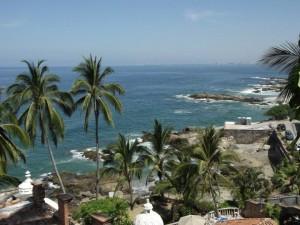
 After laying 50-200 eggs in a hole she makes in the sand (usually under cover of darkness)
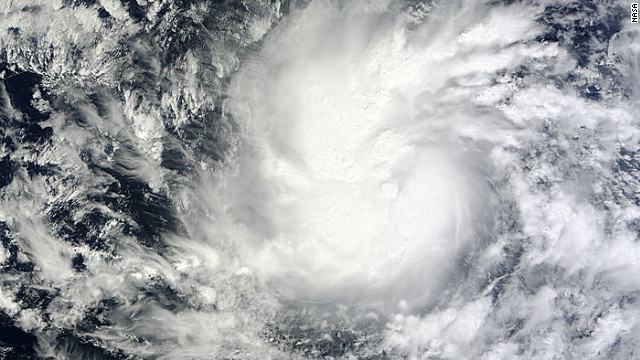 (CNN) -- The government of Mexico issued a hurricane warning Monday for parts of the west coast of Baja California as Hurricane Paul became a major storm, the U.S. hurricane center said.