

spaceshuttleLos Angeles residents have been turning out to watch the US space shuttle Endeavour as it inches through the city on a giant trolley, bound for a museum.

The spacecraft that once reached 17,000mph (28,160km/h) is trundling down the city's famously low-level boulevards at a stately 2mph.

"It's pretty neat to see a spaceship in the street," a spectator told local TV.

Endeavour began its 12-mile, two-day journey on Friday and is due to end up at the California Science Center.
Continue reading the main story    
Shuttle trip times

The 75-ton spacecraft entered service in 1992, making 25 trips, logging 123m miles and circling the globe almost 4,700 times.

Replacing Challenger, which was destroyed in an accident in 1986 that killed seven astronauts, Endeavour was the baby of the shuttle fleet.

Nasa took its shuttles out of service last year in order to focus on destinations beyond low-Earth orbit, such as asteroids and Mars.

The three other surviving shuttles are already in museums or will be eventually

spcaceshuttle1Bridge crossing

The Endeavour crosses the Interstate 405 highway, 12 October The Interstate 405 crossing was one of the big challenges of the trip

For its trip across Los Angeles, it has been placed on a 160-wheeled carrier which is being guided by remote control.

The shuttle set off on Friday from Los Angeles international airport, where it arrived three weeks ago aboard a specially equipped Boeing 747.

After an early bumpy ride, it was backed into a shopping centre car park in the city's Westchester neighbourhood as crowds cheered.

Janet Dion, a family therapist from nearby Manhattan Beach, marvelled at the shuttle, its exterior weathered by its space missions.

"You can sense the magnitude of where it's been," she told the Associated Press news agency, looking at the heat tiles which had protected the craft on its returns to Earth.

Around midnight local time (07:00 GMT Saturday), Endeavour crossed a bridge over the Interstate 405 highway, an especially difficult part of the complicated journey because of the size of the shuttle and width of the bridge.

For the bridge manoeuvre, crews spent hours transferring the shuttle to a special, lighter towing dolly, which was then pulled across by a pickup truck.
'Inspirational'

Four hundred trees had to be cut down to make way for Endeavour's wingspan. The city has promised to plant 1,000 replacements.

Power lines have also been raised and traffic lights pulled down but some stretches of the 12-mile journey are still a tight squeeze.

Former shuttle commander Mark Kelly, who captained Endeavour's final flight, said he hoped the spacecraft would become an inspiration for future generations of astronauts.

"Maybe some day one of these kids that see Endeavour, look up at it at the California Science Center, will be that person that walks on the planet Mars?" he told US broadcaster CNN.

[readon1 url="http://www.bbc.co.uk/news/world-us-canada-19935264"]Source:mexico.cnn.com[/readon1]

chiletemblorSANTIAGO - A moderate earthquake struck Chile's central region on Thursday afternoon, causing buildings to sway in capital Santiago though there were no reports of injuries, damage to infrastructure or disruptions in the country's massive copper mines.

The tremor hit 43 miles northeast of Santiago at a depth of 50.9 miles, according to the U.S. Geological Survey, which downgraded the quake to magnitude 5.5 from an originally reported 5.7.

World No. 1 copper producer Codelco said its nearby mines were operating normally after the quake, as was global miner Anglo American Plc's south-central Los Bronces copper deposit, a union leader told Reuters.

"Everything is calm. Everything is operating normally," Jose Navarro, a union leader at Los Bronces told Reuters.

Seismically-active Chile was battered in February 2010 by an 8.8 magnitude quake and ensuing tsunami, which caused billions in damage and killed hundreds.

In Thursday's quake there were no reports of injuries, disruptions to basic services or infrastructure damage, the country's emergency office Onemi said.

Cell phone lines, however, appeared to be down and alarmed shoppers left malls following the tremor, according to local radio. Following a strong quake, cell phone lines typically clog up as concerned residents call relatives and friends.

The quake did not meet the conditions needed to trigger a tsunami, Chile's navy said.

[readon1 url="http://news.yahoo.com/magnitude-5-5-quake-jolts-central-chile-no-191223564--finance.html"]Source:news.yahoo.com [/readon1]

tequilastartmexico

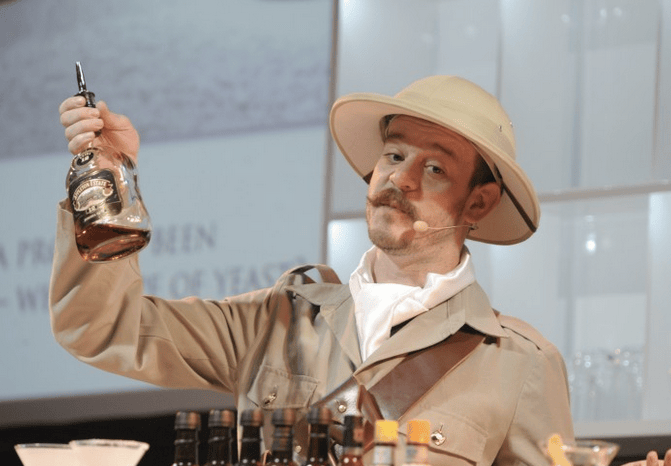
On October 9 and 10, Mexican tequila and mezcal were at the main stage of Germany and Central Europe’s largest beverage and spirits tradeshow at the Postbahnhof in Berlin, Germany. The architecturally exquisite venue was filled with mixologists and beverage connoisseurs from around the world, and Mexico was honored to have been chosen the guest country at this year’s Bar Convent Berlin (BCB).

At the Mexico Pavilion, hundreds of Europeans enjoyed tastings of tequila and mezcal. In the evening of October 9, the Mexican Embassy in Berlin also hosted a cocktail reception with the theme “Mexican Night” where Mexicans in Germany and friends of Mexico continued celebrating the wonders of Mexico’s exquisite beverages.

Germans and other Europeans met the masters from Oaxaca and Guadalajara, and watched them make phenomenal drinks, while also learning more about Mexican tequila and mezcal. Tequila and mezcal are differentiated by the production process, taste, and location where the agave is grown. The different types of tequila include blanco, gold, reposado and añejo, where the difference among them is established by the amount of time they are aged in barrels. Mezcal is mainly made in Oaxaca, while tequila is made in Jalisco. Although they both come from the agave plant, the variety of the agave differs. In addition, mezcal is typically distilled once and tequila is distilled at least twice.  

Mexico is not only an innovative leader in the beverages sector but also a leader in commercial trade. And at the Pavilion, Mexico was proud to show Europe all that it has to offer.


[readon1 url="http://mexicotoday.org/article/mexican-tequila-start-%E2%80%9Cmexican-night%E2%80%9D-coctail-recption-%9Cbar-convent-berlin%E2%8%D-germany"]Source: mexicotoday.org [/readon1]


refineriamxMEXICO CITY (AP) — Mexico's state-owned oil company reports it has found possible reserves of as much as 125 million barrels of oil at a deep-water well in the Gulf of Mexico.
Petroleos Mexicanos says the Supremus 1 well is located about 24 miles (39 kilometers) south of U.S. territorial waters, and is more than 4,000 yards (meters) deep.

The company says the area known as the Perdido belt contains prospective reserves that could amount to as much as 13 billion barrels of crude equivalent.

It notes that if proven, that would double Mexico's current proven reserves.

President Felipe Calderon announced the discovery Friday. If brought into production, the well could account for about 10 percent of the company's current daily output, which is about 2.6 million barrels per day.

[readon1 url="http://finance.yahoo.com/news/mexico-announces-big-gulf-deep-water-oil-193108581.html"]Source:finance.yahoo.com [/readon1]

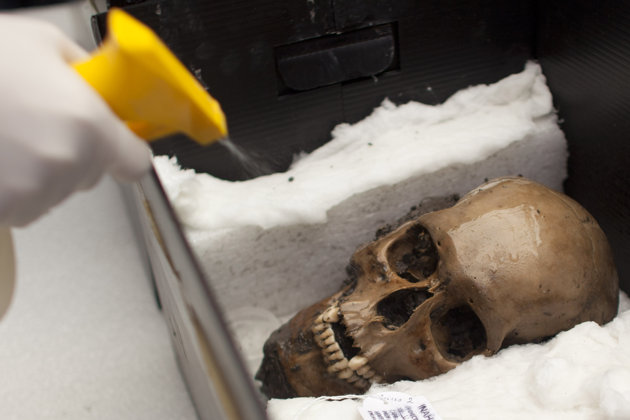
skullsMEXICO CITY (AP) — Mexican archaeologists said Friday they uncovered the largest number of skulls ever found in one offering at the most sacred temple of the Aztec empire dating back more than 500 years.
The finding reveals new ways the pre-Colombian civilization used skulls in rituals at Mexico City's Templo Mayor, experts said. That's where the most important Aztec ceremonies took place between 1325 until the Spanish conquest in 1521.

The 50 skulls were found at one sacrificial stone. Five were buried under the stone, and each had holes on both sides — signaling they were hung on a skull rack.

Archaeologist Raul Barrera of Mexico's National Institute of Anthropology and History said the other 45 skulls appeared to have just been dumped on top of the stone.

The team of archeologists unearthed the skulls and jaw bones in August. They stumbled on them as they were renovating a section of the Templo Mayor in the heart of Mexico City.

Barrera said they believe the 45 skulls were those of women and men between 20 and 35 years old and could have been dug up from other sites and reburied.

Last August, the Mexican government announced experts had found an unprecedented human burial at another spot in the same temple in which the skeleton of a young woman, possibly sacrificed personifying a goddess, was surrounded by piles of nearly 1,800 bones. Another unusual finding this summer was a "sacred tree," which looks like a battered oak trunk emerging from a well and which experts say was brought from a mountain region for a ritual.

The skulls shown to the media Friday were in good condition but cracked on each side of the head, possibly because of the wooden stake that ran through them so they could be placed in a skull rack.

Barrera said the key in the discovery was the sacrificial rock, which looks like a gray headstone.

"Underneath the sacrificial stone, we found an offering of five skulls. These skulls were pierced with a stick," he said. "These are very important findings."

University of Florida archaeologist Susan Gillespie, who was not involved in the excavation, said it caught her attention that the skulls that had been on the rack, called tzompantli, were buried separately.

"It provides rather novel information on the use and reuse of skulls for ritual events at the Templo Mayor," Gillespie said in an email.

Also, the common belief about Aztec sacrificial stones is that a person being sacrificed was killed by cutting open the chest and pulling out the heart.

"We normally associate (it) with heart removal rather than decapitation," she said. "It ultimately gives us a better understanding of how the Aztecs used the human body in various ways in their ritual practices.

[readon1 url="http://news.yahoo.com/mexico-finds-50-skulls-sacred-aztec-temple-220008197.html"]Source:news.yahoo.com [/readon1]

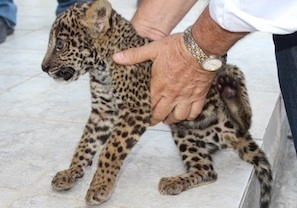
jaguarThe little animal about two months old, was taken to a secure area to provide protection, perform a physical examination and provide the care necessary for their survival.
Through the Social Communication of the City of Bahia de Banderas, confirmed the Jaguar rescue a puppy that was stolen from their natural habitat in the Sierra de Vallejo.

"Staff of the Rural Development Division of the City, located on Monday in the vicinity of the Sierra de Vallejo, a puppy of the species that have been abandoned Jaguar inside a sack by criminals who have caught allegedly with the intention market.

The little animal about two months old, was taken to a secure area to provide protection, perform a physical examination and provide the care necessary for their survival, and then be delivered to the Federal Attorney for Environmental Protection - PROFEPA-acting the final destination of the small Jaguar.

The Sierra de Vallejo is considered natural habitat of this protected species, and is also on call Jaguar Trail. It is known that around this time is when playing and predators that market with this and other endangered species, they go on their "search."

[readon1 url=" http://www.noticiaspv.com/archivo/226607"]Source:www.noticiaspv.com - Translation by Suyapa Ajuria[/readon1]

Mexico's drugs war

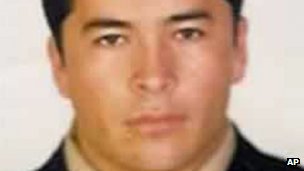
zetasTop Los Zetas drug cartel leader Heriberto Lazcano has apparently been killed in a shootout in northern Mexico, the country's navy says.
The navy said it was still awaiting final forensic results, but that the body appeared to be "El Lazca".

Lazcano, alias "The Executioner", is a founder of the notorious cartel which has been implicated in a string of mass killings and kidnappings.

His death would be a victory in the fight against cartels, say analysts.

Mexican police believe a recent surge in mass killings is due to a split within the Zetas cartel.

Lazcano is thought to be the leader of one faction, while the other is led by Miguel Angel Trevino Morales.

In the nearly six years of Felipe Calderon's presidency, almost 50,000 people are believed to have died in violence blamed on organised crime.
Forensics examination

Two alleged gang members were killed in a gun battle with the navy on Sunday in the region of Progreso, some 125km (80 miles) west of the Texan border in Coahuila state.

The navy said there was "strong evidence" one of the bodies was Lazcano.

"Information was obtained after the first forensics tests were carried out that yielded indications that suggest that one of the bodies is Heriberto Lazcano," the Associated Press quoted the navy's statement as saying.

Ivan Velazquez Caballero, 27 Sept Ivan Velazquez Caballero, known as El Taliban or Z50, was arrested last month

"The Navy Department is co-ordinating efforts with Coahuila state, and will be awaiting the conclusions of the forensics examination in the case," the statement said.

The navy has been at the forefront of operations against drug cartels.

Lazcano is suspected of involvement in hundreds of killings, including that of crusading newspaper editor Francisco Ortiz Franco in 2004.

The US had put up a $5m (£3.1m) reward and Mexico another $2.3m for information leading to Lazcano's capture.

On Monday the navy said it had arrested suspected regional Zetas leader, Salvador Alfonso Martinez Escobedo, who the navy says was behind the 2010 murder of 72 migrants in northern Tamaulipas state.

Officials say Escobedo works for Trevino Morales.

Trevino Morales, known as Z40, has a reputation for equal if not greater brutality than Lazcano and remains at large.

Police also recently arrested Ivan Velazquez Caballero, known as El Taliban or Z50.

He had reportedly been at war with Trevino Morales and was believed to have joined the rival Gulf Cartel.

Gulf Cartel head Jorge Costilla, alias "El Coss", was also captured last month.

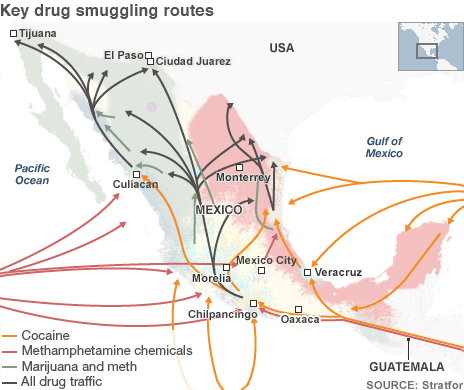
Infamous for mass killings and use of extreme violence, the Zetas control key drug-trafficking routes in north-eastern Mexico.

mexico drug routes 464map

[readon1 url="http://www.bbc.co.uk/news/world-latin-america-19879585?ns_source=PublicRSS20-sa"]Source:www.bbc.co.uk [/readon1]

cucarachasA contestant in a roach-eating contest who downed dozens of live bugs and worms collapsed and died shortly after winning the contest in South Florida, authorities say.
About 30 contestants ingested the insects during Friday night's contest at Ben Siegel Reptile Store in Deerfield Beach about 40 miles north of Miami. The grand prize was a python.

Edward Archbold, 32, of West Palm Beach became ill shortly after the contest ended and collapsed outside the store, according to a Broward Sheriff's Office statement released Monday. He was taken to a hospital where he was pronounced dead. Authorities were awaiting results of an autopsy to determine a cause of death.

The sheriff's office said none of the other contestants fell ill.
Roach Eating Contest Death.JPEGAP

Unless the roaches were contaminated with some bacteria or other pathogens, I don't think that cockroaches would be unsafe to eat," said Michael Adams, professor of entomology at the University of California at Riverside. He said he has never heard of someone dying after consuming roaches.

"Some people do have allergies to roaches," he added, "but there are no toxins in roaches or related insects."

There was no updated phone number listed for Archbold in West Palm Beach.

"We feel terribly awful," said store owner Ben Siegel, who added that Archbold did not appear to be sick before the contest.

"He looked like he just wanted to show off and was very nice," Siegel said, adding that Archbold was "the life of the party."

A statement from Siegel's attorney said all the participants signed waivers "accepting responsibility for their participation in this unique and unorthodox contest."

The bugs consumed were from an inventory of insects "that are safely and domestically raised in a controlled environment as food for reptiles."

[readon1 url="http://www.informador.com.mx/technologia/2012/409927/6/hombre-muere-tras-concurso-de-comer-cucarachas.htm"]Source:www.informador.com.mx - Translation by Suyapa Ajuria[/readon1]

colon 3

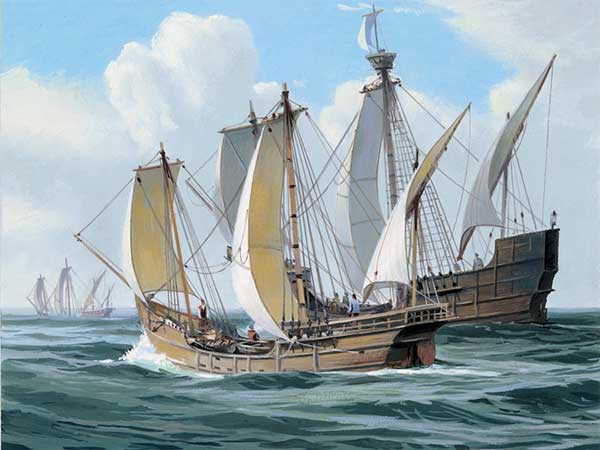
A U.S. national holiday since 1937, Columbus Day commemorates the arrival of Christopher Columbus in the New World on October 12, 1492. The Italian-born explorer had set sail two months earlier, backed by the Spanish monarchs King Ferdinand and Queen Isabella. He intended to chart a western sea route to China, India and the fabled gold and spice islands of Asia; instead, he landed in the Bahamas, becoming the first European to explore the Americas since the Vikings set up colonies in Greenland and Newfoundland during the 10th century.

Later that month, Columbus sighted Cuba and believed it was mainland China; in December the expedition found Hispaniola, which he though might be Japan. There, he established Spain's first colony in the Americas with 39 of his men. In March 1493, the explorer returned to Spain in triumph, bearing gold, spices and "Indian" captives. He crossed the Atlantic several more times before his death in 1506; by his third journey, he realized that he hadn't reached Asia but instead had stumbled upon a continent previously unknown to Europeans.
Columbus Day in the United States

The first Columbus Day celebration took place in 1792, when New York's Columbian Order–better known as Tammany Hall–held an event to commemorate the historic landing's 300th anniversary. Taking pride in Columbus' birthplace and faith, Italian and Catholic communities in various parts of the country began organizing annual religious ceremonies and parades in his honor. In 1892, President Benjamin Harrison issued a proclamation encouraging Americans to mark the 400th anniversary of Columbus' voyage with patriotic festivities, writing, "On that day let the people, so far as possible, cease from toil and devote themselves to such exercises as may best express honor to the discoverer and their appreciation of the great achievements of the four completed centuries of American life."

In 1937, President Franklin D. Roosevelt proclaimed Columbus Day a national holiday, largely as a result of intense lobbying by the Knights of Columbus, an influential Catholic fraternal benefits organization. Originally observed every October 12, it was fixed to the second Monday in October in 1971.

Columbus Day Alternatives

Opposition to Columbus Day dates back to the 19th century, when anti-immigrant groups in the United States rejected the holiday because of its association with Catholicism. In recent decades, Native Americans and other groups have protested the celebration of an event that indirectly resulted in the colonization of the Americas and the death of millions: European settlers brought a host of infectious diseases, including smallpox and influenza, that decimated indigenous populations; warfare between Native Americans and the colonists claimed many lives as well. The image of Christopher Columbus as an intrepid hero has also been called into question. Upon arriving in the Bahamas, the explorer and his men forced the native peoples they found there into slavery; later, while serving as the governor of Hispaniola, he allegedly imposed barbaric forms of punishment, including torture.

In many Latin American nations, the anniversary of Columbus' landing has traditionally been observed as the Dìa de la Raza ("Day of the Race"), a celebration of Hispanic culture's diverse roots. In 2002, Venezuela renamed the holiday Dìa de la Resistencia Indìgena ("Day of Indigenous Resistance") to recognize native peoples and their experience. Several U.S. cities and states have replaced Columbus Day with alternative days of remembrance; examples include Berkeley's Indigenous Peoples Day, South Dakota's Native American Day and Hawaii's Discoverer's Day, which commemorates the arrival of Polynesian settlers.

Columbus Day Traditions

In many parts of the United States, Columbus Day has evolved into a celebration of Italian-American heritage. Local groups host parades and street fairs featuring colorful costumes, music and Italian food. In cities and towns that use the day to honor indigenous peoples, activities include pow-wows, traditional dance and lessons about Native American culture.

[readon1 url="http://www.history.com/topics/columbus-day#a0"]Source:www.history.com [/readon1]

Under the slogan "Take care of them, Love them, Immunize on time", the DIF system and Nayarit Ministry of Health launched the National Health Day.

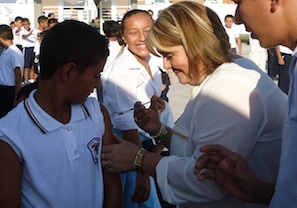
vacunarTo complete the basic outlines of vaccination in children, the Health Department of the State Government, in coordination with the municipal DIF system Banderas Bay, inaugurated the Third National Health Week, with the headquarters facilities primary school "Ignacio Allende" fractionation Alta Vela.

The start of the third National Immunization Week was led by Mrs. María del Refugio Gomez de Cervantes, president of DIF, accompanied by Dinora Costilla Galaviz White, director of the agency, the nurse Carlos Esteban Herrera Lopez, manager of Department of Health immunization ; Anareira Montoya Martinez, charged with promoting health in Banderas Bay; Yissel Hernandez Delgado, Ara Homes representative; Rodelinda Professor Mendoza Velazquez, supervisor of the School Zone 70 and Iztaccihuatl Pearl teacher Frausto, director of campus and parents.

The nurse Carlos Esteban Herrera Lopez mentioned the importance of vaccines in childhood and reported that apply Vaccine Human Papillomavirus (1st dose) to adolescents fifth grade and also apply the MMR vaccine to new children entering primary education, as well as children 6 and 7 years old.

Similarly students from sixth grade, applies a booster with diphtheria and tetanus toxoid initiated or completed the vaccination against hepatitis B. I note that it is always important to complete basic schemes (BCG, pentavalent cell, anti hepatitis B, MMR, influenza vaccine application and reinforcement of DPT.

Finally, Mrs. Refugio Gomez de Cervantes made an invitation to all parents to take their children vaccinated because the vaccines prevent serious illness and allow better development and quality of life for their children. "Seize the Third National Health Week 2012 to implement the vaccines you and your family are missing," he urged the president of DIF.

[readon1 url="http://www.noticiaspv.com/archivo/226179"]Source www.noticiaspv.com - Translation by Suyapa Ajuria [/readon1]

mayancalendarioThe Maya who developed the Long Count calendar believed the end of one cycle would simply signal the beginning of another. According to this logic, a new Grand Cycle will start on December 22, 2012. However, some people in the U.S. and Europe have come to believe that the calendar will not reset itself. Instead, they say, the end of the cycle will bring the end of the world. Some of these doomsayers claim that there is a scientific explanation for their prediction: On December 21, they say, the winter solstice and the Milky Way's equator will align. (For their part, scientists point out that the coincidence of these two events will actually have no effect on the Earth--and furthermore, without 20th-century radio telescopes the Maya could not have known that the galactic equator even existed, much less where it would be in 2,000 years.) Other prognosticators have more outlandish theories.
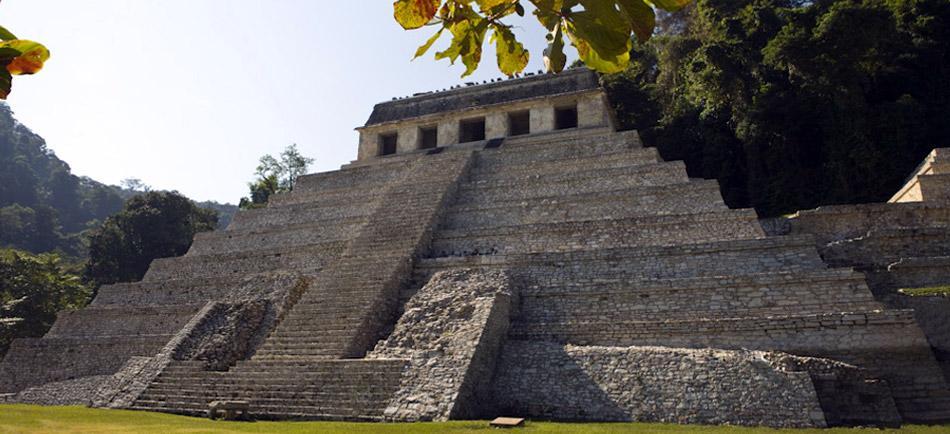
Some believe that the Maya were following extraterrestrial instructions when they developed their calendar, for instance, while others fear that aliens will use the Long Count calendar to time their takeover of our planet. Either way, this vision of the future is an unpleasant one, combining Biblical plagues like fires and floods with more cinematic catastrophes like planetary collisions, extreme global warming and mass extinction, and explosions large and small.

Today, there are more than 6 million Maya in Mexico and Central America, and very few of them are expecting Armageddon in 2012. (In fact, scholars say that Mayan communities call the end-of-the-world stories “gringo inventions.”)

[readon1 url="http://www.history.com/topics/2012 /en/archaeology"]Source:www.history.com [/readon1]

smoking2Nicotine acceleration and this reduces intestinal absorption of nutrients from food, at the same time  decreasing the senses of taste and smell

Although it is a fact that smoking slims, the real fact is that nicotine addictive element snuff, acceleration causes bowel movement and thereby reduces nutrient absorption.

The researcher of the Mexican Social Security Institute (IMSS) in Jalisco, Ruth De Celis Carrillo, said that in addition, smoking inhibits the senses of taste and smell so people tend to eat less regularly and quantity, falling into malnutrition .

She admitted that smoking slims, but only one is unhealthy weight loss that leads people to malnutrition and all adverse effects.

He explained that nicotine causes the increase of some hormones like adrenaline and estrogen,   the first resulting in feeling greater profit, while in the second and particularly in women, increases sexual appetite.

Moreover, she said, has shown that nicotine has a thermogenic effect, that is, that smokers are between five and 10 percent of elevated body temperature allowing them to burn 200 to 500 calories only by the act of smoking.

Another point highlighted the research was related to the decrease in both senses of taste and smell that develop causing smokers eat less regularly and in small quantities, which also helps to lose weight.

She noted that so far, these effects may seem positive for anyone looking to lose weight, however, reiterated, although this goal is achieved even without the proposed smoking, the reality is that it is a unhealthy thinness because there is malnutrition and risk high metabolic disorders by hypoglycemia.

In contrast, she said, most people who decide to quit experiencing weight gain partly because it regulates your digestive process and on the other, because most changes one addiction for another.

"And, that feeling of anxiety characteristic of the process of quitting, is filled by 'easy meal, highly fatten as if contained in flour and fried crackers" she said.

In fact, it has been found that the combination of fat, starch and salt, which are typical fries, "is highly addictive form reaching receptors in the brain similar to those that develop in people who use cocaine, so I say you change one addiction for another, "she said.

Given this, the interviewee said that there are alternatives to quitting decides to do so without the risk of gaining weight.

Walk, run, or do any physical exercise to fill the anxiety that ensues after leaving this addiction, is a very healthy option also allows stay slim, and if this is added to the intake of fruits and vegetables instead of chips or cookies, fatten the probability is further reduced.

She emphasized that "the harm caused by snuff not perceived until when testing as X rays or get cancer, but if you eat the evidence is clear, no weight gain and its effects are much more recognizable to the naked eye ".

[readon1 url="http://www.noticiaspv.com/archivo/226199"]Source:www.noticiaspv.com - Translation by Suyapa Ajuria[/readon1]