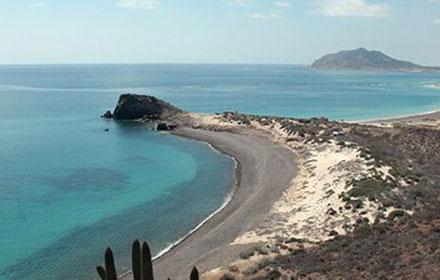
Cabo Pulmo marine reserveA Chinese-U.S. joint venture said it is halting plans to build a large tourist development in northwestern Mexico due to the “well-founded” criticism of environmental groups.

In a note published in Mexican dailies, the Rivera Desarrollos BCS joint venture made up of China’s Beijing Sansong International Trade Group and U.S.-based Glorius Earth Group said it would immediately end an environmental-impact study of the Cabo Dorado project in Baja California Sur state.

The goal is to resume this procedure in the near future with a new project “that meticulously takes into account the well-founded criticisms that have been expressed and which we’ve listened to carefully and with the utmost respect,” it said.

Numerous environmental groups have urged the Mexican government in recent weeks to halt the project, saying it would pose a severe threat to the Cabo Pulmo marine reserve.

The $3.6 billion project was to have included construction of 22,503 hotel guestrooms in the same spot where another giant development project, Cabo Cortes, had been planned.

Mexico’s government canceled that earlier project in 2012 over environmental concerns.

Cabo Pulmo is a 7,111-hectare (17,550-acre) marine reserve that boasts the best-preserved coral reef in Mexico’s Pacific region.

Rivera Desarrollos BCS said its goal “is to achieve a project that benefits the area and fosters better care of the fundamental characteristics of nature and the environment.”

Friends for the Conservation of Cabo Pulmo, the Mexican Center for Environmental Rights, Wildcoast and Greenpeace, among other groups, argued that Cabo Dorado would create a settlement of 440,000 inhabitants with a water demand of 50 million cubic meters (1.76 billion cubic feet) annually and put Baja California Sur’s water security at “serious risk.”

The project also would affect the health of Cabo Pulmo’s coral reef system, according to scientific studies cited by the NGOs.

[readon1 url="http://www.hispanicallyspeakingnews.com/latino-daily-news/details/controversial-plans-to-develop-mexican-region-for-tourism-is-halted/30126/"]Source:www.hispanicallyspeakingnews.com[/readon1]

ArnieWeissmann-new1I first met Claudia Ruiz Massieu, Mexico's secretary of tourism, 11 months ago, when she had been on the job for about seven months. We discussed a surprisingly detailed list of initiatives she was proposing:

• Extending tourism from Cancun and the Riviera Maya to the Mayan and colonial sites in Yucatan, Chiapas, Campeche and Tabasco, beginning with new rail service from the Riviera Maya to Merida, including a stop near the ruins of Chichen Itza.

• Rebranding two Pacific coast destinations in need of a boost -- Puerto Vallarta and Riviera Nayarit -- as "Vallarta Nayarit."

• Facilitating a "tourism cabinet," comprising herself and nine other federal secretaries, chaired by Mexican President Enrique Pena Nieto. The group would convene regularly to identify opportunities to grow tourism in areas of overlapping ministerial responsibility. Tourism would be viewed as a strategic platform to generate jobs and spur economic vitality, not only in established resort centers but in interior towns that are rich in culture but far from beaches.

Her plans were linked philosophically with the policy platform of her political party, PRI. Each initiative emphasized helping raise the standard of living for citizens and strengthening communities, as opposed to underscoring business-friendly aspects.

I felt Ruiz Massieu's plans reflected creativity, ambition and no small degree of boldness. Articles I had read prior to our first meeting had left me with the impression that she did not have much direct experience in tourism or private enterprise but was politically savvy and moved carefully. I was impressed by her understanding of what drives tourism; it seemed she was, in the very best sense, a policy wonk, seeking practical solutions compatible with a political position.

Still, I wondered if the boldness of the plans would create problems. Her reputation for being politically savvy notwithstanding, could this be a case where tactics that look good on paper become difficult to implement in practical terms?

Could the government of a country as diverse and politically charged as Mexico, even with its president's direct involvement, agree on details involving infrastructure that might move the needle for tourism vs. competing cabinet-level priorities? Would touristic ambition withstand government turf wars and bureaucracy?

And would elements within the business community view the benefits of the initiatives as coming at the expense of existing enterprises?

Indeed, challenges surfaced almost immediately. As a group, hoteliers in Cancun and the Riviera Maya opposed the rail line, worried that its proposed port city origin might turn the region into a cruise homeport, filling airplanes with visitors who would simply leave on a cruise, or would spend their port time taking rail-enabled day trips to Chichen Itza. Some wholesalers and hoteliers who did business on the Pacific coast seemed open to the concept of Vallarta Nayarit, but others complained it was "too much to explain."

Mexican presidents are limited to a single six-year term. Whatever plans and dreams they and their cabinets have must be accomplished within that window. Today marks, exactly, the end of the first quarter of the Pena Nieto administration.

Ten days ago, I met with Ruiz Massieu again for an update. This time, she seemed more comfortable, confident and relaxed in her role, and as she reviewed her ministry's recent activity, I began to understand why. She has some significant victories under her belt.

First and foremost, a bottom-line victory: Year-over-year tourism revenue increased 15% in the first trimester of 2014, a period she can justifiably claim as her own. During the 18 months she has been in office, tourism has moved from fifth to fourth place as a contributor to Mexico's economy.

There has also been significant movement toward her policy goals. The president's recently announced five-year, $590 billion infrastructure plan earmarks about $18 billion directly for tourism, and Ruiz Massieu said that, through the tourism cabinet, she had found areas of additional common ground with other secretaries.

For example, colonial cities will be among the first in which utility lines will be moved underground, which will both modernize and beautify historical sites. Linkage was also established between the need for medical care for citizens and the importance of medical facilities for tourists.

The tourism cabinet also reviewed and swiftly changed aspects of passenger flow through airports with an eye to minimizing the time passengers spend in arrivals hall. In the past, all incoming luggage was X-rayed. Then passengers were asked to press a button that, if randomly showing red rather than green, would lead to further screening.

Today, instead of X-raying all incoming luggage and then having passengers press the button, only those whose button-pushing triggers a red light will need to have their bags X-rayed.

She said she is also working with other ministers to eliminate the roadblocks that prevent customs pre-clearance for American citizens leaving Mexico.

The origin of the rail line was moved to Cancun, and all the details of the project have now been finalized and approved, she said.

And the Vallarta Nayarit campaign proved doubters wrong, resulting in the addition of more than 100,000 air seats into the region since the ads began. The jump in visitors there in the first quarter of 2014 increased tourism spend by $40 million.

In short order, Ruiz Massieu appears to be living up to her advance billing as a politically savvy minister.

Careful too, perhaps, but apparently keenly aware that the clock is ticking.

Stay tuned as the second quarter of her term begins.

[readon1 url="http://www.travelweekly.com/Arnie-Weissmann/Mexicos-first-quarter-score/"]Source:www.travelweekly.com[/readon1]

sbpvSix SMBs (Small and Mid-Sized Businesses) in Banderas Bay contributed to the sustainable tourism of the area and the improvement of their employees’ living conditions, which was reflected in the socioeconomic and environmental results from their participation in a pilot program founded by the International Labour Organization (ILO).

Six SMBs from the Riviera Nayarit’s tourism sector participated in the implementation of a pilot project by The Regional Programme for the Promotion of Formalization in Latin America and the Caribbean (FORLAC) created by the regional office of the International Labour Organization for Latin America and the Caribbean (OIT), among them: Rancho Nuevo Los Pinos, El Chivero, Hotel Canadian (in Bucerías), Original El Anclote (in Punta de Mita), Osos Oyster and Sandzibar (in La Cruz de Huanacaxtle).

The premise of this five-month project was to guarantee an increase in productivity among the participating businesses in order to create a virtuous circle that would create better conditions for the workers and allow them to enjoy the benefits they are entitled to by law as formal, or full-time, employees.

The participating SMBs made significant advances using the System for Integrated Measurement and Improvement of Productivity (SIMAPRO) methodology, part of the ILO’s strategy for the promotion of sustainable enterprises.

There were 216 proposals for improvements: 48% were economic, 46% social and 6% environmental in nature. For starters, the work environment improved by 6 points per their rating system.

Sales increased by 93% when compared to the same period of time from the previous year. Thirty-five percent of the sales were attributed to the applied methodology, and there was a half-ton (532kg) reduction in waste emanating from food processing plants.

In economic terms, the savings generated by optimizing the resources needed for food processing came to approximately $36 thousand Mexican pesos. The return on investment for the six SMBs was 266%, and 50% of the initial temporary workers became full-time employees (21 positions became full-time).


The Riviera Nayarit Convention and Visitors Bureau would like to congratulate the SMBs for completing this program and demonstrating their commitment towards their employees, their place of business, the destination and the visiting tourists.

logo engOn the 10th and 11th of June, 2014 the Puerto Vallarta Business Matchmaking Forum 2014 will be held at the International Convention Center. Jointly organized by ProMéxico ProChile ProExport PromPerú and Colombia, reported Sedeco.

The Department of Economic Development (Sedeco) Jalisco, José Palacios Jiménez. Attend The event holder Also bring together representatives from all three levels of government and representatives of the Ministries of Economy of the participating countries.

The business conference is an event held jointly by the member countries of the Pacific Alliance, whose main objective is to generate links economic with direct contacts between importers and exporters of those sectors that have been identified with greater potential for trade.
 
Pacific Alliance is a regional integration initiative formed by Chile, Colombia, Mexico and Peru, created on April 28, 2011.

Its main objectives are to build a participatory and consensual, an area of deep integration to move progressively towards the free movement of goods, services, capital and people way.

Moreover, drive further growth, development and competitiveness of economies with a view to achieve greater wellness, overcoming socioeconomic inequality and social inclusion of its inhabitants.

also aims to become a platform for political articulation of economic and trade integration and projection to the world, with special emphasis on Asia-Pacific.

The Sedeco be explained that the second edition of the Business Roundtable, which involves member countries of the Pacific Alliance; the first was held in Cali, Colombia, in June 2013.

Attendance of 240 buyers, 50 Chile, 50 Colombians, 50 Mexicans, 50 Peruvian and 40 Asians (20 Chinese ten ten Japanese Koreans) are expected. 120 Chileans, Colombians 120, 120 Mexicans and Peruvians 120 480 exporters will also be present.

9920 1Avocados from Mexico (AFM), today announced the launch of its in-store campaign “El Mejor Partido,” or “Best Game Ever,” in celebration of soccer’s biggest match. The program is designed to encourage the consumption of avocados during soccer celebrations.
 
The “Best Game Ever” campaign will run May 12 through June 30, 2014 and will target 800 high density Hispanic stores in key markets, including Texas, Chicago and various cities on the East Coast. The one-of-a-kind, fully integrated program will consist of branding, consumer promotions and in-store events. It will also highlight AFM brand ambassadors, professional soccer players, Jorge Campos and Pavel Pardo.
 
“Our goal is to reach Hispanic consumers with our avocados and share in the excitement of soccer’s biggest match,” said Alvaro Luque, president of Avocados from Mexico. “Avocados from Mexico are always fresh and always in season, working as the perfect companion for soccer celebrations with family and friends.”
 
As part of the campaign, consumers will have the opportunity to get up close and personal with Campos and Pardo, as the pair will be making various in-store appearances in select cities, including Chicago, Dallas, Houston, New York and Miami. The appearances will be supported by Spanish language radio remotes and giveaways.
 
Additionally, two lucky consumers will win the ultimate soccer experience when Campos or Pardo bring a BBQ to their home. AFM will also provide a top-of-the-line entertainment viewing kit to the two grand prize winners, complete with projector and screen.
 

[readon1 url="http://www.freshplaza.com/article/120322/Avocados-from-Mexico-Launches-Best-Game-Ever-Promotional-Campaign"]Source:www.freshplaza.com[/readon1]

blueberryAt the end of this year, Jalisco will begin exporting berries to China, after Chinese officials visited a total of nine orchards and three packing plants of red fruits in the state and Michoacán in March.

The head of Jalisco's Ministry of Rural Development (Seder), Hector Padilla, said the local government reached trade agreements with China. The agreement implies that Jalisco would start exporting blackberries and raspberries to the Asian country by the end of 2014 and blueberries by 2015.

After inspecting the production centres, the officials of the General Administration of Quality Supervision, Inspection and Quarantine of the People's Republic of China were satisfied with the Mexican berry production system.

Additionally, Jalisco is considered a power in the production of blueberry, raspberry, blackberry, blueberry and strawberry.

According to Mario Steta, secretary of the National Association of Berries Exporters (Aneberries), annual exports of strawberries produced in Mexico amount to U.S. $900 million, and the United States and Canada are their major markets, with 90% of the total foreign trade, while the remainder is sent to Europe and Japan.

Until 2013, there were 2,000 hectares of berries in the state and, according to Aneberries the production will be doubled in 2014.

According to the head of the Seder, the global demand for berries is growing as a result of an increase in consumption by the developed countries because of the fruits' nutritional qualities.

Sweet business
After pointing out that the berry production generated 20,000 direct jobs in Jalisco, the official stressed that these productions were generating intensive labour because they generated high returns on small areas and developed regional economies.

According to the state agency, strawberries have a high profitability and generate a rapid return on investment, on average in the second year. They also generate intensive labour, i.e. some 900 jobs per hectare.

"Jalisco has the ideal physical features, climate and geographical conditions to produce berries. We can get blueberries in the few months of the year in which Canada and the United States have no production."

15 companies devoted to the export of the fruits from Jalisco, Michoacán, Baja California and Colima integrate Aneberries. According to the association, the annual output of strawberries amounts to 465,000 tons and the sector generates 100,000 direct jobs per season.

[readon1 url="http://www.freshplaza.com/article/121376/Mexico-Jalisco-will-market-berries-in-China-this-year"]Source:www.freshplaza.com[/readon1]

PVTMexico’s Ministry of Tourism has reported that Puerto Vallarta had average hotel room occupancy of 8,612 rooms from January to April, 2014, 10 percent more when compared to the same period in 2013. This represents an 8 percent increase in overall hotel occupancy for the destination which had the biggest increase in hotel occupancy of Mexican beach destination so far this year. Puerto Vallarta’s International Airport (PVR) received 126,000 international passengers from January to April, 2014.

Summer hotel occupancy from US and Canada travelers is also expected to get a boost this year. Kayack.com, reported a 59 percent increase on flight and hotel searches to the destination for this past Memorial Day weekend. Fly.com also reported that the destination was placing in the top 10 destinations most searched for summer travel.

Puerto Vallarta is increasingly becoming more accessible for travelers as improvements continue to be made to the destination’s access points and infrastructure. The destination has heavily invested in renovations to seaports as well as the addition of new flight frequencies and routes.

Puerto Vallarta's natural beauty, exquisite gastronomy, superb service and people’s warmth are highlighted on the national campaign “Puerto Vallarta, Mexico’s most authentic port” through niche media and digital platforms. Puerto Vallarta’s prime location, nestled between the Bay of Banderas, one of the world’s largest bays, and the lush Sierra Madre Mountains, offers a magical and unique Mexican setting where travelers can experience the destination’s world-class infrastructure, attractions and services.

[readon1 url="http://www.eturbonews.com/46363/tourists-flocking-puerto-vallarta-over-other-beach-destinations-"]Source:www.eturbonews.com[/readon1]

mdpvThe Riviera Nayarit is so diverse it can host everything from sports events to conferences, festivals and conventions. Along with the promotions offered by the destination, occupancy has continuously hovered around 80 percent.

The Riviera Nayarit Convention and Visitors Bureau has organized and sponsored a variety of events throughout the year, events that have resulted in a rise in occupancy and income for the destination.

Holy Week and Easter have usually brought in the greatest number of tourists. This year, occupancy reached to 82% from April 12 – 17, with the highest numbers occurring during the Holy Days, April 17-20 at 90%.

The Oyster Festival at Bucerías had over one thousand attendees, and was the icing on the cake to close out the Easter week festivities, when occupancy reached 82%.

The International Beach Polo Tournament that took place during the May 4th long holiday (domestic) brought in an 87% occupancy rate for the Banderas Bay area during that weekend.

The Salsa Mambo Fest followed soon after on May 8-11, which took place during Mother’s Day. During this time period Nuevo Vallarta received approximately two thousand visitors and an income for the region of approximately $3 million Mexican pesos just for this event.

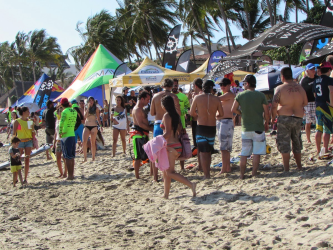
The nonstop fun continued the following weekend, May 16-18, at Banderas Bay, which increased its occupancy rate to 85% during those days. This increase was attributed to the Cruz de Huanacaxtle Open Water Tournament and the Bucerías Wind Festival, which together brought in some four thousand visitors.

That same weekend, Compostela came into its own with the Guayafest, which welcomed over 400 exhibition vehicles and over three thousand visitors, filling the hotels in Guayabitos to capacity with 100% occupancy.

On average, the first two weeks in May showed a 79% occupancy rate for Banderas Bay and Compostela.

The events continue, as Restaurant Week has already started, the Mountain Bike Race is about to start in Higuera Blanca and the San Blas International Sport Fishing Tournament is on its way. Speaking of, in 2013 the fishing tournament raised the port’s occupancy from 50% on the first day of the activities to 79% by the last day.

The Grupo Aeroportuario del Pacífico (Pacific Region Airport Group) indicated the Vallarta-Nayarit International Airport received 6.3% more travelers during the first four months of 2014 than the same period last year.

And when comparing the month of April to 2013, this year showed a 20.3% increase in domestic passengers, which were mainly attracted by the Spring Promotions launched by the Riviera Nayarit in this time period and are good through June 8th.

asprThe promotional campaign with special offers for hotels in the Riviera Nayarit increased hard sales by 207% in April 2014 compared to the same time period in 2013.

The marketing campaign launched on March 24th by the Riviera Nayarit Convention and Visitors Bureau titled “Spring Specials in the Riviera Nayarit” has considerably increased sales in the destination.

The campaign, launched over social media (Facebook, Twitter and newsletters) and sold by the agency Price Travel, resulted in an increase of hard hotel sales of 207% in April 2014 compared to the same period the year before: $546,938 in 2014 vs. $178,353 in 2013.

These promotions reached their zenith this month thanks to the Holy Week and Easter holiday as the main target was the domestic market. The campaign began on March 24th and ended June 8th.

The data revealed the hits on the official Riviera Nayarit page (specifically the spring sale landing page) indicated the Spanish-language page registered 1,201 visits and the English-language page registered 292.

The campaign was shared with 16,023 fans on the Spanish-language Facebook page; 7,601 fans on the English-language Facebook page; 7,786 followers on the Spanish-language Twitter page; 4,719 Twitter followers on the English-language page; 3,507 contacts in the Spanish-language newsletter database and 38,814 contacts in the English-language newsletter database.

The promotion was initially launched with 10 hotels offering special discounts; however, during the process even more joined in, until a total of 18 hotels were offering specials.

The participating hotels included the Belair, Hard Rock Hotel Vallarta, Riu Palace Pacifico, Riu Jalisco, Riu Vallarta, Samba Vallarta, Iberostar Playa Mita, La Tranquila Breathtaking Resort, Dreams Villamagna, Marival Resort, Marival Residences, Rancho Banderas, Grand Velas Riviera Nayarit, Villa del Palmar Flamingos, Villa La Estancia, Occidental Grand, St Regis and Villa Varadero.T

MEPVMexico’s Ministry of Tourism has reported that Puerto Vallarta had average hotel room occupancy of 8,612 rooms from January to April, 2014, 10% more when compared to the same period in 2013. This represents an 8% increase in overall hotel occupancy for the destination which had the biggest increase in hotel occupancy of Mexican beach destination so far this year. Puerto Vallarta’s International Airport (PVR) received 126,000 international passengers from January to April, 2014.

Summer hotel occupancy from US and Canada travelers is also expected to get a boost this year. Kayack.com, reported a 59% increase on flight and hotel searches to the destination for this Memorial Day; Fly.com also reported that the destination was placing in the top 10 destinations most searched for summer travel.

Puerto Vallarta is increasingly becoming more accessible for travelers as improvements continue to be made to the destination’s access points and infrastructure. The destination has heavily invested in renovations to sea ports as well as the addition of new flight frequencies and routes.

Puerto Vallarta's natural beauty, exquisite gastronomy, superb service and people’s warmth are highlighted on the national campaign “Puerto Vallarta, Mexico’s most authentic port” through niche media and digital platforms. Puerto Vallarta’s prime location, nestled between the Bay of Banderas, one of the world’s largest bays, and the lush Sierra Madre Mountains, offers a magical and unique Mexican setting where travelers can experience the destination’s world class infrastructure, attractions and services.

Mexico’s Ministry of Tourism has reported that Puerto Vallarta had average hotel room occupancy of 8,612 rooms from January to April, 2014, 10% more when compared to the same period in 2013. This represents an 8% increase in overall hotel occupancy for the destination which had the biggest increase in hotel occupancy of Mexican beach destination so far this year. Puerto Vallarta’s International Airport (PVR) received 126,000 international passengers from January to April, 2014.

Summer hotel occupancy from US and Canada travelers is also expected to get a boost this year. Kayack.com, reported a 59% increase on flight and hotel searches to the destination for this Memorial Day; Fly.com also reported that the destination was placing in the top 10 destinations most searched for summer travel.

Puerto Vallarta is increasingly becoming more accessible for travelers as improvements continue to be made to the destination’s access points and infrastructure. The destination has heavily invested in renovations to sea ports as well as the addition of new flight frequencies and routes.

Puerto Vallarta's natural beauty, exquisite gastronomy, superb service and people’s warmth are highlighted on the national campaign “Puerto Vallarta, Mexico’s most authentic port” through niche media and digital platforms. Puerto Vallarta’s prime location, nestled between the Bay of Banderas, one of the world’s largest bays, and the lush Sierra Madre Mountains, offers a magical and unique Mexican setting where travelers can experience the destination’s world class infrastructure, attractions and services.


[readon1 url="http://www.visitpuertovallarta.com/en/blog/puerto-vallarta-reports-8-increase-the-first-4-months-of-2014-with-72-hotel-occupancy#.U3-Co_ldXUU"]Source:www.visitpuertovallarta.com [/readon1]

barcoIn cruising's early years, it didn't get much more glamorous than a cruise on the Mexican Riviera. The popular TV show “Love Boat” showed Princess ships and the B-list celebrities they carried stopping at then-exotic ports such as Mazatlan, Puerto Vallarta and Acapulco.

Today, you'd be hard-pressed to find Acapulco on a mainstream cruise itinerary; in 2014, only a handful of luxury lines such as Regent Seven Seas, Silversea and Oceania, planned stops at the Pacific Ocean resort town. Concerns about the safety in some ports, along with negative perceptions and increased competition from destinations elsewhere, moved Mexican Riviera itineraries off some cruise line's calendars all together.

The numbers tell the story. Puerto Vallarta went from having a banner year in 2008, when 180 ships arrived, to a mere 82 in 2013. Mazatlan suffered a significant financial hit when a string of violent incidents prompted cruise lines to pull out completely in 2011, losing all of the 520,000 passengers that had visited in 2010.

Even Cabo San Lucas, which experienced a boom in tourists drawn to its hotels, resorts and bars, has seen its cruise business falter. In 2008, nearly 400 ships visited Cabo; this year, that number is down to 112.

Those figures sound dire. But this week, the region received a major boost when Carnival announced it would be sailing in the Mexican Riviera year-round in 2015, including several stops at Mazatlan. The ports have also been taking significant steps to attract more cruise business, including the following:

Working Together. With a large expat community and a thriving restaurant scene, Puerto Vallarta has avoided perception problems that have hampered other cities along the Pacific coast. But to keep ships arriving, tourism officials realized it was time to reach out beyond state and local borders.

Last year, the three states involved in cruising -- Baja Sur, Sinaloa and Jalisco -- formed an organization called Route Committee for the Pacific, said Carlos Gerard, the Puerto Vallarta director of tourism. The group met for the first time in December 2013 and again in March 2014 before the cruise industry's biggest conference, Cruise Shipping Miami. At the event, the ports took meetings as a group, working together to entice Carnival, Princess, Holland America, Royal Caribbean and Norwegian to add more Mexican Riviera itineraries in 2015 and beyond.

“We used to see each other as competition, but now we need to see each other as a team. What happens to one port affects the entire team,” Gerard said. “We're willing to work as a whole.”

More Port Promotion. Besides developing a better relationship with the cruise lines, the three ports are actively working to promote the itinerary as a whole, Gerard said. This year, each port is contributing $200,000 for promotion and asking for a matching $600,000 from the federal government. “It's something we should have done before, but it's all about the will to do it,” Gerard said. “The ‘Mazatlan effect' did create consciousness between the states.”

Increasing Communication. When cruise lines left Mazatlan in 2011, getting them back within three years “seemed almost an impossible task,” said Frank Cordova, secretary of tourism for Sinaloa. “We sell fantasy. It's hard to sell fantasy when people have a negative perception.” Cruise lines told him it could be five years before they even considered returning.

Despite the bad news, Mazatlan and Sinaloa officials got to work. They hired more police, Cordova said, and paid them better to reduce crime rate. They worked with the Organization of American States in a program that specializes in helping destinations with image problems. And they sent cruise lines bulletins every month about improvements that were being made and increased press outreach.

The first cruise line to consider coming back was Norwegian, Cordova said. After an initial meeting in 2012, the line committed to bringing Norwegian Star to Mazatlan in late 2013 (although Holland America's Veendam was the first ship to return in November 2013). Azamara followed in 2014; in 2015, Princess and Carnival will join those lines.

“We've become a model in Mexico and Latin America in how we were able to turn things around,” Cordova said. “For every negative story that appears, we have 30 good stories.” Still, he doesn't think the port is out of the woods yet. “Whenever anything that could hurt us happens, no matter how small, people are biting their nails.”

Improving Passenger Experience. In Mazatlan, cruise passengers disembark in a busy cargo port, taking a shuttle past containers stacked several feet into the air. Port director Alfonso Gil Diaz envisions a complete revamp of the operation, with a new cruise terminal that provides easier access into the city for passengers.

In the meantime, the city developed the “blue line,” a painted stripe on the roads that directs passengers who want to walk into Mazatlan's colonial center. “Blue shirts” -- expats who speak English -- have volunteered their time and meet ships when they arrive to help passengers get their bearings.

Each port is also doing more to make sure cruisers understand what makes them special. In Puerto Vallarta, cruise ships are greeted with mariachi bands, a signature of Jalisco (the Mexican state is also the birthplace of tequila). Next year, all tour operators and taxi drivers will wear the same logo to promote customer confidence, Gerard said.

Highlighting the Culture. Even in Cabo, cruiser tastes are changing; on cruise line comment forms, some people are complaining that Cabo isn't “Mexican” enough, said Fernando Hoyos Romero, port facility security officer. The comment makes sense when you consider 20 percent of the population in Cabo is from the United States or Canada. “Cabo's local dish is fish tacos,” he noted, wryly.

To counter that backlash, Romero said he expects operators will start looking into tours that tap into greater Baja culture. That's particularly important as Cabo's Asian tourism base continues to grow; 10 percent of the area's visitors are from Asia, and they are less likely to indulge in Cabo's drinking and party culture.

In Mazatlan, officials know many people come for the beach, but it's the history that makes it special. “We're a real city with roots, tradition and culture,” Cordova said. “If you have enough money, you can build a Los Cabos or a Cancun. You can't build a Mazatlan. How do you build a center square that's 400 years old?”

One thing is for sure: The city will celebrate every ship that does arrive. “It's like when you take your wife for granted. We didn't take care of (cruise tourists),” Cordova said. “We didn't take action until it was too late”


[readon1 url="http://www.cruisecritic.com/news/news.cfm?ID=5864"]Source:/www.cruisecritic.com [/readon1]

emiliano-restaurant-atCasa Velas' signature fine-dining restaurant, Emiliano, was awarded American Automobile Association's prestigious (AAA) Four Diamond award for restaurants. Only six restaurants in the Vallarta-Nayarit area hold the Four Diamond distinction, four of them owned by Velas Resort, including Piaf, Lucca and Frida, three restaurants located in Casa Velas' sister resort, Grand Velas Riviera Nayarit. Emiliano, serving gourmet Mexican and international cuisine by Executive Chef Juan Luis Ruelas, is known for its unique Mexican and Asian ingredients, as well as an Authentic Mexican Street Food menu from all regions of Mexico. This is the first AAA Diamond Award for Emiliano, while Casa Velas has received nine consecutive Four Diamond awards for hospitality since opening in 2006.

The casually elegant restaurant, Emiliano, features gourmet Mexican cuisine served indoor or at outdoor tables located on a romantic terrace surrounded by Koi ponds. Often using herbs from Casa Velas' on-site organic botanical garden, stand-out dishes at Emiliano include thinly sliced fresh tuna sashimi with lines of chipotle citrus, avocado aioli and wonton crisp and grilled Portobello mushroom roll with marinated shrimp and baby greens dressed in vinaigrette of avocado, tomatillo and fresh cilantro. The restaurant also offers a menu of traditional street food from each region of Mexico and fresh Herbal Cocktails such as the Cilantro Margarita, Hibiscus Martini and Lemon Refresher, all with herbs and flowers grown on the property.

"We are honored our signature restaurant, Emiliano, has received the prestigious Four Diamond award from AAA. We thank our dedicated Chefs and staff for offering guests a distinctive fine-dining experience marked by high quality ingredients, creative presentation and attentive service," said Eduardo Vela Ruiz, President of Velas Resorts Group.

At Casa Velas luxury accommodations, gourmet meals, premium liquor and wine, 24-hour suite service, use of the fitness center facilities, WIFI, and taxes and gratuities are included in a single price. As part of the all-inclusive rate, guests can also dine at the AAA Five Diamond Grand Velas Riviera Nayarit, home to three additional AAA four-diamond restaurants.

Casa Velas, owned by Eduardo Vela Ruiz and operated by Vice President Juan Vela, is located on the Marina Vallarta Golf Course in Puerto Vallarta and offers guests a serene and exclusive setting, with the look and feel of a private hacienda. Its 80 suites are decorated in traditional Mexican colors and furnishings, as well as goose-down comforters and L´Occitane amenities. Each suite boasts a private terrace with plunge pool or in-suite Jacuzzi and original artwork by Mexican artist Sergio Bustamante. Casa Velas Spa offers a wide array of services and treatments, including a hydrotherapy areas for men and women.

Emiliano received a 2013 TripAdvisor Certificate of Excellence, while Casa Velas was recently named the 8th best hotel in the world on Expedia® 2013 Insiders' Select™, won a Condé Nast Traveler's 2013 Readers' Choice Award and was ranked the #1 Hotel on the Beach and #1 Luxury Hotel in Puerto Vallarta in TripAdvisor 2013.