


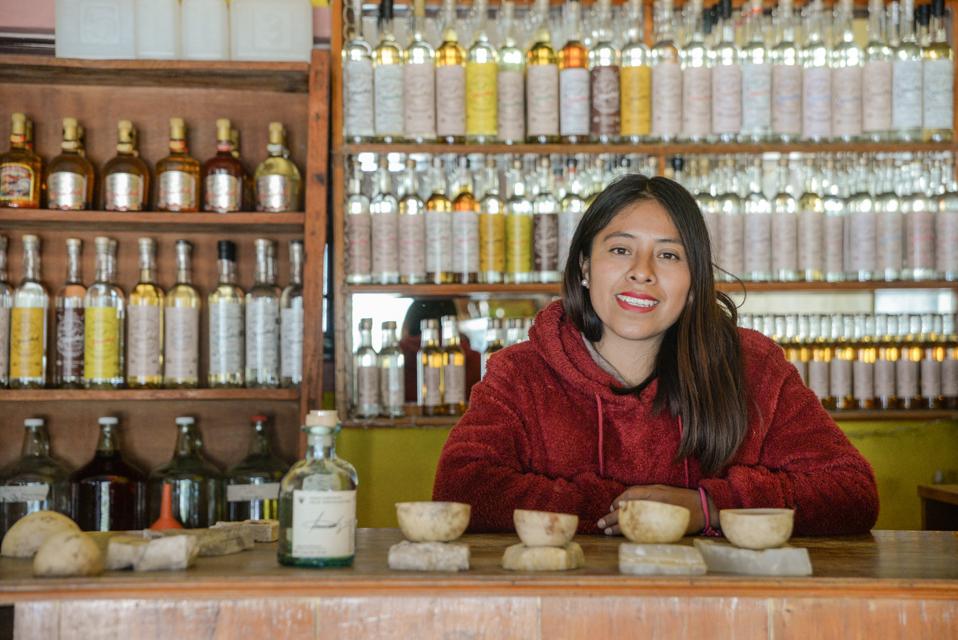
Not all mezcal producers have experienced the commercial boom in the same way. Small-scale family distilleries and women-owned producers in Oaxacan communities operate within the same regulatory and market framework as major international brands, but their relationship to that framework, and the pressures it creates, is substantially different.
We Were Taught How Much We Could Ask of the Forest
In San Pedro Totolapam and similar small communities in Oaxaca's Central Valleys, mezcal production has been a multi-generational household activity for longer than the commercial industry has existed. Producers like Gladys Sánchez Garnica, who manages a women-owned distillery there, describe a practice rooted in ecological knowledge as much as in distillation technique. Learning when to harvest agave, how to care for the soil, and how much the land can sustainably yield was transmitted alongside the production skills.
This embedded knowledge is the primary casualty of rapid commercial scaling. When production targets are set by export contracts rather than by the land's capacity, the ecological restraint that traditional production incorporated is systematically eroded. The people who carry that knowledge watch the landscape change around them while continuing to produce in the traditional manner.
Certification Costs Favour Large Operations
The mezcal Denomination of Origin created a certification system that in principle benefits all producers who meet its standards. In practice, the costs of certification, the documentation requirements, and the marketing infrastructure needed to access premium export markets are more accessible to larger operations and international brand partnerships than to small family distilleries.
Small producers have several routes to market:
- Direct sale at local level to visitors, including through festivals
- Supply agreements with larger brands that aggregate production
- Cooperative structures that pool certification and marketing costs
- Direct export through specialist importers focused on artisanal producers
Each route involves tradeoffs. Supply agreements to larger brands provide volume and predictability but often require production changes that compromise traditional methods.
Women have historically participated in household mezcal production and in transmitting production knowledge in Oaxacan communities. The commercial boom has increased visibility for women-owned operations, which have attracted attention from journalists, researchers, and specialty importers. That visibility has commercial value but also carries a risk: women producers can become marketing differentiators in a premium spirits market that values provenance stories, and the line between genuine representation and instrumental use as a brand narrative element is not always clear.
Frequently Asked Questions (FAQs)
Q: How do small-scale mezcal producers differ from large commercial operations?
A: Small-scale family distilleries in communities like San Pedro Totolapam operate with production methods and ecological knowledge rooted in multi-generational practice. Their production volumes, cost structures, and market access differ fundamentally from large operations backed by international brand partnerships. They face the same regulatory and certification framework but with less capacity to absorb its costs.
Q: What traditional knowledge is embedded in small-scale mezcal production?
A: Traditional mezcal producers in Oaxacan communities describe knowledge that encompasses when to harvest agave, how to care for the soil, and how much production the land can sustainably support. This ecological knowledge was transmitted alongside distillation technique across generations. Commercial scaling driven by export demand tends to erode this knowledge by prioritising production volume over land capacity.
Q: What routes to market do small mezcal producers have?
A: Small producers can sell directly at local level through festivals and visitors, enter supply agreements with larger brands that aggregate production, join cooperatives that share certification and marketing costs, or work with specialist importers focused on artisanal producers. Each route involves tradeoffs between commercial predictability and the preservation of traditional production methods.
Q: What role do women play in Oaxacan mezcal production?
A: Women have historically participated in household mezcal production and in the transmission of production knowledge in Oaxacan communities. The commercial boom has increased visibility for women-owned operations, which have attracted attention from journalists, researchers, and specialty importers. This visibility has commercial value but also risks reducing women producers to brand narrative elements rather than genuinely representing their role in the industry.
Q: Is the mezcal boom benefiting small producers in Oaxacan communities?
A: The boom has brought economic benefits to many local producers, including access to markets that did not previously exist for Oaxacan artisanal spirits. At the same time, it has created pressures on traditional production practices, land-use patterns, and the ecological knowledge systems that small-scale production historically maintained. The distribution of benefits is uneven, with larger operations and international brand partnerships capturing a disproportionate share of premium market value.





 How to resolve AdBlock issue?