



Large Millimeter Telescope, a motive for pride in Mexico
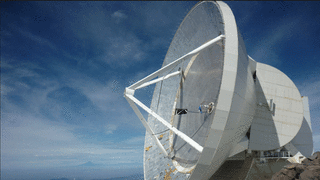 Grand-TelescopeIt is an instrument that will enable studies which reveal information about the origin of the first galaxies of the universe and render great scientific and academic contributions, defined the specialist in radio-astronomy José Antonio García Barreto, referring to the Large Millimeter Telescope “Alfonso Serrano”, which recently initiated its first stage of scientific operations from the Sierra Negra volcanoe, in Puebla.
The investigator from the Institute of Astronomy of the National Autonomous University (UNAM) pointed out to Notimex that the largest telescope of the world, which represents an investment of over 150 million dollars, is a unique technological progress in its kind.
With a parable of 50 meters in diameter, it is an instrument designed to receive waves that are separated by a small distance, in a range in between one and three millimeters, for which it was necessary to create a reflective surface and the adequate electronics to make a proper analysis, he explained in the interview.
He detailed that the instrument also required the formation of professionals, which is a great contribution "not only from the astronomical point of view, but also from the perspective of creating new technologies and the formation of human resources; such as students that finish their professional, master's and phd degrees in the specialty of millimetric radio waves".
To create the adequate infrastructure to build an instrument of this magnitude in this country was a challenge, as Mexico has an astronomical tradition dedicated to the development of optical telescopes.
Not thus in "radio waves, where Mexico didn't have any infrastructure, only in the Center of Scientific Investigation and of Superior Education of Ensenada (Cicese); it was the only place where the necessary electronics were being developed", he mentioned.
In that context, the Large Millimeter Telescope is a great progress, as "it is worth a lot that the design and the technology has been developed here, in Mexico; then they are not only contributions at an academic level but also at an industrial one, because it raises the level of its technicians and engineers involved in the project".
In the astronomical field, emphasized the also doctor in Physics, with this instrument there are new possibilities for knowledge because by analyzing millimetric waves, more space molecules could be discovered which would add on to the 450 that have already been detected.
“It is important because it directly influences what is known about the development of life", he underlined.
Furthermore, with this telescope we will be able to detect molecules from various galaxies, because by having the largest parable in the world it is possible to observe a larger number of millimetric waves, which allows us to see weak objectives "this translates in that they are distant, which means that we are seeing the past and therefore we can know the origin of the first galaxies there was in the universe".
García Barreto noted that for the construction of the telescope it was necessary to work with several enterprises dedicated to civil engineering, electrical systems and pressure mechanics, as well as big structures.
Another of the big challenges of the project, he said, was the transport and installation of the Large Millimetric Telescope, located in the Sierra Negra volcanoe in Puebla.
“The antenna couldn't be taken whole to the mountain, it had to be made here, put together here, make sure it was working, disassemble it and send it in pieces following the transportation norms of the federal freeways. Each part of the antenna was sent separately and in the mountain assembled, it was a challenge", he added.
The specialist considered that the Mexicans should feel proud that this project is concluded and in working order, as it is the result of several years of work and formation of human resources in the scientific, technological and engineering fields:
“It is a benefit, because it percolates; all the engineers and technicians who worked there, disseminate knowledge which is applied to other projects. This is not bought, it is developed. It is very different from having the federal government spending 250 million dollars in a communications satellite from the United States", he said.
About the location of the Large Telescope, which construction generated economic benefits for the states of Guanajuato, Querétaro, Puebla and Ensenada, he said, that it was chosen for being one of the highest places on earth, at four thousand 600 meters above sea level. In this site there is less atmosphere to disperse the radiation, "it is a strategic location, one of the highest points of Mexico".
The physicist signaled as the origin of this project, a series of academic talks between the Astronomic Community of Mexico and the University of Massachusetts, at the ending of the 80s and beginning of the 90s, in which the educational institution of the U.S. showed interest in collaborating with Mexicans in developing a larger telescope than the one they had, with a parable of a 14 meter diameter.
In the beginning, he remembered, it was planned that the project would be developed in collaboration with the cited institutions, however later it was decided that the National Institute of Astrophysics Optics and Electronics (Inaoe), located in Puebla, would be in charge of establishing the agreement with the University of Massachusetts.
In regards to the team in charge of this project, he precised that the astronomers who are involved belong to the Inaoe and to diverse national institutions, as the Large Milimetric Telescope is financed by the National Council of Science and Technology (Conacyt), institution which is subordinate to the Ministry of Public Education (SEP), which puts this instrument at the disposal of all of the community in the country and not only of the institute.
About the cost of the largest milimetric telescope of the world, he referred that in an initial stage it was estimated in 42 million dollars, of which 50 per cent would be given by the University of Massachusetts and 50 by the Mexican federal government, however this amount was not enough, increasing up to more than 150 million dollars, "that is why it was a mega project, because it involved developing a very complex team".
Finally, the investigator pointed out that with this telescope, Mexico has one of the peak technologies, "we hope that it gives us more astronomical data for the academic community and for humanity, which should be integrated into the school system".
 Starting with the metropolitan special police, this Monday begins the first stage of the program "Mando Único Policial" in Jalisco, with officers from the corporations of Guadalajara, Zapopan, Tlaquepaque, Tonalá, Tlajomulco, El Salto, Juanacatlán and Ixtlahuacán de los Membrillos, announced the general prosecutor of the state, Luis Carlos Nájera Gutiérrez de Velasco, adding that a thousand 392 officers from all of the municipalities will join the so called elite police force, which will be deployed in 19 regions:
 In order to fight what it described as an "obesity epidemic," the American Medical Association has voted to recognize obesity as a disease and recommended a number of measures to fight it.
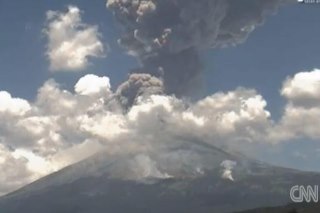 ‘Incandescent rocks’ flew nearly 330 feet from the crater and the column of smoke and ash towered thousands of feet overhead, according to accounts.
 Let’s face it: Many of us eat foods we believe to be healthy. But in reality, they’re sabotaging our
 Choose Surthrival is a new book that helps people move from just surviving to thriving with a 21st Century business solution

 FALLSTON, Md., June 10, 2013 /PRNewswire/ -- Host of EXTRA, producer, actress and New York Times best-selling author Maria Menounos has partnered with the Mexican Hass Avocado Importers Association (MHAIA) on a public service announcement (PSA) reminding viewers that self-esteem comes from making good decisions – like eating right. MHAIA's goal with the PSA is to help the public focus on engaging in positive behaviors that promote self-image and living a healthful, satisfied life.
 Only material damages were reported...
 Lena McCalla Njee, a special education teacher of children with autism, launched the Spanish edition of her book, “El Autismo Inspira! La esperanza como salvacion para los padres,” to kick off National Autism Awareness Month. The book was translated to offer the Hispanic community a variety of resources, stories and case studies that will resonate with parents.