





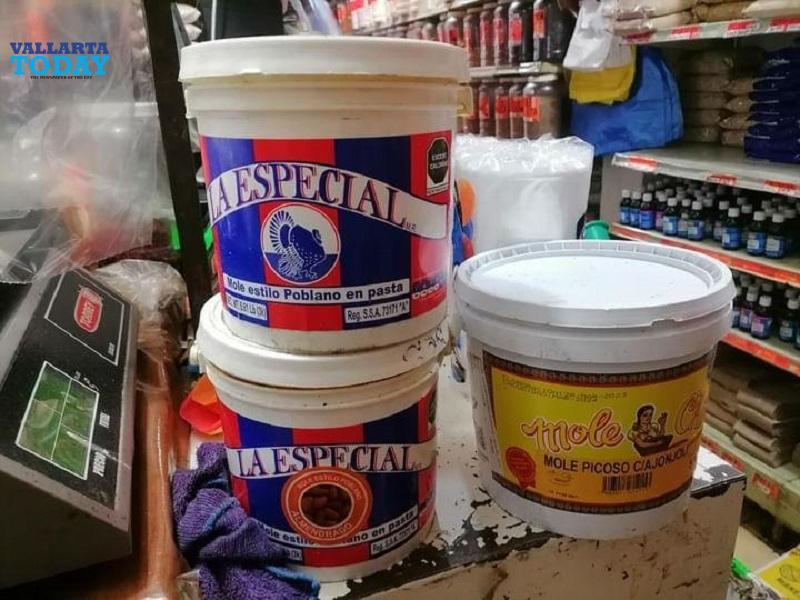
From "Mulli" to Mole, the cuisine of Mexico's history.
Mexican cuisine, complex, ancient, and of course, delicious, has its own myths and legends, which tell us about the glorious and even divine origins of the country's most representative dishes. During the colonial period of New Spain and even in some places to this day, it was very common to see an image of a friar, associated with the devotion within kitchens, where higher forces were invoked to ensure that food never ran out and that the seasoning for preparing it was just right. The character in this image was San Pascual Bailón, who was present in kitchens ranging from the simplest to the most affluent. In most of these depictions, the Friar appeared among pots, stoves, vegetables, and various meats. Even in the 21st century, this figure can still be seen in some kitchens in Puerto Vallarta. But beyond this, there is a legend associating this character with the creation of Mole.
Mole exists for every occasion, for holidays, rituals, or everyday meals. This tells us that Mole is not a singular dish but rather a result of culinary experiments and not an invention that emerged overnight as an accident. There are two tales to explain the origin of Mole.
One is that of Friar Pascual Bailón Rivero, which tells of a time when the Saint of Cooks accidentally combined a pot containing deliciously cooked turkeys with a tray he was carrying to the pantry full of chilies, peanuts, chocolate, and other spices.
The other tale speaks of Mole originating in the Dominican Convent of Santa Rosa de Lima by Sister Andrea de la Asunción in 1685. With the aim of providing an original and different dinner for Bishop Don Manuel Fernandez de Santa Cruz and the Viceroy of Conde de Paredes and Marquis de la Laguna. Sister Andrea, renowned in convent kitchens, sought inspiration in her heart and chose an extraordinary blend of anise, cloves, cinnamon, and black pepper, along with a large quantity of chilies. She added garlic, tomatillos, sesame seeds, and also included almonds and ground peanuts, finishing with a touch of bitter chocolate from Puebla.
The true origin of Mole lies within pre-Hispanic cultures where indigenous peoples mixed various chilies with pumpkin seeds, epazote, and tomatoes to create a sauce they called "Mulli." This was typically accompanied by turkey meat, although duck or armadillo meat was also used, and served in ceremonies as offerings to the Gods. The earliest written mentions of Mole are found in the General History of the Things of New Spain or in the Florentine Codex by Fray Bernardino de Sahagún. For example, a Mole or Pipián is described as a pot of hen made their way with red chili, tomato, and ground pumpkin seeds called Pipiana. The word "Nahuamulli" is repeatedly used to refer to the sauce, thus describing various "Chimullis" such as "Chiltepic Mulli" or Mole made with "Chiltepic" and tomatoes. The "Chilkus Mulli Jitomayos," a "Mulli" made from yellow chili, tomatoes, and pumpkin seeds with amaranth.
In the Spanish and Mexican language vocabulary of 1571 by Alonso de Molina, the phrase Salsa or Potaje de Chili is translated as "Chi Mulli," from which it is deduced and confirmed that "Mulli" means "Sauce."
Mole, or rather, Moles, dishes of regional identity, have pre-Hispanic origins and have transformed, like all cultural processes, into a variety of stews that we know today with different colors, flavors, and regions. With the arrival of raiders and invaders from Spain, new products were introduced and added to Mole recipes such as black pepper, anise, and cinnamon. In terms of meats, chicken, beef, and pork were integrated.
Puerto Vallarta offers a wide variety of restaurants where you can taste many different Moles that are currently a benchmark model of traditional Mexican cuisine and an attraction for international tourism. Some travelers come from afar just to taste the Mole made in Mexico.






 How to resolve AdBlock issue?