





Indigenous vs. multinationals in Mexico Wind Power
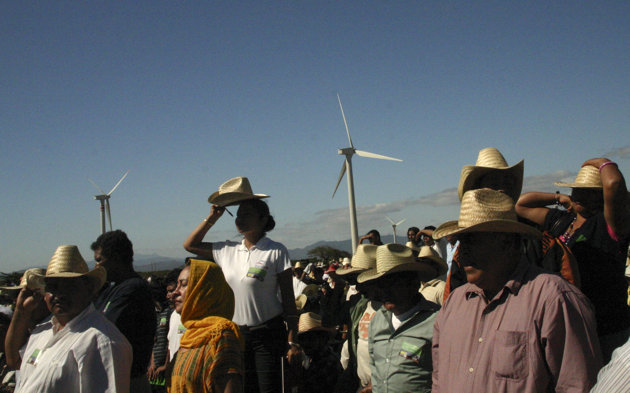
The country is posting one of the world's highest growth rates in wind energy, and almost all of it is concentrated in the narrow waist of Mexico known as the Isthmus of Tehuantepec, where winds from the Pacific meet winds from the Gulf of Mexico, spawning places so wind-blown that one town's formal name is simply "Windy."
The largely indigenous residents of the Isthmus complain that the wind farms take control of their land, affect fish and livestock with their vibrations, chop up birds and pit residents against each other for the damage or royalty payments. They also claim they see few of the profits from such projects.
President Felipe Calderon has made the inauguration of wind parks one of the main focuses of his administration's ambitious pledge to cut Mexico's carbon emissions by 30 percent by 2020, and on Tuesday — as he has done before — he stopped by the state of Oaxaca to inaugurate a new clutch of wind turbines, praising the extra income they provide for some farmers.
"Yes, you can fight poverty and protect the environment at the same time. This is a clear example," Calderon said at the opening ceremony.
But as in the past, he did so under tight security, as local protesters threatened to mar the inauguration. The president's office normally publishes a detailed schedule of his planned activities, but didn't do so with Tuesday's inauguration, keeping it under wraps until the event took place.
So far in 2012, Mexico has posted a startling 119 percent increase in installed wind-power capacity, more than doubling the 519 megawatts it had last year, the highest annual growth rate listed in the magazine Wind Power Monthly's "Windicator" index. Mexico had only 6 megawatts when Calderon took office in 2006.
While Mexico, with a total of around 1.3 gigawatts of wind power, is still a tiny part of the world's estimated 244 gigawatt capacity, it offers an insight into what happens when the industry focuses overwhelmingly on large farms dominated by large companies that are concentrated in a small, desirable area.
It has been mainly Spanish firms like Iberdrola, Union Fenosa and Gamesa, and U.S. firms like Sempra Energy, that have built the huge wind towers that now crowd the Isthmus of Tehuantepec, leaving the local population feeling invaded. Only 4 of Mexico's 17 wind farms are located outside the isthmus.
It raises the question of whether bigger is always better.
"We are asking these multinationals to please get out of these places," said Irma Ordonez, an activist from the Zapotec Indian town of Ixtepec, Oaxaca. "They want to steal our land, and not pay us what they should."
"When they come in they promise and promise things, that they're going to give us jobs, to our farmers and our towns, but they don't give us anything," said Ordonez, who traveled to Mexico City in October to protest outside the offices of a Mitsubishi Corp.
Industry sources say the distrust is unmerited, given the potential benefits to the poverty-stricken farming and fishing towns on the isthmus.
The latest battle focuses on a huge, 396-megawatt off-shore wind farm planned for a narrow spit of land in a lagoon near the village of San Dionisio del Mar, Oaxaca.
A source close to the project, who was not authorized to speak on the record, said the project had been approved by village assemblies, would have little impact on fishing activities in the lagoon and would contribute an amount equal to about half the township's annual budget in coming years in compensation and royalties.
But opponents and supporters engaged in a tense standoff outside the town in October, when a group of men blocked roads to prevent a planned demonstration against the wind farm.
Saul Celaya, a Huave Indian farmer and San Dionisio resident, said the lagoon project would damage mangrove swamps where fish, shrimp and other sea life breeds, and scare off the fish that locals depend on.
"Just when they were doing soil studies, there was a mass die-off of fish," Celaya said, adding that projects opponents "are being intimidated, they're afraid to leave their houses, they're threatened."
The industry source denied the company was intimidating anyone, but acknowledged the project had suffered some delays due to disputes within the community.
Others say it didn't have to be this way, big corporations pitting villagers against villagers. There are proposals to have local towns start their own wind farms, so that they could decide where they would be situated and where profits should go.
Rodrigo Penalosa, an activist who supports the town of Ixtepec's proposed 100-megwatt community wind farm, noted that "the community has already approved it. The problem is that the (government) Federal Electricity Commission won't allow the community project to get access to the network.... but it does allow the multinationals access."
Sergio Oceransky, whose Yansa Group is trying to help kick-start the community wind project, said the commission is asking for financial guarantees of millions of dollars "that no community in Mexico could meet."
"These are requirements that are basically designed to ensure that only projects presented by multinationals can compete," said Oceransky, who claims that such guarantees are not required by federal law.
The commission did not respond to repeated requests for comment.
With a limited transmission capacity for the projects, and the last lots of line capacity being auctioned off, the situation is becoming critical; what could be a sterling example of alternative energy production is threatening to become a permanent political dispute in southern Mexico.
"This is the last chance," Oceransky says.
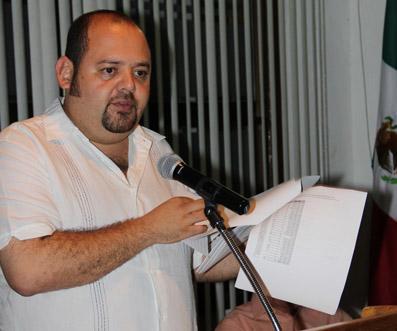 The mayor, Ramon Martinez Guerrero made it clear that while his government will do the handover process a witch hunt against the flaws, irregularities and poor condition of receipt of public administration will not cover those who willful or negligent way affected the heritage of all Vallarta, this after disclosing that derived receipt delivery process, it was learned that the material loss situation of this town is a total of approximately 3,096,603,114 (three billion, 96,603,000 ciento fourteen dollars), an amount equal pay for every citizen vallartense of 12.396 pesos.
 Changes arising from the labor reform in terms of facilities and safety measures and associated penalties for failure, may increase mortality levels of small and medium enterprises (PYMES), said the labor specialist, Gloria Arellano.
 After they established a Commission for Reception delivery at the end of the administration of Salvador Gonzalez Resendiz, members say there has been no willingness within the administration of Ramón Guerrero to start the whole process.
  Bankruptcy or embezzlement in the Congress of Jalisco will not go unpunished because in this "indeed something fishy" so the bench incoming PAN legislators in that enclosure starts,
 The state leader of Citizens Movement, Hugo Luna, publicly alleged that irregularities were found in 8 of the 9 municipalities where he won his party, referring to the process of giving and receiving in each of them.
 After public safety elements of the municipality of Puerto Vallarta said they were required to bring the uniform clean and not look old or broken, the police requested support them with new uniforms, they do not have resources to pay for them themselves .
 The next administration rightful any decision on tax adjustments for next year, said Deputy Secretary of Finance and Public Credit, Gerardo Rodriguez Regordosa.
 Many of the members of the 59th Legislature to end, have promoted a waste not to be accepted or allowed as a society, that the evident impunity and impudence to loot the coffers of Congress, money that belongs to the people, in addition to authorize an unsustainable payroll costing over 20 million dollars per month when in 2010, was covered by less than half of that amount, sentenced Youth Alliance representatives, saying that reach the Administrative Office of parties to bring impeachment proceedings against the tortfeasors legislators:
 About 30% of items in the Public Safety Department did not pass the exam confidence control that forces the Federal Government through Subsemun, so it will have to be written off no later than 1 January of 2013.
 The president of the Employers Confederation of the Mexican Republic (Coparmex), Alberto Espinosa Desigaud reiterated that this body is in favor of democracy and transparency union 'and the best way to test it is the history of the Confederation'.
 Since Professor Alberto Fabian will be recognized for his career, contribution and support to new values of the performing arts, in the First Festival of the Brotherhood, is questioning the Lawyer Antonio Lugo Morales, event organizer and president of the International Association of Sister Cities AC, on the situation in which the teacher was involved in theater. He said that if that decision were true, it would be a mistake for the mayor Ramon Guerrero must correct.
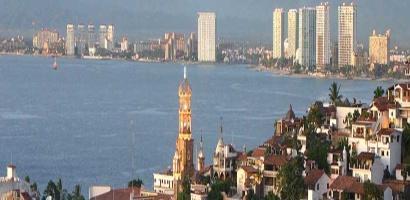
 With the motto "More Puerto Vallarta in the world and the world in Puerto Vallarta", will be held in this city, the first International Festival of the Brotherhood, with the presence of 32 ambassadors from the five continents. This event aims to promote friendship between these destinations and other countries, promote culture Vallarta and place the target in the sights of the world.