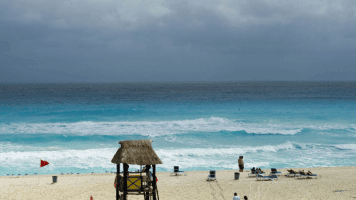
EQPVThe 6.2-magnitude earthquake struck off Mexico's Pacific coast, around 300 km from some of the country's beach resorts.

According to the US Geological Survey (USGS), the quake occurred at 10km deep in the Pacific Ocean. Nearby coastal cities include Tomaltan ('Tomato land') at 259 km, a Mexican beach resort city of Puerto Vallarta at 303 km and Ixtapa beach resort at 311 km. The country's capital Mexico City is 877 km from the earthquake's epicenter.

There were no immediate reports of injuries or damage.

Earlier this month an earthquake of 6.4 magnitude shook parts of Mexico, causing buildings to sway in its capital and was also felt in the resort city of Acapulco. In April, a 7.2-magnitude quake struck central and southern Mexico.

The country has a long history of destructive earthquakes. In 1985 more than 9,500 people were killed in Mexico City after an 8.1 earthquake hit the region.

[readon1 url="http://rt.com/news/162788-mexico-earthquake-resort-area/"]Source:rt.com [/readon1]

131015 unwtoThe festival will be in September and is currently in the phase of organization with the Ministry of Tourism, said Carlos Vogeler, Americas director of OMT.
Carlos Vogeler, director for the Americas of the World Tourism Organization reported that Guadalajara was chosen to host the World Tourism Day.

During the Global Forum on the Knowledge Network of the World Tourism Organization (UNWTO), the manager mentioned that the celebration of World Tourism Day will be in September 2014 and are currently at the stage of organization with the Secretary of Tourism .

Vogeler noted that this festival will act as a showcase for the country concerned to promote their destinations.

[readon1 url="http://www.milenio.com/negocios/guadalajara-sede-dia_mundial_del_turismo-2014-septiembre-Carlos_Vogeler_0_307769450.html"]Source:www.milenio.com[/readon1]

Destiladeras3Upon arriving in Destiladeras, you will be enraptured not only by the beautiful scenery of the bay, but also by the family-friendly and welcoming ambiance that can be felt all along the five kilometer (three-mile) beach.
 
It is common to see groups of young people and children playing with a ball, building interesting sand castles or jumping into the waves with their boogie boards.

This beach’s name can be attributed to a now-extinct freshwater waterfall.

Destiladeras’ golden, fine sands anticipate the promising future with the proposed construction of luxurious hotels, a beach club, first-class spas, restaurants and a golf course that will surely cement the Riviera Nayarit’s reputation as a dreamlike destination for golfers from around the world.

While these dreams become a reality, you can enjoy the tranquility and warmth of the sea in Destiladeras among family and friends.

It is common to see visitors trying their hand at activities such as kayaking and sailing, as well as happy tourists bouncing along on a typical banana boat or running towards the ocean with their colorful boards at the ready.

And for those more adventurous travelers, on the southern part of the beach, the waves can reach up to a meter and a half (five feet) high, a true delight for surfing enthusiasts.

And if you, nonetheless, are of a more reserved nature and you seek tranquility and rest on the ocean shore, this is also the ideal spot for you.

The beach encourages contemplation with its open, clean lands. Or enjoy a stroll along the fine sand beach as you relax to the sounds of the waves and the sight of a breathtaking sunset.

Delight in the delicious dishes served in the seafood restaurants housed inside traditional thatched-roof huts as you listen to accordion music and sing along to traditional Mexican tune

puntmraaaThanks to this newest accolade, the Riviera Nayarit confirms its place as the second tourism destination with the most luxury hotels in all of Mexico, with 14 resorts having laid claim to AAA Diamonds.
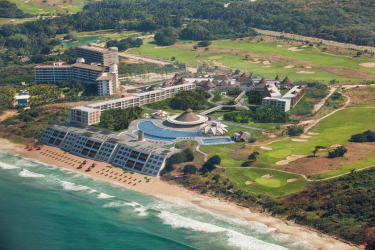
Just five months into its inauguration the Hotel Iberostar Playa Mita has already received the American Automobile Association’s (AAA) Four Diamond award.

Located in Litibú in the Fonatur development that is part of the Punta de Mita ejido—an area that has been tagged as the exclusive Glamour Peninsula of the Riviera Nayarit—this resort (categorized as Gran Turismo) continues to reinforce the area’s positioning as the second tourism destination in Mexico with the largest number of luxury properties.

“The Riviera Nayarit is turning into a very sought after destination with the opening of the new Iberostar Playa Mita, which is taking the lead in the region’s growth,” said John Long, VP of Sales and Marketing for Iberostar.

Every year, AAA reviews hotels based on ample criteria including quality, the range of facilities and the level of services offered by the property. The Iberostar Playa Mita is the fourth hotel in the Iberostar family to receive this accolade in Mexico and the sixth around the world.

“The AAA Four Diamond award is a testimony to our commitment with excellence, with our guests and to this thrilling region on the Pacific Coast,” added Long.

AAA reviews over 29 thousand hotels a year but only 5.3% of those make it to the exclusive AAA Four Diamond list, which highlights even more the importance of the brand not only in the region, but also within the all-inclusive industry as a whole.

There are a total of 14 hotels in the Riviera Nayarit that have already received Diamonds for quality and service. Only the St. Regis and the Four Seasons, both located in Punta Mita, and the Grand Velas in Nuevo Vallarta, have the AAA Five Diamond Award.

The other 10 hotels with AAA 4 Diamond Awards in the Riviera Maya are: Grand Mayan, The Grand Bliss, Grand Luxxe, Hard Rock Hotel, Riu Palace, Marival Residences, Dreams Villamagna, Villa la Estancia, Casa de Mita, Hotel Cinco and now the Iberostar Playa Mita.

Of note: the Riviera Nayarit is also home to one of the only four Relais & Chateaux properties in Mexico: Imanta Resorts Punta de Mita.


The Riviera Nayarit’s fantastic hotel infrastructure has placed it among the top destinations in the country. Besides having a selection of four- and five-star properties, it has 15 Gran Turismo resorts and another four that are denominated as Special Category.

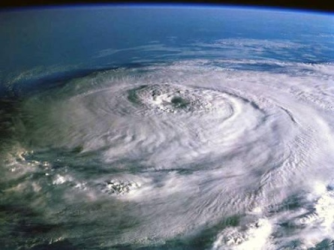
huracanamThe first hurricane of the eastern Pacific hurricane season, Hurricane Amanda, formed Thursday afternoon as a tropical depression about 635 miles south-southwest of Manzanillo, Mexico, and is moving toward the west-northwest. A turn more toward the north is likely later this weekend into early next week. Other than a few minor islands well offshore such as Socorro Island, it is no threat to land.

Amanda became the season's first hurricane Saturday morning, as a period of rapid intensification began. By Saturday evening, Amanda reached major hurricane status with maximum sustained winds of 115 mph. Major hurricanes are defined as those reaching at least 115 mph, or Category 3 on the five-category Saffir-Simpson Hurricane Wind Scale.

Amanda became a Category 4 storm early Sunday morning, making it the second-strongest May hurricane on record in the eastern Pacific behind 2001's Hurricane Adolph. Slight additional strengthening is possible this weekend. Amanda will weaken early next week as vertical wind shear starts to disrupt its circulation.

Again, to reemphasize, this system is not expected to threaten the North American mainland.

[readon1 url="http://www.weather.com/news/weather-hurricanes/tropical-storm-hurricane-amanda-20140523"]Source:www.weather.com [/readon1]

BULSoon it will begin working with secondary schools, including through partnerships with educational institutes and universities.
Guadalajara: The bullying is a priority for the state government of Jalisco topic, which shortly will land in Puerto Vallarta programs Jalisco Secretariat of Education (SEJ), which are being applied in primary schools in Guadalajara, said at a press conference the president state, Jorge Aristoteles Sandoval Diaz.

He explained that this program is coordinated with teachers of various educational institutions, "is a priority for us because this is where the program starts to generate a culture of violence."

Therefore, he said, was necessary to create a specific program and even promotional and diffuse, soon will begin to work with high schools, including through partnerships with educational institutes and universities.

Moreover, questioned about the lack of compliance in the agreements on public transport in this city, said that "it will soon welcome news from the Mobility. We shall apply the full rigor of the law, there will be improvements and of course we will have and the presentation of restructuring of routes and nurture the models we have in the metropolitan area. "

He pledged that no later than one month will be announced actions were designed to benefit public transport users of Puerto Vallarta.

In another topic, said that next month will deliver rehabilitation Mexico Avenue and several other works are also carried out in hydraulic concrete FONDEREG resources.

[readon1 url="http://www.milenio.com/region/bullying_en_Jalisco-Aristoteles_Sandoval-combate_del_bullying_0_304169951.html"]Source:www.milenio.com[/readon1]

ciclon1Puerto Vallarta: This Friday was born the first tropical cyclone of the season off the coast of the Mexican Pacific, Tropical Depression Number 1, which by their remoteness poses no risk to the region, however will lead to increased heat.

This was announced by the head of the Center of Meteorological Studies University Center Costa, Victor Manuel Cornejo Lopez, who said the center of the phenomenon is located over a thousand miles south-southwest of Manzanillo.

"This body has become favorable for tropical storm conditions during the afternoon, but his career does not threaten national shores."

He added that the flow of this cyclone rotation causes air masses rise to Guerrero were on the Banderas Bay area, so it will increase the heat and rain. For now the sky will be mixed clouds and sun. Maximum temperatures exceed 32 degrees Celsius and the minimum will be near 24 °.

He said that for the weekend hopefully more heat clouds, although the occurrence of some showers are not ruled out. "More than expected rainfall or wind, will bring warm conditions muggy and stifling in Puerto Vallarta. In general there will be good weather for tourism, recreational activities and outdoor activities. Of course, the evolution of the first tropical cyclone of the season should be monitored because at any moment can change course. "

[readon1 url="http://www.milenio.com/region/pronostico_del_tiempo_en_Puerto_Vallarta-primer_ciclon_de_la_temporada-temporada_de_huracanes_0_304169839.html"]Source:www.milenio.com[/readon1]

nuntitledThis amazing house, whose design was inspired by Sea, is located in Mexico, City. Arquitectura Orgánica built the house in 2006. Resembling a Nautilus shell, it showcases a prominent entry cut into a wall of colorful stained glass. The interior features amazing network of stone paths (grass carpet) that runs through the various areas of the home. But it’s not the only surprise you will find. The bathroom is adorned with gorgeous blue tiles.

“The metaphor was to feel like an internal inhabitant of a snail, like a mollusk moving from one chamber to another, like a symbiotic dweller of a huge fossil maternal cloister.

This home social life flows inside the Nautilus without any division, a harmonic area in three dimensions where you can notice the continuous dynamic of the fourth dimension when moving in spiral over the stairs with a feeling of floating over the vegetation.”

The World's Most Amazing, Unsual, Cool and Fascinating House

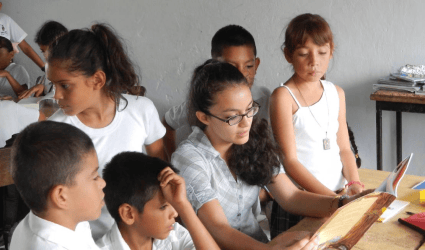
leer1Libros for Learning is a 501c3 tax deductible organization dedicated to building children’s libraries in the Cabo Corrientes area of Mexico.  Schools in rural Mexico work hard to deliver quality education, but struggle against some built-in challenges. A typical rural school consists of a single room building filled with over 30 children ages 5-15 and a single teacher. These schools lack many basic of resources for their students, including pencils and paper, crayons and notebooks. Most importantly they lack books!

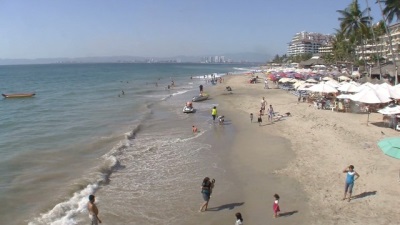
Our mission is to build as many libraries as we can to the rural children of Mexico. A typical library we assemble consists of 200 - 300 books varying in reading level and subject. The books are engaging and educational as well as some storybooks with illustrations for the younger readers. Each library costs approximately $1,000 to purchase, package and deliver to its school. We work with the local educational administration as well as with other service organizations and NGO’s in the area.

Educators agree that a sound education is rooted in the availability of books. Children are created equal, but not all are provided the same resources. These children in rural Mexico can succeed in their current situation if they are provided access to knowledge.  So what can you do?

What are the facts?

  •  Mexico is a 95% literate society, but for most students,

the literacy level stops at about 5th grade.

· Two-thirds of Mexican families have no books in the home.

  •  Children who read at home become better readers and better at math.
  •  Success as a reader correlates closely with the number of books available to a student.

What does Libros for Learning do?

We deliver classroom libraries of 200 to 300 books to rural schools. The books are high interest books matched to the reading levels of the students. A catalogue/check out system allows students to take books home to read.

Dr. Glenn Baron is a fifth grade teacher at Kensington Elementary in Waxhaw, NC. and is our organizer for "Libros for Learning."  In our first years of existence we have bought and delivered more than two dozen libraries and look forward to providing many dozens more.  
 
Have a Library Named After You

Make a tax-deductible donation and have a library named after a loved one!

Teachers! Think about a service project.

Classes from first grade through high school have learned about schools in Mexico and have helped out through donations of books and funds. “Club Leo” at Scholastic Books is an easy way to buy Spanish-language children’s books. We can send a Powerpoint to help you make an educational presentation to your students.

Send Your Donations to:
Libros for Learning
7614 Sims Rd.
Waxhaw, N.C. 28173

Or Donate Directly through PayPal: Libros for Lerning
Just click the "Donate" button below.

lll

[readon1 url="http://www.librosforlearning.com/"]Source:www.librosforlearning.com [/readon1]

puvretired1Puerto Vallarta, Mexico (CNN) -- It's the life Sara Wise always dreamed of: a place with unbeatable weather, sunny beaches, good medical care and an active social life -- and all at very affordable prices.

The former manager of retail businesses didn't find what she wanted in her native U.S., but rather just south of the border in Mexico.

For the last six years, the 63-year-old Minnesotan and her 70-year-old husband Mike Wise, both retired, have been enjoying the warm weather and friendly beaches of Puerto Vallarta, a resort on the Pacific coast.

They have a very active social life and say they have more friends in Mexico than they ever did in the United States, mainly because Puerto Vallarta is full of people just like them.

According to local government estimates, there are around 35,000 U.S. and Canadian citizens living in Puerto Vallarta, many of them retired like Mike and Sara.

"We get together and we have happy hours, we have wine and appetizers, we have coffees in different neighborhoods and we get together at different restaurants," Sara Wise says.

Medical care is another factor they considered when they decided to move here. To their surprise, they found more options for quality health care and at much more affordable prices than in the United States, including procedures like surgeries and advanced dental care.

"The accessibility to the doctors is something that we never experienced in the United States and from what we understand it's getting more difficult, not less," Mike Wise says. "And the cost is somewhere between a quarter to a half of what things cost in the U.S."

Puerto Vallarta has adapted to this relatively new, foreign clientele. Around town, doctors and dentists put out signs in English, and often have English-speaking employees.

Kimberly Altman, 63, a retiree from California who has been living in Puerto Vallarta for three-and-a-half years, says a doctor's visit is usually $40.

"No matter what they do, $40 per visit and you can get to see them the very same day you need them. It's very convenient in a lot of ways," Altman says.

Mike Altman, 68, Kimberly's husband, says affordability goes well beyond just medical care. For him, part of the beauty of living in Puerto Vallarta is how far dollars go when it comes to real estate.

"We have an ocean view, 3,000-square-foot condominium that I can afford on my Social Security. How's that? We have 24-hour security and indoor parking," Altman says.

According to the U.S. Department of State, 1 million American citizens of all ages live in Mexico, and 20.3 million visited as tourists -- making it the No. 1 destination for U.S. travelers.

The number of expats living in Mexico has continued to grow, local officials say, despite safety concerns from the drug violence which has made headlines around the world.

"I feel very safe here. I go for walks with my dog at midnight. I go alone and I don't worry about it. When we lived in northern Minnesota, I'd wake up every morning and hear how many people were killed in Minneapolis overnight. We don't have that down here," Sara Wise says.

With plenty of food options, water sports like sailing and diving and American stores like Costco and Home Depot, retirees say they can enjoy the best of Mexico while still having access to many American products.

"We're here for good," Sara Wise says with a chuckle. "They'll probably take us out in a jar of ashes."


[readon1 url="http://www.cnn.com/2014/05/15/world/americas/us-mexico-retirees/"]Source:www.cnn.com[/readon1]

URSIn a few days the hurricanes season 2014 for the Atlantic, Caribbean Sea and Gulf of Mexico will start and better than knowing the forecast is the importance of being prepared, stated today a Cuban expert.
Defining a season as quite and below-average does not mean anything for a specific point, place or country, therefore forecasts do not really have a practical use; explained Dr.José Rubiera, head of the Forecast Center of the Institute of Meteorology, in an article posted in Cubabate website.

If this were a very active season, it would be exactly the same. We have to be prepared in all times, and when there is a tropical cyclone of any classification or category in areas relatively close to Cuba, we must follow the forecasts and warnings that are issued, as well as the guidelines for civil defense, stated Rubiera.

However, he pointed out that for this period, to begin on June 1 until November 30, it is expected a normal to quite general activity, with nine tropical storms, but only three will become hurricanes and none of great intensity.

The historical average would be about 12.

The first named storms of the Atlantic hurricane season will be Arthur, Bertha, Cristobal, Dolly and Edouard, Fay, Gonzalo, Hanna, Isaiah, Josephine, Kyle, Laura, Marco, Nana, Omar, Paulette, Rene, Sally, Teddy, Vicky, Wilfred.

[readon1 url="http://www.plenglish.com//index.php?option=com_content=view=2677251=73"]Source:www.plenglish.com[/readon1]

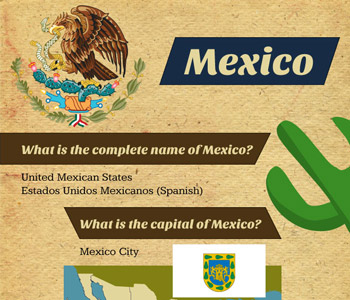
mexico-fast-facts-infographic-thumbWhat is the complete name of Mexico ?
United Mexican States (Estados Unidos Mexicanos in Spanish)

What is the capital of Mexico ?
Mexico City

What is the official language of Mexico ?
Spanish

What type of government does Mexico have ?
Federal republic

Who is the president of Mexico ?
Enrique Peña Nieto

When did Mexico declare independence ?
September 16, 1810, but Mexico’s independence was not recognized by Spain until almost eleven years later, on August 24, 1821 with the Treaty of Córdoba

What country had settled Mexico before independence ?
Spain

How big is Mexico ?
1,964,375 square kilometers, or 1,220,606 square miles. Mexico is the 15th largest country.

What is the population of Mexico ?
116,220,947 (July 2013 estimate). Mexico is the 11th most populous nation.

What currency is used in Mexico ?
Peso

Where is Mexico located ?

Mexico is located in southern North America, below the United States and above Central America.

What are the major mountain ranges in Mexico ?

    Sierra Madre Oriental and Sierra Madre Occidental (extensions of the Rocky Mountains)
    Trans-Mexican Volcanic Belt (the Sierra Nevada range)
    Sierra Madre del Sur
    Peninsular Ranges

What are the major rivers in Mexico ?

    Usumancita
    Grijalva
    Papaloapán
    Coatzacoalcos
    Pánuco
    Rio Bravo del Norte (known as Rio Grande in the United States)

What countries border Mexico ?

    United States
    Guatemala
    Belize

What body of water forms the border between the United States and Mexico ?
The Rio Grande

Where is the highest point in Mexico ?
Pico de Orizaba volcano at 18,491 feet or 5,610 meters above sea level

Where is the lowest point in Mexico ?
Laguna Salada at 33 feet or 10 meters below sea level

How many time zones does Mexico have ?
Three. Central, Pacific (which is Mountain Time in the United States and Canada), and Northwest (which is Pacific Time in the United States and Canada)

How many states does Mexico have ?
31 + Federal District

What are the capitals of the Mexican states ?

    Aguascalientes – Aguascalientes
    Baja California – Mexicali
    Baja California Sur – La Paz
    Campeche – San Francisco de Campeche
    Chiapas – Tuxla Gutiérrez
    Chihuahua – Chihuahua
    Cohuila – Saltillo
    Colima – Colima
    Durango – Victoria de Durango
    Guanajuato – Guanajuato
    Guerrero – Chilpancingo de los Bravo
    Hidalgo – Pachuca de Soto
    Jalisco – Guadalajara
    Mexico – Toluca de Lerdo
    Michocan – Morelia
    Morelos – Cuernevaca
    Nayarit – Tepic
    Nuevo Leon – Monterrey
    Oaxaca – Oaxaca de Juárez
    Puebla – Puebla de Zaragoza
    Querétaro – Santiago de Querétaro
    Quintana Roo – Chetumal
    San Luis Potosí – San Luis Potosí
    Sinaloa – Culiacán Rosales
    Sonora – Hermosillo
    Tabasco – Villahermosa
    Tamaulipas – Ciudad Victoria
    Tlaxcala – Tlaxacala de Xicohténcatl
    Veracruz – Mérida
    Zacatecas – Zacatecas

What is the largest state in Mexico ?
Chihuahua (95,543 square miles or 247,455 square kilometers)

What is the smallest state in Mexico ?
Tlaxcala (1,541 square miles or 3,991 square kilometers)

What does the Mexican flag represent ?
The green, white, and red of the Mexican flag originally stood for independence (green), religion (white), and union (red). The meaning of the colors are now hope (green), unity (white), and blood of the national heroes (red).

Mexico’s coat of arms is centered on the flag, featuring an eagle eating a serpent, perched on a prickly pear cactus above a lake. The image comes from an Aztec legend.

What is the national anthem of Mexico ?
“Himno Nacional Mexicano”

[readon1 url="http://www.mapsofworld.com/mexico/facts.html"]Source:www.mapsofworld.com [/readon1]

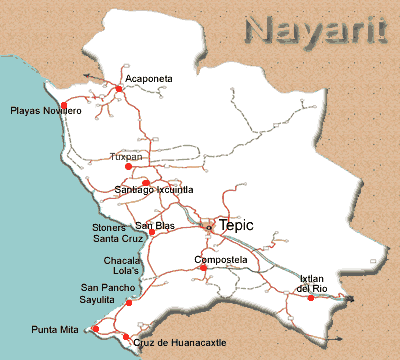
nayarit stateNayarit’s farmers benefit from its location in a fertile valley, and with 181 miles of coastline, the state is a top tourist destination. Tourism and other service industries account for about 24 percent of the state’s economy. Agriculture also supports the economy, with tobacco, sugarcane and tropical fruits being among the chief crops. Small factories manufacture tequila, leather goods, textiles and wooden products.

Early History
Although humans may have settled in Nayarit as early as 5,000 B.C, the first known civilization in the region, the Cora, appeared sometime around 400 A.D. Concentrated on the Nayar plateau of the Sierra Madre Occidental, Cora society reached its apex about 1200 A.D.; many of their descendants continue to live in the area. The Cora relied on agriculture, and cultivated beans, corn and amaranth.

From the 9th to the 12th century, other tribes migrated into the region, including the Tepehuano, Totorano and Huichole. Over the next 300 years they were driven back by tribes from the Indian civilizations of Xalisco. These tribes were members of the Chimalhuacán Confederation.

Middle History
In 1523, Spanish conquistador Hernán Cortés briefly visited Nayarit. He was followed five years later by Nuño Beltrán de Guzmán, infamous for his ruthlessness in overthrowing indigenous leaders. Beltrán de Guzmán conquered many villages in the region and founded the settlement of Espíritu Santo on the ruins of the indigenous city of Tepic. In 1531, Cortés returned and tried to take control of the area, but Beltrán de Guzmán appealed to the Spanish crown and was named governor of a province comprised of the territories he had conquered.

In 1536, Diego Pérez de la Torre replaced Beltrán de Guzmán as governor. He ruled only two years, however, before being killed during an indigenous revolt in 1538. Throughout most of the 16th and 17th centuries, Franciscan priests of the Roman Catholic Church sought to convert and pacify the Cora, who fiercely resisted Spanish occupation. Spanish control of the region was constantly threatened by indigenous revolts, such as the famous uprising led by Tenamaxtli in the 1540s. Rebels in the Nayar mountain range continued to harass the Spanish until they were finally conquered in 1722.

Mexico began its march toward independence in 1810 under the leadership of Miguel Hidalgo. In Nayarit, a local priest named José María Mercado took up the cause, occupying the capital city of Tepic without a battle in November 1810. By December he had also captured the port of San Blas, but his success was fleeting. Within a year, royalist forces had recaptured most of Nayarit. Even so, the larger revolution eventually succeeded, and Nayarit became a part of independent Mexico in 1821.

Recent History
Under the first Mexican constitution in 1824, Nayarit was made a region of neighboring Jalisco. In the 1830s and 1840s national politics were dominated by conflicts between centralists and federalists and in the 1850s and 1860s by clashes between liberals and conservatives. The liberals finally consolidated their power under President Benito Juárez, who shaped the future of Nayarit by separating Tepic from Jalisco in 1867. The city was not an independent state, however; it instead became a military district of the Mexican Federation.

Soon after Juárez left the presidency, Porfirio Díaz rose to power, ruling Mexico from 1877 to 1880 and again from 1884 to 1911. During this period, Nayarit–like many states in Mexico–enjoyed economic growth due to improvements in transportation and communication. Increased prosperity was concentrated in the hands of a few, however, and most of the region’s inhabitants remained poor. Social unrest brought about the Mexican Revolution of 1910, when Francisco I. Madero led the effort to overthrow Díaz.

Although Díaz was removed from power in 1911, the war continued as various revolutionary factions battled among themselves. Forces loyal to Madero, Francisco “Pancho” Villa and Venustiano Carranza fought for control of the government in Nayarit. When the government adopted a new constitution in 1917, Nayarit was declared a federal state, and a brief period of peace and prosperity followed.

Like the rest of Mexico, Nayarit was under the political control of the Partido Revolucionario Institucional (Institutional Revolutionary Party) from the beginning of the 1930s to the latter part of the 20th century. Under their leadership, the region experienced a surge of economic development and political stability.

NAYARIT TODAY
For many years, one of the most significant contributors to the economy of Nayarit has been tobacco production. Two of Mexico’s largest tobacco companies are headquartered in the state, and a major cigarette factory operates in Tepic.

Although tourism is increasing, Nayarit’s coastline is still largely undeveloped, enabling visitors to surf and swim on beautiful, uncrowded beaches. The state is home to some of the best snorkeling in western Mexico, especially in the Las Marietas archipelago.

The government program Tepic Ciudad Blanca coordinates citizen initiatives to make the city cleaner and safer through trash collection and recycling, graffiti removal and neighborhood crime watches.

FACTS & FIGURES
Capital: Tepic
Major Cities (population): Tepic (336,043) Santiago Ixcuintla (84,314) Valle de Banderas (83,739) Compostela (62,925) San Blas (37,478)
Size/Area: 10,417 square miles
Population: 949,684 (2005 Census)
Year of statehood: 1917

FUN FACTS
The renowned painter Diego Rivera designed Nayarit’s coat of arms in 1921. A corn plant fills the upper left portion of the emblem, symbolizing the state’s capital, Tepic, the name of which comes from the Aztec word for corn, tepictu. At the upper right a golden bow and arrow represent Nayarit, the god of war worshipped by the Cora, the region’s most prominent indigenous tribe; Nayarit is said to have invented the bow and arrow. At the bottom, white peaks signify the Sierra Madre Occidental, a mountain chain that was home to the Nayar kingdom in the 1500s. At the center of the coat of arms, a small shield depicts an eagle eating a snake on a cactus, the nation’s symbol. Seven footprints encircle the small shield, representing the seven Aztec tribes that walked from the mythical Aztlán to their new home at

Tenochtitlán.
Nayarit is one of the smallest Mexican states. Only Aguascalientes, Colima, Morelos, Tlaxcala and the Federal District are smaller.
One of Nayarit’s typical dishes is called cucaraches de camaron (shrimp cockroaches), although it contains no insects.
Luis E. Miramontes, chemist and co-inventor of the contraceptive pill, was born in the state’s capital, Tepic.
Nayarit has an unusual combination of both tropical and temperate ecosystems. About 300 species of orchids can be found there. Notable wildlife includes crocodiles, sea turtles, jaguars, humpback whales and 400 species of birds.
The Las Palmas crocodile refuge in San Blas manages a breeding program and offers visitors the chance to see many of the large reptiles in their natural environment.

The Spanish priest Junipero Serra, who founded many of area missions, embarked on his journey at the port of San Blas.
Henry Wadsworth Longfellow’s 1882 poem The Bells of San Blas portrays the city as a link between the past and present. More recently, the Mexican rock group Mana recorded a song, El Muelle de San Blas (The Pier of San Blas) about the city.
The archipelago Islas Marías lies about 115 kilometers (70 miles) off the coast. Since 1905 these islands have served as a federal penal colony where prisoners work and live with their families.

LANDMARKS

Tepic’s eclectic architecture showcases the city’s varied history. The city’s oldest building is the church of La Cruz de Zacate, famous for a natural grass cross that maintains its shape and color without cultivation. Adjacent to La Cruz de Zacate is a former convent, built in 1784, where Junípero Serra resided before founding missions in Baja California and the U.S. state of California. A more recent building is the neo-Gothic Cathedral of Tepic, erected during the 19th century; its two main towers rise 40 meters (132 feet).

Archaeological Sites
Los Toriles, also known as Ancient Ixtlán, is the region’s only major archaeological site. Náhuatl people are believed to have occupied Los Toriles between 300 B.C. and 600 A.D., building columns, porticos, plazas, interior patios, avenues and stairways that survive today.

Islands
Many islands dot the Pacific Ocean off the coastline of Nayarit, including Las Marietas, Islas Marías and Isla Isabela.

Las Marietas, a small archipelago near Puerto Vallarta, is perfect for diving, snorkeling and camping. The natural reserve attracts tourists who come to observe humpback whales. Each year these giant mammals swim over 6,000 kilometers (4,000 miles) from Alaska’s icy seas to mate in the warm waters of Banderas Bay.

The Islas Marías are located 115 kilometers (70 miles) west of San Blas. The four main islands–María Madre, María Magdalena, Cleofas and San Juanico–have a total area of 274 square kilometers (106 square miles). María Madre, the largest island, has been used as a penal colony since 1905. The three smaller islands are inhabited by government officials and religious workers.

The small island of Isla Isabel, 74 kilometers (46 miles) from San Blas, is an ecological reserve that provides sanctuary to several unique bird species, including the tijereta (a kind of hummingbird), various types of bobo, pelicans and seagulls.

Beaches
Visitors to Destiladeras, El Anclote and Punta de Mita enjoy coral reefs, turtles, manta rays and lobsters. Los Ayala and Frideras are known for their golden sand, jungle vegetation and blue-green waters.