

GAPGrupo Aeroportuario del Pacífico, S.A.B. de C.V., (NYSE:PAC) (BMV:GAP) ("the Company" or "GAP") announced today preliminary terminal passenger traffic figures for the month of May 2014 compared to traffic figures for May 2013.

During May 2014, total terminal passengers increased 11.3% compared to the previous year. Domestic passenger traffic increased 7.7%, while international passenger traffic increased 19.2% compared to May 2013.

For the month of May, it is important to highlight the opening of the following routes: Puerto Vallarta -- Manchester and Puerto Vallarta -- London (Gatwick) by Thomson Airways; Aguascalientes -- Monterrey by Aeroméxico and Bajío -- México by Interjet.

Company Description:

Grupo Aeroportuario del Pacífico, S.A.B. de C.V. (GAP) operates twelve airports throughout Mexico's Pacific region, including the major cities of Guadalajara and Tijuana, the four tourist destinations of Puerto Vallarta, Los Cabos, La Paz and Manzanillo, and six mid-sized cities: Hermosillo, Guanajuato, Morelia, Aguascalientes, Mexicali and Los Mochis. In February 2006, GAP's shares were listed on the New York Stock Exchange under the ticker symbol "PAC" and on the Mexican Stock Exchange under the ticker symbol "GAP".

This press release may contain forward-looking statements. These statements are statements that are not historical facts, and are based on management's current view and estimates of future economic circumstances, industry conditions, company performance and financial results. The words "anticipates", "believes", "estimates", "expects", "plans" and similar expressions, as they relate to the company, are intended to identify forward-looking statements. Statements regarding the declaration or payment of dividends, the implementation of principal operating and financing strategies and capital expenditure plans, the direction of future operations and the factors or trends affecting financial condition, liquidity or results of operations are examples of forward-looking statements. Such statements reflect the current views of management and are subject to a number of risks and uncertainties. There is no guarantee that the expected events, trends or results will actually occur. The statements are based on many assumptions and factors, including general economic and market conditions, industry conditions, and operating factors. Any changes in such assumptions or factors could cause actual results to differ materially from current expectations.

In accordance with Section 806 of the Sarbanes-Oxley Act of 2002 and article 42 of the "Ley del Mercado de Valores", GAP has implemented a "whistleblower" program, which allows complainants to anonymously and confidentially report suspected activities that may involve criminal conduct or violations. The telephone number in Mexico, facilitated by a third party that is in charge of collecting these complaints, is 01 800 563 00 47. The web site is www.lineadedenuncia.com/gap. GAP's Audit Committee will be notified of all complaints for immediate investigation.

For more information please visit www.aeropuertosgap.com.mx

[readon1 url="http://online.wsj.com/article/PR-CO-20140604-911467.html"]Source:online.wsj.com[/readon1]
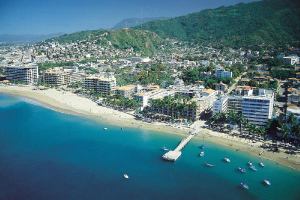
pvbvPuerto Vallarta (often referred to as Vallarta or just PV) is known for its friendly atmosphere, so it’s not surprising that it attracts a lot of tourists. Many of the expats you’ll meet here started out as tourists. The ones I spoke to told me they came here on vacation but realized pretty soon that they didn’t want to leave. As soon as they went home, they changed their lives to move here. You can’t get a better stamp of approval than that.

But PV’s not just popular with gringos—it’s a favorite destination for Mexicans, too. That alone helps maintain its authentic cultural flavor.

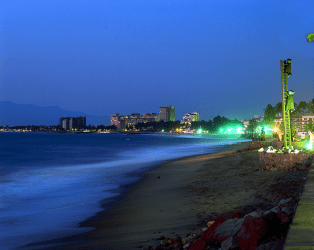
So what’s drawing so many people here? Well, first of all, Puerto Vallarta is incredibly beautiful. The majestic ocean—with its long sandy beaches splattered up and down the coastline—stretches as far as the eye can see.

The thoughtful architecture of the city complements its natural beauty. Traditional Mexican buildings blend with modern and abstract designs, while palm trees and exotic flowers grow abundantly on its cobble-stoned streets.

It’s an easy city to navigate, too. Because Puerto Vallarta is relatively small with a population of 250,000, transportation is quick, inexpensive, and efficient. A bus from downtown Old Vallarta to outlying suburbs where there are malls (including Walmart and Costco), modern hospitals, clinics, and universities, only costs 50 cents. Take a taxi and depending on how well you can haggle, it will only cost between $5 and $8. And if you need to fly somewhere, Puerto Vallarta has its own international airport, making it convenient to North American destinations.

The half mile malecon (boardwalk) that borders the beach from Old Vallarta to the Zona Romantica is a fun place to stroll and offers a great mix of activities and art, against one of the most beautiful backdrop views of the Pacific you’ll ever see. Puerto Vallarta is also an art mecca that offers weekly art walks.

As you walk the boardwalk, you’ll pass 15 life-size sculptures depicting local history and culture by famous artists.

The smells wafting from the many restaurants and food stalls selling everything from smoothies to fish on a stick are hard to resist. You like people watching? This is the place to do it. As the sun starts to go down, you can find a quiet place on the beach to watch the sunset, then go to one of the many piano bars, bass-thumping clubs, or salsa bars to practice your Latin dance moves.

What about safety? We’ve all heard stories about the dangers in Mexico…but you don’t need to worry in PV. Puerto Vallarta has been deemed one of the safest destinations in Mexico and the locals will tell you it’s safe to walk almost anywhere in the city on your own, day or night. That’s partly due to the abundance of tourist police on nearly every corner downtown. And, geographically speaking, because Puerto Vallarta is located on the Bay of Banderas, there is increased protection from natural disasters like tsunamis and hurricanes.

That all might sound great for a vacation…but what about as a full-time retirement destination? Well, when I was there scouting it out, I made sure to research how much it costs to live in PV. And I heard about some great deals.

The owner of the local tacqueria that I like to frequent (two tacos cooked fresh in front of you with the ingredients of your choice and a freshly squeezed orange juice all cost just $4, by the way) said he could find me a one-bedroom apartment in the suburb of El Pitillal, a 20-minute bus ride from downtown, for just $200 a month. Wandering around El Pitillal, you’ll rarely cross paths with another gringo. It’s like old Mexico, with traditional small tacquerias, tiendas and lavanderias.

If you prefer to live in Old Vallarta (downtown), where there is more action, I discovered you can rent a one-bedroom apartment for $400 a month. Living in this area you’re more likely to spend time eating out, but a light dinner including a fresh garden salad, ceviche (presentation is of Food Network calibre), and a glass of wine need only cost $8. Or go with friends for a breakfast of French toast with candied pecans, orange juice, and coffee on one of the beachfront restaurant patios for $7.

Spend $20 at the local grocery store and you’ll have enough veggies, pasta, fresh cheese, yogurt, papayas, and fresh oranges (to squeeze for your morning juice), to easily last you for a couple of days. Tourism has meant that locals are making things like fresh granola, and imported foods are easily available, but that will quickly drive your monthly expenses up.

Of course, the sky’s the limit with respect to both your accommodation choice and lifestyle, but your lifestyle in Puerto Vallarta—and your budget—can easily be tailored to your interests and your income. Clearly, Puerto Vallarta has not “been done” yet.

[readon1 url="http://internationalliving.com/2014/06/affordable-puerto-vallarta-not-just-a-vacation-paradise/"]Source:internationalliving.com[/readon1]

imrThe Grand Velas Riviera Nayarit, located on Mexico's Pacific Coast, is offering a choice of complimentary perks and more for new bookings made through Nov. 1, 2014. Groups can pick one perk from a selection that includes: complimentary decor and music for one themed party, like a themed fiesta or a Black & White Gala; complimentary setup for one private event, or a complimentary 18-hole round of golf for each guest. Planners also have the option to select one coffee break service per stay. In addition to the chosen perk, one three-night complimentary return stay certificate, 25 percent savings on all in-house audio visual equipment and one complimentary massage for one designated group member is included with the Pick Your Perk package.
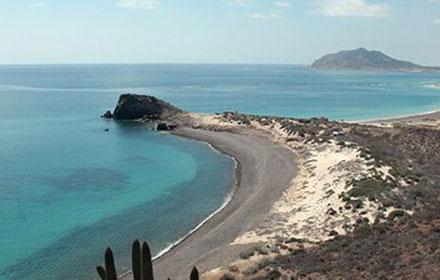
The offer is available for reservations made up to Nov. 1, 2014 and the travel window for the promotion is now through Dec. 15, 2014. The promotion is not valid for groups under contract, combinable with other promotions or special offers and restrictions and blackout dates may apply. Grand Velas Resorts’ all-inclusive rates include suite accommodations, a la carte gourmet meals at a choice of specialty restaurants, complimentary basic WiFi, premium branded beverages, 24-hour ensuite service, fitness center with personal training sessions, taxes and gratuities, and more.

The resort has 25,321 square feet of indoor meetings facilities. The Grand Marissa Ballroom consists of over 6,000 square feet and is easily subdivided into five separate rooms, ideal for breakout sessions or individual workshops. The resort’s facilities also include four other rooms ranging from 681 to more than 1,954 square feet that offer several arrangement variations to maximize meeting productivity and efficiency. All meeting rooms offer high-speed Internet access, video conferencing services, LCD projectors, high-end lighting equipment and simultaneous translation services.

[readon1 url="http://www.internationalmeetingsreview.com/mexico/grand-velas-riviera-nayarit-offers-perks-bookings-made-through-nov-1-2014-99086"]Source:www.internationalmeetingsreview.com[/readon1]

Cabo Pulmo marine reserveA Chinese-U.S. joint venture said it is halting plans to build a large tourist development in northwestern Mexico due to the “well-founded” criticism of environmental groups.

In a note published in Mexican dailies, the Rivera Desarrollos BCS joint venture made up of China’s Beijing Sansong International Trade Group and U.S.-based Glorius Earth Group said it would immediately end an environmental-impact study of the Cabo Dorado project in Baja California Sur state.

The goal is to resume this procedure in the near future with a new project “that meticulously takes into account the well-founded criticisms that have been expressed and which we’ve listened to carefully and with the utmost respect,” it said.

Numerous environmental groups have urged the Mexican government in recent weeks to halt the project, saying it would pose a severe threat to the Cabo Pulmo marine reserve.

The $3.6 billion project was to have included construction of 22,503 hotel guestrooms in the same spot where another giant development project, Cabo Cortes, had been planned.

Mexico’s government canceled that earlier project in 2012 over environmental concerns.

Cabo Pulmo is a 7,111-hectare (17,550-acre) marine reserve that boasts the best-preserved coral reef in Mexico’s Pacific region.

Rivera Desarrollos BCS said its goal “is to achieve a project that benefits the area and fosters better care of the fundamental characteristics of nature and the environment.”

Friends for the Conservation of Cabo Pulmo, the Mexican Center for Environmental Rights, Wildcoast and Greenpeace, among other groups, argued that Cabo Dorado would create a settlement of 440,000 inhabitants with a water demand of 50 million cubic meters (1.76 billion cubic feet) annually and put Baja California Sur’s water security at “serious risk.”

The project also would affect the health of Cabo Pulmo’s coral reef system, according to scientific studies cited by the NGOs.

[readon1 url="http://www.hispanicallyspeakingnews.com/latino-daily-news/details/controversial-plans-to-develop-mexican-region-for-tourism-is-halted/30126/"]Source:www.hispanicallyspeakingnews.com[/readon1]

ArnieWeissmann-new1I first met Claudia Ruiz Massieu, Mexico's secretary of tourism, 11 months ago, when she had been on the job for about seven months. We discussed a surprisingly detailed list of initiatives she was proposing:
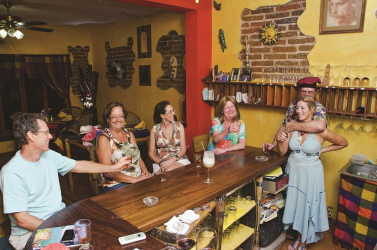
• Extending tourism from Cancun and the Riviera Maya to the Mayan and colonial sites in Yucatan, Chiapas, Campeche and Tabasco, beginning with new rail service from the Riviera Maya to Merida, including a stop near the ruins of Chichen Itza.

• Rebranding two Pacific coast destinations in need of a boost -- Puerto Vallarta and Riviera Nayarit -- as "Vallarta Nayarit."

• Facilitating a "tourism cabinet," comprising herself and nine other federal secretaries, chaired by Mexican President Enrique Pena Nieto. The group would convene regularly to identify opportunities to grow tourism in areas of overlapping ministerial responsibility. Tourism would be viewed as a strategic platform to generate jobs and spur economic vitality, not only in established resort centers but in interior towns that are rich in culture but far from beaches.

Her plans were linked philosophically with the policy platform of her political party, PRI. Each initiative emphasized helping raise the standard of living for citizens and strengthening communities, as opposed to underscoring business-friendly aspects.

I felt Ruiz Massieu's plans reflected creativity, ambition and no small degree of boldness. Articles I had read prior to our first meeting had left me with the impression that she did not have much direct experience in tourism or private enterprise but was politically savvy and moved carefully. I was impressed by her understanding of what drives tourism; it seemed she was, in the very best sense, a policy wonk, seeking practical solutions compatible with a political position.

Still, I wondered if the boldness of the plans would create problems. Her reputation for being politically savvy notwithstanding, could this be a case where tactics that look good on paper become difficult to implement in practical terms?

Could the government of a country as diverse and politically charged as Mexico, even with its president's direct involvement, agree on details involving infrastructure that might move the needle for tourism vs. competing cabinet-level priorities? Would touristic ambition withstand government turf wars and bureaucracy?

And would elements within the business community view the benefits of the initiatives as coming at the expense of existing enterprises?

Indeed, challenges surfaced almost immediately. As a group, hoteliers in Cancun and the Riviera Maya opposed the rail line, worried that its proposed port city origin might turn the region into a cruise homeport, filling airplanes with visitors who would simply leave on a cruise, or would spend their port time taking rail-enabled day trips to Chichen Itza. Some wholesalers and hoteliers who did business on the Pacific coast seemed open to the concept of Vallarta Nayarit, but others complained it was "too much to explain."

Mexican presidents are limited to a single six-year term. Whatever plans and dreams they and their cabinets have must be accomplished within that window. Today marks, exactly, the end of the first quarter of the Pena Nieto administration.

Ten days ago, I met with Ruiz Massieu again for an update. This time, she seemed more comfortable, confident and relaxed in her role, and as she reviewed her ministry's recent activity, I began to understand why. She has some significant victories under her belt.

First and foremost, a bottom-line victory: Year-over-year tourism revenue increased 15% in the first trimester of 2014, a period she can justifiably claim as her own. During the 18 months she has been in office, tourism has moved from fifth to fourth place as a contributor to Mexico's economy.

There has also been significant movement toward her policy goals. The president's recently announced five-year, $590 billion infrastructure plan earmarks about $18 billion directly for tourism, and Ruiz Massieu said that, through the tourism cabinet, she had found areas of additional common ground with other secretaries.

For example, colonial cities will be among the first in which utility lines will be moved underground, which will both modernize and beautify historical sites. Linkage was also established between the need for medical care for citizens and the importance of medical facilities for tourists.

The tourism cabinet also reviewed and swiftly changed aspects of passenger flow through airports with an eye to minimizing the time passengers spend in arrivals hall. In the past, all incoming luggage was X-rayed. Then passengers were asked to press a button that, if randomly showing red rather than green, would lead to further screening.

Today, instead of X-raying all incoming luggage and then having passengers press the button, only those whose button-pushing triggers a red light will need to have their bags X-rayed.

She said she is also working with other ministers to eliminate the roadblocks that prevent customs pre-clearance for American citizens leaving Mexico.

The origin of the rail line was moved to Cancun, and all the details of the project have now been finalized and approved, she said.

And the Vallarta Nayarit campaign proved doubters wrong, resulting in the addition of more than 100,000 air seats into the region since the ads began. The jump in visitors there in the first quarter of 2014 increased tourism spend by $40 million.

In short order, Ruiz Massieu appears to be living up to her advance billing as a politically savvy minister.

Careful too, perhaps, but apparently keenly aware that the clock is ticking.

Stay tuned as the second quarter of her term begins.

[readon1 url="http://www.travelweekly.com/Arnie-Weissmann/Mexicos-first-quarter-score/"]Source:www.travelweekly.com[/readon1]

sbpvSix SMBs (Small and Mid-Sized Businesses) in Banderas Bay contributed to the sustainable tourism of the area and the improvement of their employees’ living conditions, which was reflected in the socioeconomic and environmental results from their participation in a pilot program founded by the International Labour Organization (ILO).

Six SMBs from the Riviera Nayarit’s tourism sector participated in the implementation of a pilot project by The Regional Programme for the Promotion of Formalization in Latin America and the Caribbean (FORLAC) created by the regional office of the International Labour Organization for Latin America and the Caribbean (OIT), among them: Rancho Nuevo Los Pinos, El Chivero, Hotel Canadian (in Bucerías), Original El Anclote (in Punta de Mita), Osos Oyster and Sandzibar (in La Cruz de Huanacaxtle).

The premise of this five-month project was to guarantee an increase in productivity among the participating businesses in order to create a virtuous circle that would create better conditions for the workers and allow them to enjoy the benefits they are entitled to by law as formal, or full-time, employees.

The participating SMBs made significant advances using the System for Integrated Measurement and Improvement of Productivity (SIMAPRO) methodology, part of the ILO’s strategy for the promotion of sustainable enterprises.

There were 216 proposals for improvements: 48% were economic, 46% social and 6% environmental in nature. For starters, the work environment improved by 6 points per their rating system.

Sales increased by 93% when compared to the same period of time from the previous year. Thirty-five percent of the sales were attributed to the applied methodology, and there was a half-ton (532kg) reduction in waste emanating from food processing plants.

In economic terms, the savings generated by optimizing the resources needed for food processing came to approximately $36 thousand Mexican pesos. The return on investment for the six SMBs was 266%, and 50% of the initial temporary workers became full-time employees (21 positions became full-time).


The Riviera Nayarit Convention and Visitors Bureau would like to congratulate the SMBs for completing this program and demonstrating their commitment towards their employees, their place of business, the destination and the visiting tourists.

logo engOn the 10th and 11th of June, 2014 the Puerto Vallarta Business Matchmaking Forum 2014 will be held at the International Convention Center. Jointly organized by ProMéxico ProChile ProExport PromPerú and Colombia, reported Sedeco.

The Department of Economic Development (Sedeco) Jalisco, José Palacios Jiménez. Attend The event holder Also bring together representatives from all three levels of government and representatives of the Ministries of Economy of the participating countries.

The business conference is an event held jointly by the member countries of the Pacific Alliance, whose main objective is to generate links economic with direct contacts between importers and exporters of those sectors that have been identified with greater potential for trade.
 
Pacific Alliance is a regional integration initiative formed by Chile, Colombia, Mexico and Peru, created on April 28, 2011.

Its main objectives are to build a participatory and consensual, an area of deep integration to move progressively towards the free movement of goods, services, capital and people way.

Moreover, drive further growth, development and competitiveness of economies with a view to achieve greater wellness, overcoming socioeconomic inequality and social inclusion of its inhabitants.

also aims to become a platform for political articulation of economic and trade integration and projection to the world, with special emphasis on Asia-Pacific.

The Sedeco be explained that the second edition of the Business Roundtable, which involves member countries of the Pacific Alliance; the first was held in Cali, Colombia, in June 2013.

Attendance of 240 buyers, 50 Chile, 50 Colombians, 50 Mexicans, 50 Peruvian and 40 Asians (20 Chinese ten ten Japanese Koreans) are expected. 120 Chileans, Colombians 120, 120 Mexicans and Peruvians 120 480 exporters will also be present.

9920 1Avocados from Mexico (AFM), today announced the launch of its in-store campaign “El Mejor Partido,” or “Best Game Ever,” in celebration of soccer’s biggest match. The program is designed to encourage the consumption of avocados during soccer celebrations.

 
The “Best Game Ever” campaign will run May 12 through June 30, 2014 and will target 800 high density Hispanic stores in key markets, including Texas, Chicago and various cities on the East Coast. The one-of-a-kind, fully integrated program will consist of branding, consumer promotions and in-store events. It will also highlight AFM brand ambassadors, professional soccer players, Jorge Campos and Pavel Pardo.
 
“Our goal is to reach Hispanic consumers with our avocados and share in the excitement of soccer’s biggest match,” said Alvaro Luque, president of Avocados from Mexico. “Avocados from Mexico are always fresh and always in season, working as the perfect companion for soccer celebrations with family and friends.”
 
As part of the campaign, consumers will have the opportunity to get up close and personal with Campos and Pardo, as the pair will be making various in-store appearances in select cities, including Chicago, Dallas, Houston, New York and Miami. The appearances will be supported by Spanish language radio remotes and giveaways.
 
Additionally, two lucky consumers will win the ultimate soccer experience when Campos or Pardo bring a BBQ to their home. AFM will also provide a top-of-the-line entertainment viewing kit to the two grand prize winners, complete with projector and screen.
 

[readon1 url="http://www.freshplaza.com/article/120322/Avocados-from-Mexico-Launches-Best-Game-Ever-Promotional-Campaign"]Source:www.freshplaza.com[/readon1]

blueberryAt the end of this year, Jalisco will begin exporting berries to China, after Chinese officials visited a total of nine orchards and three packing plants of red fruits in the state and Michoacán in March.

The head of Jalisco's Ministry of Rural Development (Seder), Hector Padilla, said the local government reached trade agreements with China. The agreement implies that Jalisco would start exporting blackberries and raspberries to the Asian country by the end of 2014 and blueberries by 2015.

After inspecting the production centres, the officials of the General Administration of Quality Supervision, Inspection and Quarantine of the People's Republic of China were satisfied with the Mexican berry production system.

Additionally, Jalisco is considered a power in the production of blueberry, raspberry, blackberry, blueberry and strawberry.

According to Mario Steta, secretary of the National Association of Berries Exporters (Aneberries), annual exports of strawberries produced in Mexico amount to U.S. $900 million, and the United States and Canada are their major markets, with 90% of the total foreign trade, while the remainder is sent to Europe and Japan.

Until 2013, there were 2,000 hectares of berries in the state and, according to Aneberries the production will be doubled in 2014.

According to the head of the Seder, the global demand for berries is growing as a result of an increase in consumption by the developed countries because of the fruits' nutritional qualities.

Sweet business
After pointing out that the berry production generated 20,000 direct jobs in Jalisco, the official stressed that these productions were generating intensive labour because they generated high returns on small areas and developed regional economies.

According to the state agency, strawberries have a high profitability and generate a rapid return on investment, on average in the second year. They also generate intensive labour, i.e. some 900 jobs per hectare.

"Jalisco has the ideal physical features, climate and geographical conditions to produce berries. We can get blueberries in the few months of the year in which Canada and the United States have no production."

15 companies devoted to the export of the fruits from Jalisco, Michoacán, Baja California and Colima integrate Aneberries. According to the association, the annual output of strawberries amounts to 465,000 tons and the sector generates 100,000 direct jobs per season.

[readon1 url="http://www.freshplaza.com/article/121376/Mexico-Jalisco-will-market-berries-in-China-this-year"]Source:www.freshplaza.com[/readon1]

PVTMexico’s Ministry of Tourism has reported that Puerto Vallarta had average hotel room occupancy of 8,612 rooms from January to April, 2014, 10 percent more when compared to the same period in 2013. This represents an 8 percent increase in overall hotel occupancy for the destination which had the biggest increase in hotel occupancy of Mexican beach destination so far this year. Puerto Vallarta’s International Airport (PVR) received 126,000 international passengers from January to April, 2014.
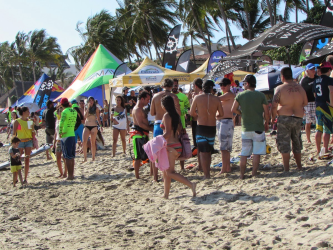
Summer hotel occupancy from US and Canada travelers is also expected to get a boost this year. Kayack.com, reported a 59 percent increase on flight and hotel searches to the destination for this past Memorial Day weekend. Fly.com also reported that the destination was placing in the top 10 destinations most searched for summer travel.

Puerto Vallarta is increasingly becoming more accessible for travelers as improvements continue to be made to the destination’s access points and infrastructure. The destination has heavily invested in renovations to seaports as well as the addition of new flight frequencies and routes.

Puerto Vallarta's natural beauty, exquisite gastronomy, superb service and people’s warmth are highlighted on the national campaign “Puerto Vallarta, Mexico’s most authentic port” through niche media and digital platforms. Puerto Vallarta’s prime location, nestled between the Bay of Banderas, one of the world’s largest bays, and the lush Sierra Madre Mountains, offers a magical and unique Mexican setting where travelers can experience the destination’s world-class infrastructure, attractions and services.

[readon1 url="http://www.eturbonews.com/46363/tourists-flocking-puerto-vallarta-over-other-beach-destinations-"]Source:www.eturbonews.com[/readon1]

mdpvThe Riviera Nayarit is so diverse it can host everything from sports events to conferences, festivals and conventions. Along with the promotions offered by the destination, occupancy has continuously hovered around 80 percent.

The Riviera Nayarit Convention and Visitors Bureau has organized and sponsored a variety of events throughout the year, events that have resulted in a rise in occupancy and income for the destination.

Holy Week and Easter have usually brought in the greatest number of tourists. This year, occupancy reached to 82% from April 12 – 17, with the highest numbers occurring during the Holy Days, April 17-20 at 90%.

The Oyster Festival at Bucerías had over one thousand attendees, and was the icing on the cake to close out the Easter week festivities, when occupancy reached 82%.

The International Beach Polo Tournament that took place during the May 4th long holiday (domestic) brought in an 87% occupancy rate for the Banderas Bay area during that weekend.

The Salsa Mambo Fest followed soon after on May 8-11, which took place during Mother’s Day. During this time period Nuevo Vallarta received approximately two thousand visitors and an income for the region of approximately $3 million Mexican pesos just for this event.

The nonstop fun continued the following weekend, May 16-18, at Banderas Bay, which increased its occupancy rate to 85% during those days. This increase was attributed to the Cruz de Huanacaxtle Open Water Tournament and the Bucerías Wind Festival, which together brought in some four thousand visitors.

That same weekend, Compostela came into its own with the Guayafest, which welcomed over 400 exhibition vehicles and over three thousand visitors, filling the hotels in Guayabitos to capacity with 100% occupancy.

On average, the first two weeks in May showed a 79% occupancy rate for Banderas Bay and Compostela.

The events continue, as Restaurant Week has already started, the Mountain Bike Race is about to start in Higuera Blanca and the San Blas International Sport Fishing Tournament is on its way. Speaking of, in 2013 the fishing tournament raised the port’s occupancy from 50% on the first day of the activities to 79% by the last day.

The Grupo Aeroportuario del Pacífico (Pacific Region Airport Group) indicated the Vallarta-Nayarit International Airport received 6.3% more travelers during the first four months of 2014 than the same period last year.

And when comparing the month of April to 2013, this year showed a 20.3% increase in domestic passengers, which were mainly attracted by the Spring Promotions launched by the Riviera Nayarit in this time period and are good through June 8th.

asprThe promotional campaign with special offers for hotels in the Riviera Nayarit increased hard sales by 207% in April 2014 compared to the same time period in 2013.
The marketing campaign launched on March 24th by the Riviera Nayarit Convention and Visitors Bureau titled “Spring Specials in the Riviera Nayarit” has considerably increased sales in the destination.

The campaign, launched over social media (Facebook, Twitter and newsletters) and sold by the agency Price Travel, resulted in an increase of hard hotel sales of 207% in April 2014 compared to the same period the year before: $546,938 in 2014 vs. $178,353 in 2013.

These promotions reached their zenith this month thanks to the Holy Week and Easter holiday as the main target was the domestic market. The campaign began on March 24th and ended June 8th.

The data revealed the hits on the official Riviera Nayarit page (specifically the spring sale landing page) indicated the Spanish-language page registered 1,201 visits and the English-language page registered 292.

The campaign was shared with 16,023 fans on the Spanish-language Facebook page; 7,601 fans on the English-language Facebook page; 7,786 followers on the Spanish-language Twitter page; 4,719 Twitter followers on the English-language page; 3,507 contacts in the Spanish-language newsletter database and 38,814 contacts in the English-language newsletter database.

The promotion was initially launched with 10 hotels offering special discounts; however, during the process even more joined in, until a total of 18 hotels were offering specials.

The participating hotels included the Belair, Hard Rock Hotel Vallarta, Riu Palace Pacifico, Riu Jalisco, Riu Vallarta, Samba Vallarta, Iberostar Playa Mita, La Tranquila Breathtaking Resort, Dreams Villamagna, Marival Resort, Marival Residences, Rancho Banderas, Grand Velas Riviera Nayarit, Villa del Palmar Flamingos, Villa La Estancia, Occidental Grand, St Regis and Villa Varadero.T

MEPVMexico’s Ministry of Tourism has reported that Puerto Vallarta had average hotel room occupancy of 8,612 rooms from January to April, 2014, 10% more when compared to the same period in 2013. This represents an 8% increase in overall hotel occupancy for the destination which had the biggest increase in hotel occupancy of Mexican beach destination so far this year. Puerto Vallarta’s International Airport (PVR) received 126,000 international passengers from January to April, 2014.

Summer hotel occupancy from US and Canada travelers is also expected to get a boost this year. Kayack.com, reported a 59% increase on flight and hotel searches to the destination for this Memorial Day; Fly.com also reported that the destination was placing in the top 10 destinations most searched for summer travel.

Puerto Vallarta is increasingly becoming more accessible for travelers as improvements continue to be made to the destination’s access points and infrastructure. The destination has heavily invested in renovations to sea ports as well as the addition of new flight frequencies and routes.

Puerto Vallarta's natural beauty, exquisite gastronomy, superb service and people’s warmth are highlighted on the national campaign “Puerto Vallarta, Mexico’s most authentic port” through niche media and digital platforms. Puerto Vallarta’s prime location, nestled between the Bay of Banderas, one of the world’s largest bays, and the lush Sierra Madre Mountains, offers a magical and unique Mexican setting where travelers can experience the destination’s world class infrastructure, attractions and services.

Mexico’s Ministry of Tourism has reported that Puerto Vallarta had average hotel room occupancy of 8,612 rooms from January to April, 2014, 10% more when compared to the same period in 2013. This represents an 8% increase in overall hotel occupancy for the destination which had the biggest increase in hotel occupancy of Mexican beach destination so far this year. Puerto Vallarta’s International Airport (PVR) received 126,000 international passengers from January to April, 2014.

Summer hotel occupancy from US and Canada travelers is also expected to get a boost this year. Kayack.com, reported a 59% increase on flight and hotel searches to the destination for this Memorial Day; Fly.com also reported that the destination was placing in the top 10 destinations most searched for summer travel.

Puerto Vallarta is increasingly becoming more accessible for travelers as improvements continue to be made to the destination’s access points and infrastructure. The destination has heavily invested in renovations to sea ports as well as the addition of new flight frequencies and routes.

Puerto Vallarta's natural beauty, exquisite gastronomy, superb service and people’s warmth are highlighted on the national campaign “Puerto Vallarta, Mexico’s most authentic port” through niche media and digital platforms. Puerto Vallarta’s prime location, nestled between the Bay of Banderas, one of the world’s largest bays, and the lush Sierra Madre Mountains, offers a magical and unique Mexican setting where travelers can experience the destination’s world class infrastructure, attractions and services.


[readon1 url="http://www.visitpuertovallarta.com/en/blog/puerto-vallarta-reports-8-increase-the-first-4-months-of-2014-with-72-hotel-occupancy#.U3-Co_ldXUU"]Source:www.visitpuertovallarta.com [/readon1]