
s1.reutersmedia.net

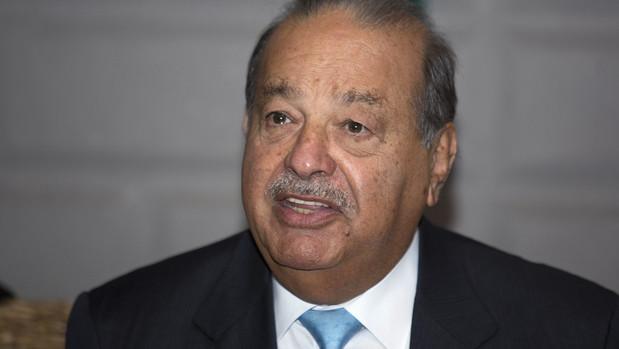
America Movil SAB’s top executives, attempting to maintain the company’s grasp on the telephone market it has ruled for more than a decade, are reassessing the structure of Carlos Slim’s $73 billion carrier.

The company put a special board committee to work after regulatory changes forcing it to share infrastructure and cut fees in Mexico, its biggest market. The members may consider spinning off faster-growing businesses in 17 other countries, according to analysts at Macquarie Group Ltd. Or, they could break up the Mexican unit, reducing its 80 percent share of the phone market to below 50 percent, Banco Itau BBA analysts said.

America Movil, which was also sanctioned this year by Mexican officials for operating more than half of the nation’s mobile-phone accounts, said last week the committee will consider a wide range of options that could be proposed to the full board or to shareholders. The company gave no indication of what specific scenarios it was reviewing and when it might make a decision, leaving all alternatives on the table.

“It could go in more than one direction,” Valeria Romo, an analyst with Banco Monex SA, said in a phone interview. “This is 100 percent focused on the regulator’s decision earlier this year.” She has a hold rating on the shares.

America Movil brought the committee together after the newly created Federal Telecommunications Institute, or IFT, declared it dominant, according to a filing last week. While it challenges the csruling, the company said the group will “assess the various structural, commercial, technological and other options available to it, as well as the opportunities offered by the new Mexican regulatory framework, in order to continue with the development of the telecommunications sector and providing services with high quality, state-of-the-art technologies and under best conditions.”
An America Movil press official declined to comment further on the committee’s work.

Proposing Breakups

Last year, lawmakers made constitutional changes to let regulators force companies to divest assets if they’re too dominant in the telecommunications industry. A joint Senate committee released a draft bill this week that would give dominant companies a way to propose their own breakups to the IFT, with the goal of reducing their market share below 50 percent.

Slim’s company must consider “bold, adaptive moves” to reduce the regulatory pressure it faces, Itau analyst Gregorio Tomassi wrote in a report last week.

The company “has an incentive, even a responsibility, to exhaustively explore breakup options as alternatives that could actually maximize value under the current conditions,” he said. He has the equivalent of a hold rating on the stock.

Shedding Clients

To cut its customer base, America Movil could try to shed its less profitable clients in rural and poor areas where competitors don’t even offer service because it’s unprofitable, said Vector Casa de Bolsa SA analyst Julio Zetina. America Movil would have to win regulatory approval to adjust its operating license, which requires it to cover those populations under the terms of its 1990 privatization.

“The strategy here could be, ‘What segment of clients can I release to lower my market share under 50 percent?’” Zetina said. “They have been obligated to serve markets that don’t represent their financial interests, so even if they drop their share by, say, 25 percent, the impact on revenues is infinitely lower.” He has a hold rating on the stock.

America Movil has looked into structural changes before. In 2011, its landline unit, Telmex, announced a reorganization that would have created a separate unit, Telmex Social, for its customers in rural and marginalized communities. With the division, which would have represented about 10 percent of its subscribers, Telmex sought for regulators to view it as two companies. Regulatory approval for the creation of Telmex Social was never granted.

Outside Directors

The eight-member committee formed by America Movil includes three outside board members: Alejandro Soberon, chief executive officer of entertainment company Corporacion Interamericana de Entretenimiento SAB; Pablo Gonzalez Guajardo, CEO of Kimberly-Clark de Mexico SAB; and Ernesto Vega Velasco, a retired executive of Grupo Kuo SAB, a consumer-goods and auto-parts conglomerate. Their presence gives the group independence and validity in front of regulators, Zetina said.

The committee includes five America Movil executives, including CEO Daniel Hajj, Slim’s son-in-law, and Telmex head Hector Slim, the billionaire’s nephew. The elder Slim isn’t on the committee himself.

Breakups Hard

Breaking up a dominant phone carrier to create more competition has proven difficult to sustain. To settle an antitrust suit in the U.S., AT&T Corp. agreed in 1982 to split with its regional phone networks, which would provide local telephone service while the national company focused on long distance, manufacturing and research. Many of those units are now part of the same company again, called AT&T Inc., while Verizon Communications Inc. owns most of the rest.

In Brazil, the government broke its telephone monopoly into 12 holding companies in 1998, including three regional landline carriers, eight mobile-phone companies and one long-distance carrier. They have since joined forces to create four major telecommunications providers in Brazil.

In both cases, the breakups separated the providers’ national infrastructure, such as the fiber-optic cables that stretch across the country, from their local networks, such as home-phone lines. Mexican regulators have already ordered America Movil to let its competitors use its network -- the biggest in the country -- to provide service to their customers, removing a key competitive advantage.

Calming Investors

The regulatory pressure has weighed on America Movil, sending shares down 11 percent this year, the sixth-worst performer on Mexico’s benchmark IPC index of 35 companies. Last week, Slim, 74, boosted his investment in the company, acquiring AT&T’s 8.3 percent stake for $5.57 billion. By increasing his holdings to 57 percent of the company, Slim calmed investor concerns that AT&T would dump its shares on the open market, diluting the stock, Itau said.

The acquisition was a sign that Slim “views value in the company,” Macquarie analyst Kevin Smithen wrote in a June 30 report. AT&T sold the stake because it’s acquiring satellite company DirecTV, which competes with America Movil for TV customers in Brazil and Colombia.

America Movil’s committee could consider other structural changes that would reduce its dependence on Mexico as regulations tighten there, Smithen said. Spinning off the businesses outside of Mexico would give investors access to a company with faster growth, he said.

TV Opportunity?

Selling the company’s 40,000 wireless towers in Latin America, as carriers from AT&T to Oi SA have done around the world, could produce as much as $10 billion that could be used for stock repurchases or for acquisitions, Smithen said. The company could also raise money by disposing of its stake in Dutch carrier Royal KPN NV, which rejected a full takeover last year, he said.

The funds would let America Movil seek acquisitions in Brazil or the U.S., or could help the company acquire satellite-TV operator Dish Mexico, Smithen said.

America Movil already has an option to take control of Dish Mexico if Slim’s company gets a license from the government to offer TV service. A Dish Mexico press official declined to comment.

The IFT has said Slim’s company must comply with its regulatory requirements for 18 months before it can apply for the TV license. America Movil has the technology to offer TV over its phone lines, too, as soon as it’s allowed, Zetina said.

“The infrastructure is there -- it’s like opening a valve,” Zetina said. He said America Movil is thinking, “I already give you telephone, Internet and data services -- now I can add another service to that list.”

To contact the reporter on this story: Patricia Laya in Mexico City at This email address is being protected from spambots. You need JavaScript enabled to view it.

To contact the editors responsible for this story: Sarah Rabil at This email address is being protected from spambots. You need JavaScript enabled to view it. Crayton Harrison

[readon1 url="http://www.bloomberg.com/news/2014-07-03/how-carlos-slim-can-fix-america-movil-s-antitrust-problem.html"]Source:www.bloomberg.com[/readon1]

xc

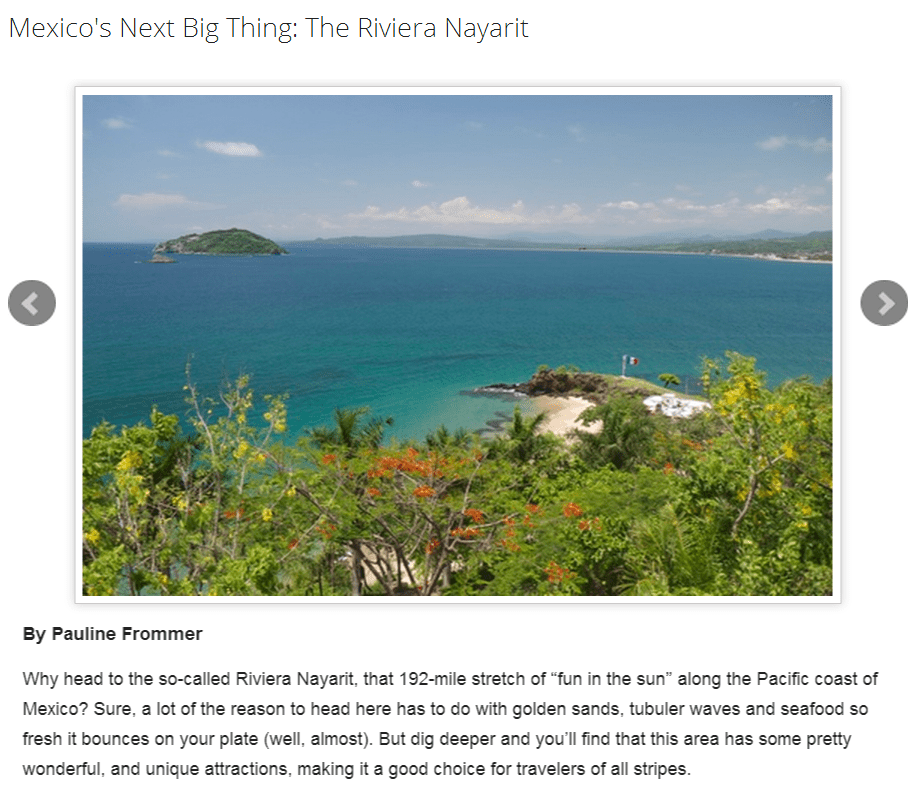
Arthur Frommer’s daughter, Pauline, published an article showcasing the Riviera Nayarit’s top ten special attractions, which she experienced during her FAM trip visit, coordinated by the destination’s CVB.

As a result of the FAM trip the Riviera Nayarit Convention and Visitors Bureau (CVB) coordinated with Pauline Frommer, daughter of Arthur Frommer, the travel maven published an article called “Mexico’s Next Big Thing: The Riviera Nayarit.”

Having already received the seal of approval from Mr. Frommer during his “Top 14 Destinations to Visit in 2014,” this time the focus was the top ten attractions Pauline highlighted as reasons to visit Mexico’s Pacific Treasure.

Among them were the destination’s vast beaches, birdwatching, idyllic colonial towns, exquisite folk art, the Marietas Islands, the relaxing all-inclusive resorts, water sports, its romantic ruins, its coastal surfing villages and its exclusivity and privacy for the rich and famous.

“…a lot of the reason to head here has to do with golden sands, tubuler [sic] waves and seafood so fresh it bounces on your plate (well, almost). But dig deeper and you’ll find that this area has some pretty wonderful, and unique attractions, making it a good choice for travelers of all stripes,” wrote Pauline Frommer.

The articles on the www.frommers.com portal serve as a tourist guide with a global reach, and they’re systematically sent to different media as well as to interested tourism markets.

The site itself has slightly less than 500 thousand unique visitors each month, which means it will give the destination very important exposure, particularly around the European and American continents.

A radio show is in the works produced by the same editorial group. It will go into further detail regarding all of the destination’s wonderful attractions as yet to be recommended. Pauline herself was awe-struck at what she experienced in the destination as far as tourism is concerned, and she has committed herself to give the Riviera Nayarit the promotion it deserves.

Click here to read the article in its entirety

s2.reutersmedia.net

Germany's BMW AG (BMWG.DE) will unveil this week plans to build a new factory in Mexico, a government official said, as the company seeks to meet growing demand for premium cars.

News of the factory comes just days after BMW's German rival, Daimler, announced similar plans, and adds to a growing list of companies plowing money into car making in Mexico.

Speaking on condition of anonymity, the Mexican official said the plant would likely amount to an investment of at least 1 billion euros ($1.36 billion) and would be located either in Hidalgo state north of Mexico City or San Luis Potosi in central Mexico.

A spokesman for Munich-based BMW said earlier on Monday that "a decision will be made public" on July 3.

BMW declined to comment further.

A new factory in Mexico would come on top of BMW's plans to invest $1 billion to expand capacity by 50 percent at its plant in Spartanburg, South Carolina.

BMW Chief Executive Norbert Reithofer said last week that the Bavarian carmaker was still deliberating about where to locate a new factory and would reach a decision before the summer break.

Premium auto makers BMW, Audi and Mercedes-Benz are expanding global production as their factories in Germany struggle to meet strong demand for off-road vehicles and limousines in the United States and Asia.

Supplier sources said BMW had already mapped out a production timetable for Mexico, with a tentative plan to begin assembly in late 2017, ramping up annual capacity to 200,000 by 2020.

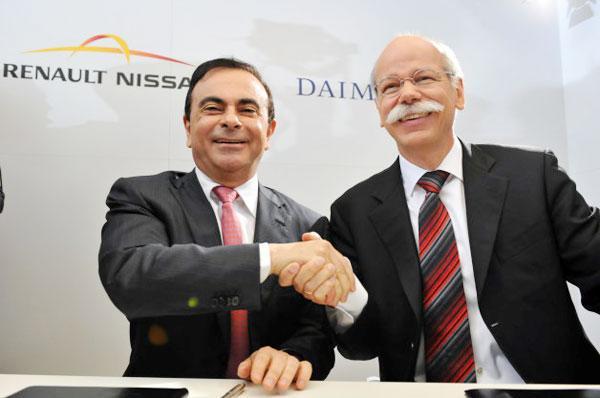
On Friday, Daimler AG (DAIGn.DE) and Renault Nissan (RENA.PA) (7201.T) said they would invest 1 billion euros ($1.36 billion) to develop small cars and build a factory in Aguascalientes, Mexico.

Manufacturing in Mexico allows European car makers to sell vehicles in the United States while avoiding some of the currency and tariff costs that crimp profits on imports. Mexico also offers lower labor costs than Germany and the United States.

Daimler's Mercedes-Benz, Nissan Motor Co, Honda Motor Co (7267.T), Mazda Motor Corp (7261.T) and Volkswagen AG (VOWG_p.DE) already have large auto plants in Mexico.

At around $2.50 an hour, manufacturing wages in the country are nearly 20 percent cheaper than in China, according to a Bank of America study. That study put U.S. manufacturing wages at just under $20 an hour, on average.

German car makers' overall output is set to rise for the fifth year in 2014, driven by overseas production, German auto industry association VDA has said.


[readon1 url="http://www.reuters.com/article/2014/06/30/us-bmw-mexico-factory-idUSKBN0F52EA20140630"]Source:www.reuters.com[/readon1]

sc

A local Sacramento web design company, Frog Stone Media, recently launched a website for Visit-Vallarta.com, a company which promotes tourism for Puerto Vallarta and Banderas Bay.

Sacramento, CA (PRWEB) July 01, 2014

Organization and scalability were first on the minds for Frog Stone Media’s team strategy to create a successful website for Visit Vallarta. With an extensive and constantly changing information base, organizing the data in a way which feels intuitive and natural for visitors seeking information was imperative.

Frog Stone Media worked to ensure the owners of Visit Vallarta could quickly and easily update information on the website while on the go and with great fluidity.

Visit Vallarta is organized with traveling essentials, different zones around Banderas Bay, beaches, art, maps, accommodations, restaurants for each city, adventures, trip reports, and trending topics specific to the region.

The Essentials section contains everything from what to pack, traveling through public transit or driving on your own, to tipping and emergency information, as well as everyone else a first time visitor would need to know.

Discover includes a list of famous beaches, landmarks in each city, and the zones. Photos and descriptions of each destination are provided, making sure visitors know exactly where they need to go.

The Maps are each carefully curated and drawn to give tourists a handy guide on how to get around and where important landmarks are located in relation to each other.

Accommodations cover everything from all inclusive hotels and resorts to hostels.

Food and restaurants contain a list of restaurants in each city, along with the payment types accepted, hours, type of food, and location.

Adventures provide information on reputable companies to book through, as well as a few suggested itineraries. Free activities are also listed.

The company mascot, Gilbert, has his own corner where trip reports have been published, locals in the spotlight, and information about events and trending topics.

See more about http://visit-vallarta.com here.

About Frog Stone Media: Frog Stone Media is a local Sacramento web design company which excels in developing websites using WordPress and HTML5 responsive websites which follow the latest SEO standards. Learn more about Frog Stone Media here.


[readon1 url="http://www.prweb.com/releases/mexico/puerto-vallarta/prweb11988741.htm"]Source:www.prweb.com[/readon1]

nissan-daimler

A new automotive plant in Aguascalientes will build both Daimler and Nissan vehicles, according to an announcement by the two companies today.

The 50-50 joint venture between Daimler AG and Nissan Motor Co. represents an investment of US $1.4 billion. The two firms will share planning, development and manufacturing of Mercedes and Nissan compact luxury cars.

The Wall Street Journal says the venture highlights a trend toward greater cooperation in the global automotive industry.

The new plant will be built near an existing Nissan factory and will produce 300,000 cars a year when it reaches full capacity in 2021. It will create 5,700 local jobs when fully operational.

Production is expected to begin in 2017, with Nissan Infiniti models. Mercedes-Benz vehicles will follow a year later.

Daimler has already engaged in a similar sharing of manufacturing and resources through a partnership with Renault, building the Renault Twingo and Mercedes Smart Car with shared design and parts.


[readon1 url="http://mexiconewsdaily.com/news/nissan-mercedes-build-cars-new-plant-aguascalientes/"]Source:mexiconewsdaily.com[/readon1]

     
  bimbo   
   Grupo Bimbo is one of six Mexican firms that have become world leaders in their sectors.  


Six Mexican firms are world leaders in their sectors due to free trade, good administration, international expansion strategies and acquisitions, reports El Financiero.

Grupo Bimbo, Gruma, Mexichem, Coca-Cola Femsa, Grupo Televisa and José Cuervo, with combined sales totaling nearly US $42 billion last year, weren’t satisfied with being leaders within Mexico. So they went out and conquered the world, the newspaper reports.

The North American Free Trade agreement is credited with being the principal reason for the companies’ success internationally. NAFTA propelled Mexican firms to globalize.

José Antonio Quesada of PricewaterhouseCoopers explained that the importance of NAFTA is reflected in the results at bread-maker Bimbo: 96% of its sales in 1994 were within Mexico. Last year, only 42% of its sales were in this country.

With its purchase of Sara Lee, Bimbo became the biggest bakery in the world and has a presence in 21 countries.

Gruma is a major producer of corn flour with annual production of 2.6 million tonnes and operates in 35 countries.

The others on the list:

  • Mexichem is a leader in the manfacture of PVC pipe which it sells in 50 countries.
  • Grupo Televisa is the largest Spanish-language media company in the world, having generated 93,000 hours of content distributed in 85 countries. Its penetration in Spanish-speaking homes is estimated between 60 and 85%.
  • Coca-Cola Femsa is the biggest bottler of Coca-Cola products in terms of sales due to its expansion in Mexico, Latin America and Asia. Its 1995 sales were 355 million cases with operations only in Mexico and Argentina. Its sales tody are 3.2 billion cases in 12 markets.
  • Jose Cuervo is the oldest business in Mexico and second oldest in Latin America. Founded in 1795, it is the largest tequila maker in the world with sales in more than 90 countries.

In spite of severing relations with its partner Diageo, an international beverage company, it has maintained its position as the world leader in tequila.


[readon1 url="http://mexiconewsdaily.com/news/6-mexican-firms-went-conquered-world/"]Source:mexiconewsdaily.com[/readon1]


blanca-trevino 
 Blanca Treviño, CEO of Softtek.
 

If Mexico wants to meet its objectives in terms of technological innovation, it needs to work with more Mexican firms and talent, a strategy that would spark growth in the sector.

In an interview with CNN Expansion, one of the few women working in the technology industry in Mexico advised that the government needs to work more with startups and small and medium-sized businesses in order to encourage development of the local market.

This is a fundamental means of sparking entrepreneurship in the technology sector, said Blanca Treviño, CEO of information technology firm Softtek.

“This is a most favorable time to spark new enterprises; yes, there is a rhythm of growth, but we need more new businesses. Something that would facilitate this would be Mexico giving more opportunities for new businesses to provide their services.”

If all the government is going to do is offer broadband access, technology businesses won’t have the opportunity to become integrated into the market, she said during the technology exposition, Campus Party 2014 in Zapopan, Jalisco.

She cited the United States, China, Spain, India and others where the participation rate of national firms in government projects stands around 40%. In Mexico the figure is barely one per cent, according to the consultancy Gartner.

“This makes it very difficult for the sector,” Treviño continued. “This local consumption is fundamental for the growth of small and medium-sized businesses. I’m not saying don’t give the contracts to foreigners, but I would like to see a balance, this is key.”

One way of achieving that would be through the integration of local firms into government purchases for projects such as the National Digital Strategy (EDN). Treviño said three foreign firms appear in the contracts currently approved by the EDN, Google, Microsoft and Oracle, yet only one Mexican firm is among them, which is a distributor for an American firm.

Treviño was one of the presenters at the event in Zapopan. Based in Monterrey, Softtek is an international provider of IT services with offices in Latin America, United States, Europe and Asia.

She wrote late last year on Quartz that Latin America is becoming a hotbed for business innovation. “A growing middle class with disposable income coupled with the rise of the digital information economy and increased access to mobile broadband has created ripe conditions for innovation throughout the region.”

According to the Inter-American Development Bank, broadband internet access has tremendous potential to promote growth. The bank states that a 10% increase in broadband penetration in Latin American countries brought about an average increase of 3.19% in per-capita GDP, an 2.61% increase in productivity and generated 67,000 new jobs.

[readon1 url="http://mexiconewsdaily.com/news/buy-tech-services-locally-encourage-growth-says-firms-chief/"]Source:mexiconewsdaily.com[/readon1]


  ruben1   
  Rubén Morones found a way of combining silver salts with antibiotics to improve their efficiency.   

A process that improves the effectiveness of antibiotics and a system for monitoring pregnancies in rural areas have won awards for two Mexicans.

The MIT Technology Review presented Innovators Under 35 prizes to Rubén Morones, 33, of the Autonomous University of Nuevo León (UANL) and Fernando Rojas Estrada, 32, of the Carlos Slim Health Institute, in the category social innovation.

Morones was recognized for developing a process that combines antiobiotics with silver salts to improve treatment against infection. Silver allows the antibiotics to penetrate bacteria cells more easily and treat the infection.

“Silver can be seen as the Trojan horse or vehicle that opens the door to antibiotics to enter the cell and cause further damage,” says Morones. “It’s as if we have had a ‘super’ antibiotic cocktail behind a first aid kit where the key is made of silver.”

The discovery is important because microbes have been developing a resistance to common medications.

Rojas received the award for AmaneceNET, a system that permits distance monitoring of women during pregnancy. It is an application that runs on an Android tablet with which workers in the field can enter medical information.

That information is analyzed and what results is an evaluation of the woman’s condition and any possible risk that might exist. On average, 960 women die in Mexico every year during pregnancy.

Rojas was featured in a story on MND on June 22.

There were 10 finalists in the Innovators Under 35 program, held this year for the third time. The other eight were:

  • Alejandro Cantú — developed a seismic satellite warning system that can measure the intensity of earthquakes.
  • Blanca Lorena Villareal — created a robotic nose that can detect and locate the source of a smell.
  • Caleb Rascón — created a robotic system that can detect and locate sound sources.
  • Daniel Jacobo — developed an alternative system of modification to convert vegetable waste into bioactive compounds.
  • Guillermo Ulises Ruiz — designed a strategy for improving the delivery of therapeutic molecules for cardiac deficiency.
  • Josué Gio — designed an application that allows travellers to book accommodation at the last minute.
  • Juan Leonardo Martínez — created an app to read quickly and precisely analyses made by colori

[readon1 url="http://mexiconewsdaily.com/news/mexicans-35-awarded-innovative-talent/"]Source:mexiconewsdaily.com[/readon1]

6415047w

Mexico City, Jun 27 (EFE).- President Enrique Peña Nieto said Mexico plans to invest 415 billion pesos ($31.9 billion) in water infrastructure between 2014 and 2018 to guarantee all Mexicans have access to that vital resource.

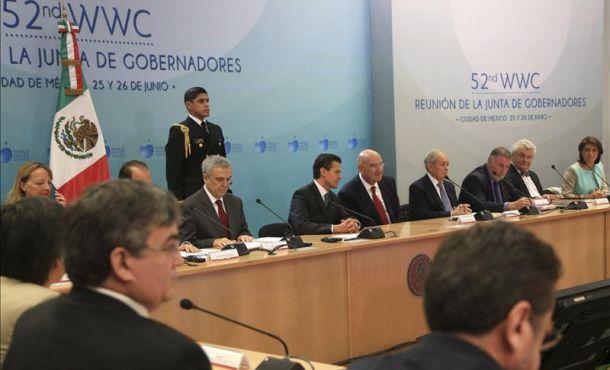
Speaking at the conclusion of a meeting here of the World Water Council's Board of Governors, Peña Nieto said Mexico is aware of the water challenges at the global and national level.

"Today, 35 million Mexicans have limited water access," the president said, recalling that per-capita water availability in the country fell from 18,035 cubic meters (635,650 cubic feet) in 1950 to 3,982 cubic meters in 2013.

He noted that Mexico's geographical location makes it vulnerable to droughts and also prone to hurricanes and intense rainfall, which raise water levels but also cause serious damage to homes, basic infrastructure and crops.

Peña Nieto said water is a basic resource for human development and wellbeing and that its availability is essential for food production, hygiene and public health, as well as the viability of human settlements and companies' operations.

He stressed, however, that the era of easy and abundant water has come to an end in Mexico and across the globe.

The president added that those responsible around the world for water management and supply will face increasingly complex scenarios due to overuse and pollution, intensified by demographic growth and climate change.

Water management is a global issue that requires the commitment of the international community, according to Peña Nieto, who expressed confidence that the WWC's efforts will lead to mechanisms that guarantee water supplies for the entire planet.

The 36 members of the council's Board of Governors participated Wednesday and Thursday in a preparatory meeting for the 7th World Water Forum 2015, to be held in South Korea.

They discussed issues related to the human right to water and the relationship between that resource and food production, energy, health, nature, natural disasters, climate and urban development, among other aspects.

[readon1 url="http://www.laprensasa.com/309_america-in-english/2604060_mexico-to-invest-31-9-bn-in-water-infrastructure-through-2018.html"]Source:www.laprensasa.com/[/readon1]

6411429w

Mexico's economy will continue to recover during the rest of this year, but the situation in international markets poses risks, the Financial System Stability Council, or CESF, said.

Foreign demand and the federal government's stimulus policies should help bolster the recovery in the wake of first-quarter gross domestic product (GDP) growth that came in lower than expected, the CESF said in a statement.

Demand in developed countries has given a boost to Mexico's economy, but "signs of relative weakness persist," the CESF, whose members are the heads of Mexico's main economic organizations, said.

Monetary policy in the main developed economies is likely to experience "gradual" normalization, the CESF said.

Investors' outlook for monetary policy "has contributed to low volatility" in the financial markets and "encouraged capital flows to return to emerging economies," the council said, referring to the low interest policies adopted by many central banks around the world.

Mexico's GDP grew 1.8 percent in the first quarter, compared to the same period in 2013, a figure that was well below expectations.

The government has revised its economic growth forecast for this year downward from 3.9 percent to 2.7 percent.

Mexico's economy grew just 1.1 percent in 2013 due to a strong deceleration in the first half of the year.


[readon1 url="http://latino.foxnews.com/latino/news/2014/06/26/mexico-economy-is-in-recovery-mode-financial-council-says/"]Source:latino.foxnews.com[/readon1]

screen-shot-2014-06-25-at-33722-pm

Buying a home overseas may seem like an unaffordable investment, but some places offer luxury at a bargain.
With the help of Point2Homes, we've put together a list of some pretty overseas properties that are available for less than $50,000, which is the median household income in the U.S.

These homes range from a cozy home in Ireland to a seaside apartment in Thailand.


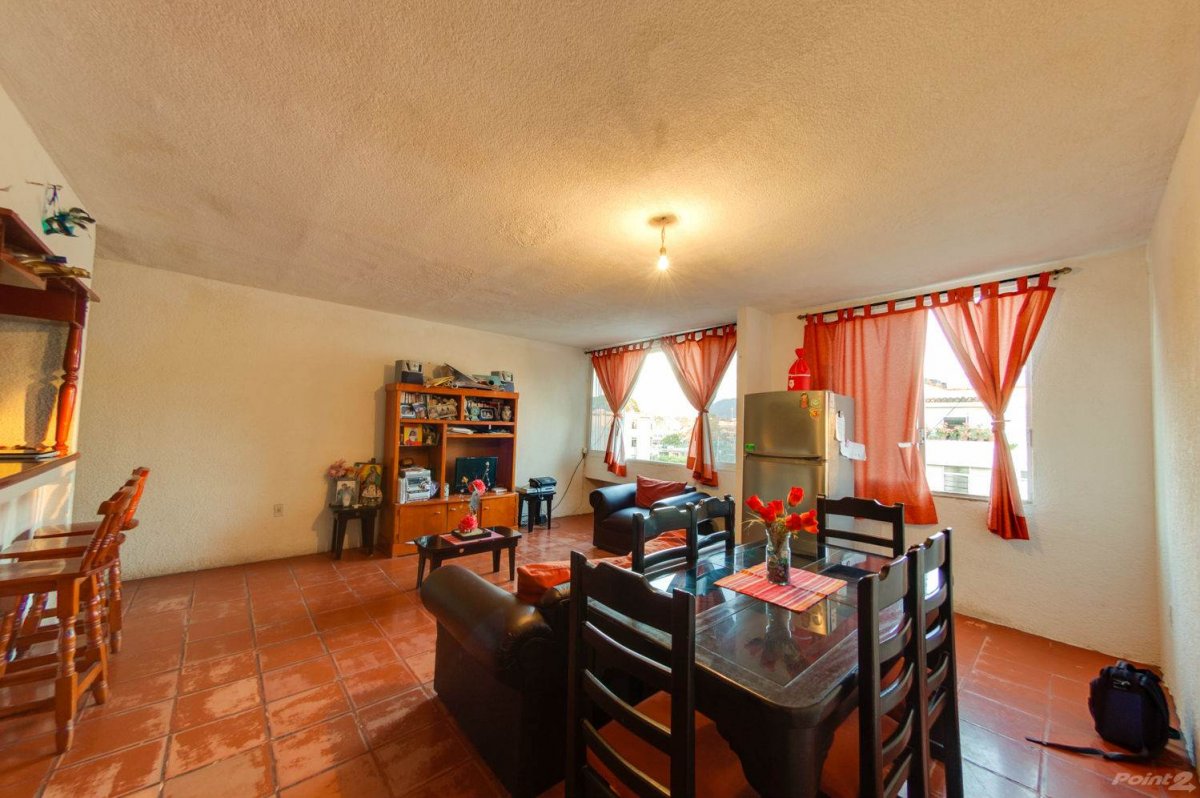
1. Pick up a condo in the resort town of Puerto Vallarta, Mexico, for $49,900.
This two-bedroom condo is located in Puerto Vallarta, a resort city on Mexico's Pacific Coast. The 713-square-foot home is located on the fourth floor of its building and has nice touches including a breakfast bar and a laundry room. It is close to shopping, restaurants, and more.

05-mexico 1

2. This apartment on the Gulf of Thailand is $47,746.
Not only is this home located in the exciting city of Pattaya, but it has incredible views of the Gulf of Thailand as well. The 398-square-foot condo comes partially furnished and has a balcony, as well as access to the building's communal gym, barbecue area, and jacuzzi.

screen shot 2014-06-25 at 3.32.00 pm

3. A home in a quaint Irish village for $47,687.
This quaint three-bedroom home is located in Shinrone, an Irish village, and though it's in need of some repair, it certainly has charm. The home has a garden, central heating, and a large brick fireplace.

09-ireland

4. Stunning views in Andalusia, Spain, for $47,611.
For under $48,000, you could have this luxurious two-bedroom apartment in Almeria, Spain. This apartment has both sea and mountain views, a large terrace, access to communal tennis courts and a pool, and private underground parking and storage. Did we mention it's only 10 minutes from the coast?

08-spain

5. Live in the Costa Rica forest for $45,500.
This ground-level condo is located in the tropical dry forest of Costa Rica and features both mountain and river views. The one bedroom condo is 658 square feet and has access to a community pool.

04-costa-rica

6. Buy near the beach in the Dominican Republic for $42,000.
This one-bedroom condo in the small town of Sosua is a great tropical getaway. It is within walking distance of downtown and the beach and also has a garden area and a large pool on site. The condo is furnished and has a balcony.

07-dominican-republic

7. Purchase a pad in Cape Town for just $41,197.
At this two-bedroom flat in Cape Town, South Africa, you'll be living in the most popular international tourist destination in Africa. The flat, which is located 9 miles from the city center, is listed as a perfect starter home, with 592 square feet of space and 24-hour security.

screen shot 2014-06-25 at 3.34.46 pm

8. Lead a tropical life in the Philippines for $38,200.
Mactan Island is a great place to live, with opportunities to go diving, snorkeling, and island hopping. This two-bedroom home on the island is larger than most on the list at 1,350 square feet. It is located within the Brookfield subdivision, which features a guardhouse, a park and playground, a tennis and basketball court, and more.

screen-shot-2014-06-25-at-33722-pm

9. A home in the heart of Budapest for $28,000.
Budapest is a beautiful city full of history, and it also happens to be very affordable. This studio apartment is a steal at only $28,000. It has large windows that light up the small space and it's located very close to the subway.

10-hungary

[readon1 url="http://www.businessinsider.com/homes-for-less-than-50000-around-the-world-2014-6?op=1"]Source:www.businessinsider.com[/readon1]

1003-oil-gulf-630x420 large

Mexico’s historic energy reform has understandably whetted the appetites of oil companies worldwide. But, concerns are growing that Mexico’s tax terms might turn out a little too tough – potentially scaring off, rather than attracting, investors.

How so? Let’s recap: Mexico expects to offer a range of licences and profit – or production – sharing contracts to private investors in a tender next year, the terms of which may become known in late in 2014.

Full details of the tax terms will depend on the licences or contracts on offer, but the government has given some broad outlines, including that the total tax take could be as high as 75 per cent.

That looks around the international ballpark, so what’s the problem?

Potentially two things, at least for foreign majors, who have vented their concerns in private forums, to the government and to their lawyers.

One is the concept of so-called “ring-fencing”, which the World Bank sums up as:

A limitation on consolidation of income and deductions for tax purposes across different activities, or different projects, undertaken by the same taxpayer

The other is a time-limit on the ability to amortise losses. Companies would have 10 years to deduct such losses from investments, despite the fact that in some projects – think deep- or ultra-deep water exploration, which can easily take more than a decade to bear fruit – they may not be making a profit in 10 years and would thereafter lose the ability to deduct the investment.

Here is Comexi, a think-tank, in a new report:

The combination of ring-fencing with the limit on amortisation of fiscal losses could produce an effective taxation rate higher in this sector than in other industries.

It fears there could be “distortions that inhibit investment” – a grave prospect: Inhibiting investment would defeat the whole point of the reform.

It’s a serious concern. As Eduardo Barrón, international tax partner at Deloitte in Mexcio told beyondbrics, the rules “could substantially increase” the effective tax rate for companies not in profit after a decade – though he noted that companies would take that into account when submitting offers during the tender process.

As is normal in the industry, oil and gas players in Mexico can expect to have to pay a royalty and other charges, besides Mexico’s 30 per cent corporate tax rate.

Jorge Luis Preciado, head of the main opposition PAN party in the Senate (the PAN, remember, pushed the government to make the reform much broader and more investment-friendly than originally planned), did a quick back-of-the-envelope calculation recently, telling foreign correspondents:

The most conservative estimates are that for every barrel that costs $100, $50 is oil revenue [for the state], $18 in value-added-tax, $6 in income tax and a specific tax that the finance ministry is going to impose, so more or less the government is taking away $82 with $18 for the company who extracts it.

Mind you, as Roberto Mendoza, senior corporate tax manager at KPMG noted, the legislation does offer the sector an exemption from a normally mandatory 10-per cent profit sharing scheme known as PTU, a potentially welcome sweetener.

Indeed, the government has to tread a fine line between being attractive enough to companies and keeping the lion’s share of revenue that comes from a non-renewable resource that belongs to the state.

But Miguel Messmacher, income undersecretary, told beyondbrics, neither ring-fencing nor the deductions limit should scare away petrodollars.

Ring-fencing is something used in other countries to ensure that the state receives the oil rent – it’s not something we’re inventing for Mexico or something that has impeded private participation in the sector in other countries. What we’re trying to avoid is that contractors can take costs from other activities and try to reduce what they have to pay in tax linked to hydrocarbons …

The 10-year limit on deductions is not something that applies especially to the hydrocarbons sector but is a disposition of income tax applicable to all productive sectors in Mexico, including some that have projects which take a long time to mature (steel plants, dams, roads, airports, etc). We have never had problems in those sectors.

On the contrary, it can be a blessing, he believes:

In fact, the time limit has served as an incentive for investment projects to be conducted more rapidly because a company is seeking income as fast as possible to be able to take advantage of this cost deductibility.

Pedro van Meurs, who has advised some 90 governments on oil and gas fiscal terms in the last 40 years, including consulting for Mexico’s state oil company, Pemex, on service contracts, and working in China, Canada, Bolivia and Kuwait, is not so sure.

In a new study of the legislation, he says:

The proposed Hydrocarbon Revenue Law significantly reduces the benefits that Mexico could obtain from the Constitutional change, despite attractive features in terms of fiscal structure, royalty rates and tax depreciation rates included in the proposed law.

He is concerned that the regime is too complex and bureaucratic; leaves too much to be decided in the contracts “creating significant possibilities for conflicts and a chaotic administration”; leaves “significant loopholes for contractors to achieve unwarranted profits”; creates loopholes for contractors to make “unwarranted profits”; and:

Introduces an excessive system of ring-fencing and establishes disincentives which will reduce investor interest for no particular benefit to Mexico

Ouch.

Of course, tax is just one of several elements investors will have to weigh in assessing whether to rush to Mexico or not. Compared with many other countries where oil and gas is extracted, Mexico looks like paradise – a stable economy, scant prospect of a sudden shift in the legal framework, plus proximity to the US with all the synergies and logistical benefits that brings.

It remains to be seen whether Congress – where approval of the energy bills to implement the reform have become bogged down in political horse-trading – will make any changes.

Mexico has done its homework carefully and the government knows it cannot afford for its first tender to be a flop. Special pleading by rich oil majors, then, or a real potential impediment to investment?

[readon1 url="http://blogs.ft.com/beyond-brics/2014/06/25/mexicos-tax-regime-scaring-off-oil-company-investors/"]Source:blogs.ft.com[/readon1]

Mexico-seeks-more-UH-60-Black-Hawks-for-counter-narcotics-effort

WASHINGTON, June 25 (UPI) --Mexico has requested five additional UH-60 Black Hawk helicopters from the United States for its counter-narcotics activities.
The proposed procurement of the Black Hawks, which has received approval from the U.S. State Department, was made public by the U.S. Defense Security Cooperation Agency in its required notification to Congress of a possible Foreign Military Sales program contract.

Specific requested are five UH-60M Black Hawk Helicopters with designated unique equipment, 13 T700-GE-701D engines, a dozen embedded global positioning systems/inertial navigation systems, 10 M134 7.62mm machine guns, and Safire III forward-looking infrared radar Systems.

Communications equipment, air worthiness support, spare and repair parts and support equipment are also included in the package, which is worth an estimated $225 million.

"Mexico has been a strong partner in combating organized crime and drug trafficking organizations," the agency said. "The sale of these UH-60M helicopters to Mexico will significantly increase and strengthen its capability to provide in-country airlift support for its forces engaged in counter-drug operations."

In April, the agency reported that Mexico was seeking 18 Black Hawks -- plus support -- in a deal worth $680 million.

[readon1 url="http://www.upi.com/Business_News/Security-Industry/2014/06/25/Mexico-seeks-more-UH-60-Black-Hawks-for-counter-narcotics-effort/1481403719466/"]Source:www.upi.com[/readon1]