Caravana Colombia boletín

Over 300 Colombian travel agents attended workshops for the Vallarta-Nayarit brand held in Cali, Medellin, Bucaramanga and Bogota; Colombian tourists to the destination have increased 83% from January-May 2014 over the same period last year.

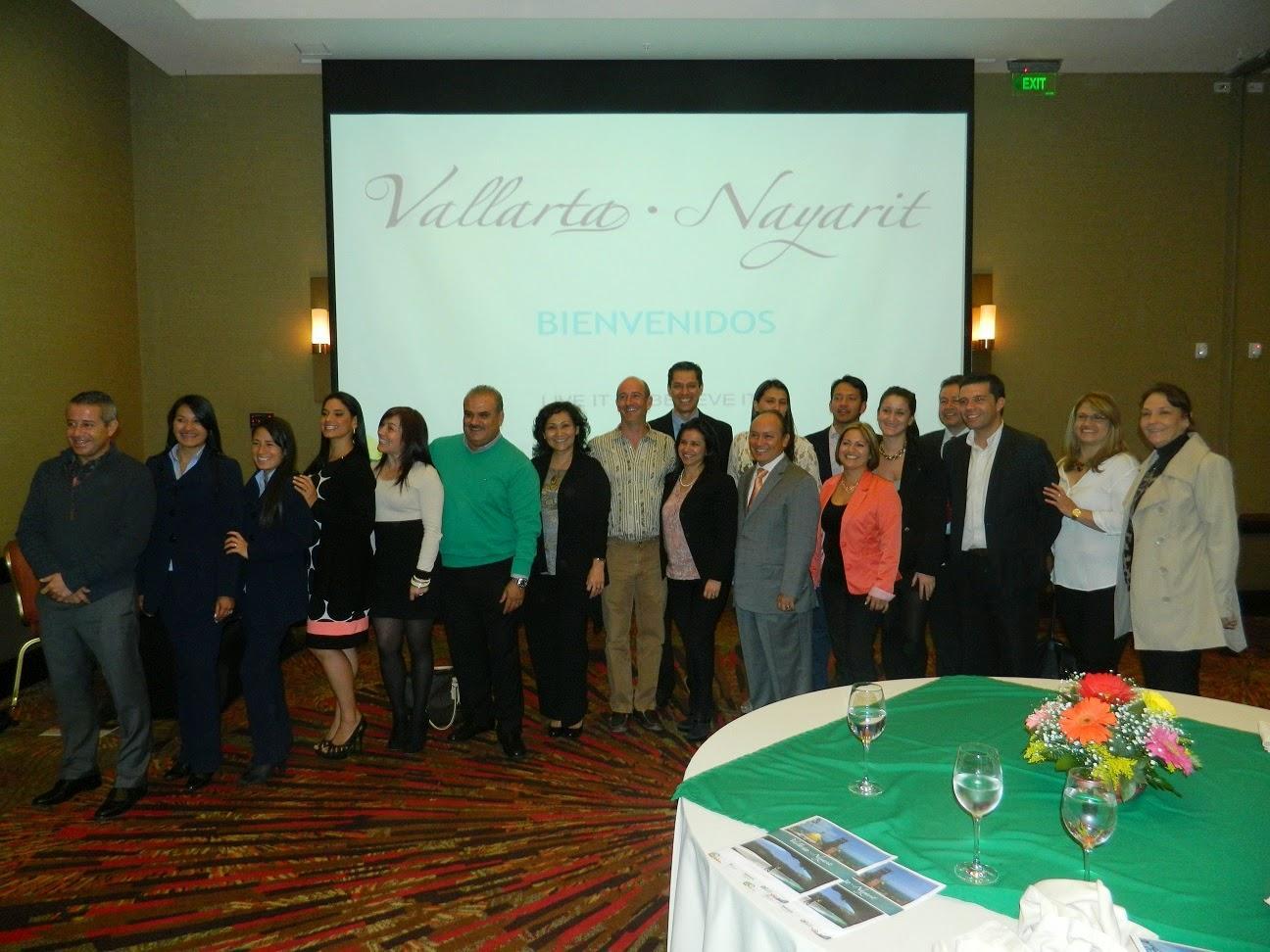
From July 29 through August 1, 2014, the Riviera Nayarit and Puerto Vallarta’s convention and visitors’ bureaus held workshops in Colombia together with the Mexico Tourism Board (MTB) to promote the Vallarta-Nayarit brand.

Over 300 agents attended seminars held in Cali, Medellin, Bucaramanga and Bogota in order to get the training needed to better sell the destination within their country.

Marc Murphy and Rolando Miravete, directors of the Riviera Nayarit and Puerto Vallarta CVBs, respectively, led the trip. The MTB made the most of the meetings by offering important information about tourism in Mexico.

“The Aeromexico report from January-May for this year compared to 2013 indicate there has been an increase of 83% of Colombian tourists to our region,” commented Marc Murphy, Managing Director of the Riviera Nayarit CVB. “This is proof we’re beginning to see the fruits of our labor within this emerging market.”

There were also several hotels from both destinations at the workshops; they held their own presentations in all four cities, showcasing the region’s attractive hotel infrastructure.

Representatives from Aeromexico were on hand to share news about their flights to the Vallarta-Nayarit International Airport. Colombian tour operators Cielos Abiertos, Los Nómadas, Pelicanos, UGA and Turivel were also present, offering special packages to the destinations for the travel agents attending the workshops.

By way of thanks, the participating hotels raffled off complimentary stays among the attending agents at each event; Aeromexico also gave away tickets to the destinations.


 MX auto industry

Standing in front of the assembly line in Volkswagen’s massive campus in Puebla, Mexico, 35-year-old line boss Milton Araujo, looked at the shiny new Volkswagen Beetles rolling off the conveyer belt, illuminated by the bright lights overhead. “Back in the day, everybody had a Beetle,” he told Fox News Latino. “Now the car is different, much more modern.”

So is Puebla, which has emerged as one of the main hubs of Mexico’s automotive sector. “There are more stores, shopping centers,” Araujo said.

VW’s facility is a modern metropolis unto itself, covering more than 1.1 square miles, employing nearly 16,000 people and producing more than 500,000 vehicles a year.

It’s the largest car factory in North America and a big part of the reason why in 2013 the company celebrated the production of its ten millionth car made in Mexico.

Beyond Volkswagen and Puebla, the automotive industry is also growing throughout the country, in places like Aguascalientes, where Nissan opened a $2 billion facility late last year.

The latest evidence of this came in early July, when BMW announced plans to build a $1 billion assembly plant, most likely in the central state of San Luis Potosí.

In the last decade, Mexico has emerged as the world’s fourth-largest automobile exporter, behind only Germany, Japan and Korea, and earlier this year the country eclipsed Japan as the biggest exporter of cars to the world’s largest market, the United States.

“Investors see Mexico as an export platform with access to the United States,” Eric Farnsworth, the Vice President at the Council of the Americas in Washington D.C. told FNL.

Auto manufacturers from around the world are drawn to the country because of its proximity to the U.S. as well as cheap labor. Workers are paid about one-sixth what their counterparts in the U.S. make.

Chrysler builds Hemi engines and Ram pickups in Saltillo, the capital of the Mexican border state of Coahuila. General Motors builds Silverado trucks in the state of Guanajuato, northwest of Mexico City.

Although Chrysler still builds its highly profitable Jeep Grand Cherokee in Detroit, both Ford and General Motors have shuttered facilities in the Motor City.

Today Detroit is bankrupt, known nearly as much for its urban decay and abandoned factories and 14.5 percent unemployment rate—a figure more than double the national average—as it once was for manufacturing the cars.

The simplest logic suggests that there is a zero-sum calculation that any new auto plant in Mexico means one less plant in the U.S. and that every job created means one fewer job in the U.S.

Advocates of cross-border, regional economic development as exemplified by the North American Free Trade Agreement (NAFTA), however, argue that U.S. companies working in tandem with partners in Mexico can out-compete manufacturers in Asia and help build up the industry on both sides of the Rio Grande.

“Mexico isn’t taking jobs from the U.S.," Eric Farnsworth told FNL, “Because of integrated supply chains, up to 40 percent of the content of the products Mexico exports comes from the U.S.”

NAFTA has helped create more than six million jobs in the U.S., its defenders claim, but it’s a notion that is frequently disputed.

What is clear is that, since NAFTA came into force in 1994, foreign direct investment (FDI) in North America has increased nearly sixfold from $110 billion per year in 1992 to $650 billion per year in 2010, and today more than $1 billion dollars of goods and services cross the U.S.-Mexico border every day.

“A prosperous Mexico is good for the U.S.,” Farnsworth added, echoing the sentiment expressed by Mexican President Enrique Peña Nieto last year in an editorial in the Dallas Morning News. The U.S., Peña Nieto observed, “sells more of its exports to Mexico than it does to Brazil, Russia, India and China combined. By increasing economic growth in Mexico, we create jobs in the U.S.”

“The North American automobile industry is one of the most compelling cases of economic integration in the world,” Tony Payan, director of the Mexico Center at the Baker Institute for Public Policy at Rice University, told FNL. “It’s a success story, but at the same time it’s a darker story about Mexico betting on low wages” to drive development.

Eight out of every ten vehicles produced in Mexico are shipped out of the country.

“Overall Mexico is seen as a good point of distribution for both North America and South America. But [in terms of sales] it’s not a high volume country,” Paul Lacy, a director of the automotive division at the consulting firm IHS, told FNL.

Mexico may be home to 16 billionaires, but more than 11 million of the country’s 120 and some million people live in extreme poverty. In 2013 the country’s economy expanded by only 1.1 percent, and growth in 2014 isn’t expected to top 3 percent.

Nearly half of Mexico’s labor force works in the informal economy—low skill jobs that include window washers, taco stand operators and domestic help. Even if they earn enough to afford monthly payments for a car, informal sector workers often struggle to get bank loans. For this reason, Payan explained, “The cars you see in Mexico tend to be older. Families keep their cars longer.”

The Chevy Aveo is the top selling car in Mexico. But, Mexico's automobile sales are not exactly a cause of celebration for U.S. carmakers.

In 2013 Mexico reported 1,063,363 new car sales, the first time since the beginning of the global recession in 2008 that that number topped a million.

By contrast, consumers in the U.S. purchased 15.6 million vehicles in 2013.

To put this in perspective, in 2013, Fiat, the automaker that owns Chrysler and Jeep, reported 85,000 vehicle sales in Mexico—about three-quarters the amount the company sold in Argentina.

Fiat sold nearly 1.9 million cars in the U.S. and 785,000 in Brazil.

“Cheap labor has been the Mexican strategy for the last forty years, and clearly workers cannot afford the cars [they make],” Payan said. “There’s a tension in Mexico that’s unsustainable. Mexico bills itself as a middle-class country but relies on low wages. You cannot be both a middle class country and a low-income country. Middle class implies consumption.”

Not everybody sees the glass half-empty, though. “You still have a relatively small middle class, but that’s going to grow,” Farnsworth said.

“Companies no longer look at Mexico as an assembly country, a maquiladora. Mexico has educated a tremendous number of engineers and now design work and engineering takes place on both sides of the border,” he added.

After 20 years of focusing on encouraging people to get engineering degrees, Mexico now has more engineers than Germany, Brazil or Spain.

These graduates may have a bright future if Mexico’s industrial sector continues to expand.
Looking towards the future, analysts see labor costs rising in other parts of the globe, like China, something that is very likely to benefit America’s southern neighbor.

According to automotive analyst Paul Lacy, “Mexico’s manufacturing continues to grow, and that will create economic growth.”

And, he added, “We’re better off working with Mexico than we are without Mexico.”


Nathan Parish Flannery is a freelance reporter based out of Mexico City who has worked on projects in Mexico, Colombia, Bolivia, India, China and Chile.

[readon1 url="http://latino.foxnews.com/latino/entertainment/2014/08/04/top-hollywood-movies-still-lack-hispanics-in-leadings-roles-study-finds/"]Source:latino.foxnews.com[/readon1]


 6528706w

The high-speed Mexico City-Querétaro train, which will cover the 130-mile route at a speed of 186 mph, will be the first of its kind in Latin America, the Communications and Transportation Secretariat said.

The train will carry 23,000 passengers per day "safely, quickly, comfortably and in an environmentally friendly way," the secretariat said in a statement.

The high-speed rail line will benefit more than 25 million people economically and create 60,000 jobs during the construction phase, the secretariat said.

The train will offer service between Mexico City's Buenavista station and downtown Querétaro, the capital of the like-named state, covering the distance in two hours.

The bidding rules for the project were published on July 25, the secretariat said, adding that the high-speed train would be part of an integrated transportation system designed to link the capital with the Bajio region in central Mexico.

The winning bidder will be required to sign a joint public works contract covering the design, construction, supply and operations of the project, the secretariat said.

The official international call for bids will take place on Aug. 15 and will be open to all firms interested in constructing the system.

Work is expected to start this year on the high-speed rail line, with the system projected to start operating in December 2017, the secretariat said.

The government privatized Mexico's railroads in 1997, but the focus has been on freight service, leading to the virtual disappearance of passenger service on a 22,000-kilometer (13,670-mile) rail network.

Two passenger trains - the Tequila Express in Jalisco and El Chepe on the Chihuahua City-Los Mochis route - currently operate in Mexico, catering mainly to tourists.

A steam locomotive in Morelos state offers rides around the city of Cuautla.


[readon1 url="http://latino.foxnews.com/latino/news/2014/08/04/mexico-will-have-latam-first-high-speed-train-govt-says/"]Source:latino.foxnews.com[/readon1]

 

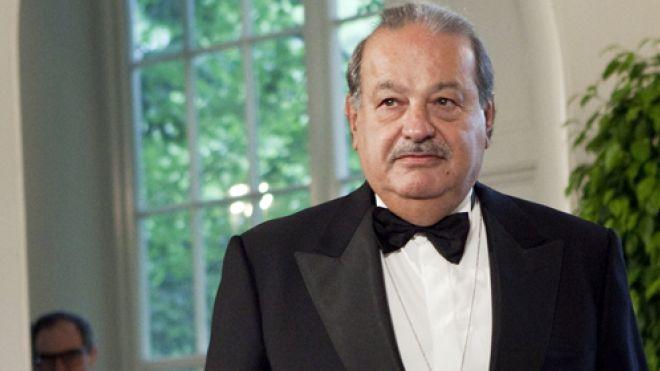
carThe businessman who is known for dominating Mexico’s telecommunications industry and regaining his spot as the world’s richest man (or at least tying with Bill Gates) is not the first person one would think as an advocate for a shorter work week.

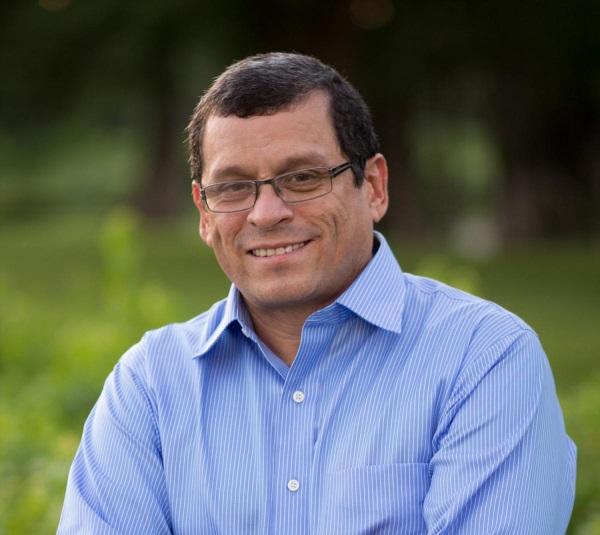
But that’s exactly what Carlos Slim told a group of businesspeople in Paraguay.

Slim said that workers should think about moving to a three-day work week, but instead of working the traditional seven or eight hours a day normal in the developed world the work day would be between 11 and 12 hours long. This, Slim said, would give workers more leisure time – and thus lead to more productivity and happier workers when on the clock.

“With three workdays a week, we would have more time to relax; for quality of life,” Slim said, according to The Financial Times. “Having four days [off] would be very important to generate new entertainment activities and other ways of being occupied.”

Slim has been progressive on a number of workers issues within the companies he owns and has even started to institute his shortened work week at his fixed line Telmex phone company in Mexico. At the company Slim has instituted a voluntary scheme allowing workers on a collective labor contract who joined the company in their late teens to keep working, on full pay, but for only four days a week.

“People are going to have to work for more years, until they are 70 or 75, and just work three days a week – perhaps 11 hours a day,” Slim said, according to Slate.

Slim’s net worth recently rose to an estimated $78.9 billion, which brings him square with Bill Gates as the richest man in the world

América Móvil’s stock has actually surged since last week’s announcement that it was selling off some its assets. The company, whose stock had languished over the past few years, jumped 10 percent on the New York Stock Exchange the day following the announcement of Mexico’s tough new telecommunications reform law, which was widely been hailed as a savvy move on Slims’ part.

[readon1 url="http://www.myfoxdc.com/story/26112604/mexicos-carlos-slim-advocates-for-three-day-work-weeks-to-make-people-happy"]Source:www.myfoxdc.com[/readon1]


Pizza inst

It’s 2 AM on a Friday in the Colonia Americana neighborhood of Guadalajara, and Mezcaleria El Rey is just starting to fill up. The doorman assumes his post at the metal gate that separates the bar, a two-story house bookended by patios, from calle Bernardo de Balbuena. Depending on your frame of reference, it is either late night or very early morning. Here, young Mexicans gather to smoke and plot their next moves, most of which most certainly involve a slice of pizza purchased outside.

Illuminated by the neon glow of the street light and the backdrop of a flickering, wood-burning oven, Peter Boccaccio’s no-name pizza operation catches the outpour of drinkers like a dam in a creek-bed. He has been in the same spot slinging dough on the pavement for just over three years. As he pulls a fresh pie from the heat with a long-handled peel—cheese still bubbling, crust singed with black—patrons wander up to his free-standing counter, pesos in hand.

For a white guy from San Francisco’s Haight-Ashbury neighborhood, the location might seem unlikely—but in the larger scope of things, Boccaccio is right at home. Born in 1967, his family decamped to Puerto Vallarta when he was 7. The perpetual traveler, he went to school in Mexico, moved to Guadalajara, bounced back to San Francisco, and then to Europe and Latin America.

He returned to Mexico to put down roots, to marry, and to start his business, the inspiration for which he traces back to a trip through Argentina, where a piece of bread changed his world view. “It was the best bread I had ever eaten in my life,” Boccaccino tells me. “The old Italian guy who made it said, ‘It’s just bread.’”

It wasn’t until years later, as he traveled through the Napa Valley, that he discovered the secret. “At one of the wineries we went to, they gave you a little bread with your wine tasting, which had the same flavor of that bread I had tasted in Argentina,” Boccaccino recalls. It turned out to be a simple sourdough baked by the winemaker. “They were selling little books that this guy had made with instructions on how to build a wood-fired oven—how to make old, European-style bread, stuff like that,” he says. “It was $20. They were also selling bottles of their wine for $20, and I only had $20, so you can guess which one I chose.”

Years before, Boccaccino’s mother had moved to the mountains in Mascota, to establish a homestead on a small ranch, so he went up there to try his hand at building an oven. He hand-patted raw brick, mud, and sand into a counter-flow dome, a sturdy but rudimentary cooking vessel, which he placed on a wheeled platform and made it mobile. “It’s pre-Christian technology,” he says.

He started playing around with recipes and baking his own loaves. “I’m from San Francisco, where people basically have sourdough in their blood. But people don’t really buy much [French-style] bread in Mexico. What they do buy is pizza.” So he settled on that—pizza with a well-developed, sourdough crust—found a little house in Guadalajara, and started cooking.

Now Boccaccino spends his days simmering tomato sauce, pre-fermenting dough, and shredding mozzarella from his mom’s ranch, and while his nights are devoted to manning the oven. His street pizza is a hit, so much so that it spawned a competing operation just 50 feet away. “I was going to call this thing Caracol, after the shape of my oven, but that guy took the name before me,” Boccaccino gestures at the operation down the street. It is a bit of a sore subject.

From the size of the crowd collecting on the street, however, it seems as though there is room enough for two pizzaiolos in town. “Sometimes, someone will have a late-night pizza and then come back a couple days later for more, sober,” Boccaccino says. His pies are memorable in that way—the tomato is light and zippy, there’s ample cheese, and resounding flavor in the crust from the sourdough. He also makes a green pesto from basil, spinach, a wallop of garlic, and a Mexican treatment of hot chilis, which hungry diners slather over their pies.

“I try and emulate a Neapolitan style while appealing to Mexican palates. That means more cheese, more toppings—but I draw the line on ketchup,” says Boccaccino. “And no ham and pineapple.”

Boccaccino is in the process of expanding. He plans to put an oven in his garage, a larger bar in the driveway, and additional chairs for a more formalized dining experience, though not a traditional full-service restaurant by any means. “And not too far from the street” he adds. “I can’t be far from the street.”

To find the no-name pizza (it doesn’t have a website), visit Bernardo de Balbuena 107, Guadalajara, Mexico from Wednesday-Saturday 9 PM-3:30 AM.

[readon1 url="https://munchies.vice.com/articles/the-no-name-street-pizza-that-feeds-guadalajaras-bar-crowd/"]Source:munchies.vice.com[/readon1]

puerto-vallarta-cvb

Puerto Vallarta is stepping up its outreach to business travel by restructuring its CVB.

The entity will be headed by executive director Miguel Andres Hernandez, who served as president of the Puerto Vallarta’s Hotel Association Tourism Board from 2010 to 2012, and GM of Puerto Vallarta’s Garza Blanca Preserve, Resort & Spa from 2009 to 2012. The CVB will promote tourism development in the region and act as a liaison between international and local businesses and governments as a way to facilitate and attract international meetings, conferences, events and incentive travel to the city.

The Puerto Vallarta Tourism Board has been promoting the city’s infrastructure in the business travel market as part of its promotions and public relations campaigns. As a result, Puerto Vallarta is currently in an alliance with the Mexico Tourism Board, participating in conferences and events such as AIBTM, IMEX and MPI in 2013 and this year and becoming an MPI Preferred Partner in April.

The CVB will take these initiatives further by providing meeting planners a direct contact to work with when bringing events and programs to Puerto Vallarta. Hernandez and his team will be able to offer presentations on the destination’s infrastructure and offerings, support and answer RFP’s, provide welcoming collateral and assist in obtaining permits within the city and support from local, State and Federal governments for bigger conferences or events.
This year the destination will once again be holding Vallarta Meetings, Puerto Vallarta’s special educational trip for US and Canadian meeting planners, from November 10-15.

To learn more on this initiative agents can visit http://www.visitpuertovallarta.com/vallarta-meetings

2222 
 Eduardo Paramo
New Promotions Manager

At the same time, the destination has named Eduardo Paramo as its new director of promotions where he will be in charge of developing and implementing a destination promotion strategy across the many markets the destination is targeting, including Canada, the United States, Mexico, South America and Europe.
Paramo has over 15 years of experience in travel and tourism, promoting destinations and hotels across Mexico with quantifiable results. He has also been instrumental in creating alliances with key international entities such as AAA, Trip advisors and Leading hotels of the World, and local and federal government representatives. Paramo Eduardo was born in Mexico City and is a graduate of the University of Guadalajara and likewise held several courses focused on managing potential markets for Mexico.

[readon1 url="http://www.internationalmeetingsreview.com/mexico/puerto-vallarta-restructures-cvb-attract-business-travel-99494"]Source:www.internationalmeetingsreview.com[/readon1]

06504

Copper Producer Would Pay $120 Million For Remaining 25% Stake

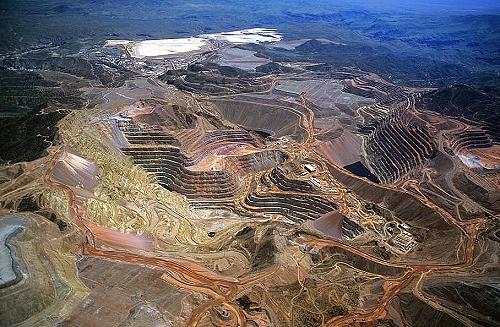
Grupo Mexico, one of the world's largest copper producers, is nearing a deal to acquire Mitsui 8031.TO -0.30% & Co.'s 25% stake in the Silver Bell copper mine in Arizona for about $120 million, according to people familiar with the matter.

The deal, if it proceeds, would give Grupo Mexico sole ownership of the mine, allowing it to take full advantage of Silver Bell's output at a time when copper prices are up about 11% from their March lows amid signs of strengthening demand for the widely used industrial metal.

Grupo Mexico hasn't signed a deal yet, but it has told Mitsui it would exercise its right of first refusal to purchase the stake, one of the people familiar with the matter said.

Representatives for Grupo Mexico and Mitsui couldn't immediately be reached for comment.

Silver Bell, located in Marana, Arizona, produces about 46 million pounds of copper annually, according to the latest available figures. Grupo Mexico's ASARCO unit owns 75% of the mine and Mitsui, a large Japanese trading company, owns the remaining 25%. ASARCO operates three copper mines in Arizona, producing a combined 350 million to 400 million pounds of copper a year.

The potential deal between Grupo Mexico and Mitsui could signal an increase in deal activity in the mining sector after a long lull, and comes as some miners look to shed noncore assets to pay down debt.

The Wall Street Journal reported earlier this month that Freeport-McMoRan Inc. as looking for buyers for its Candelaria copper mine in Chile and that well-known mining executives such as Tye Burt and Aaron Regent, the former heads of Kinross Gold Corp.and Barrick Gold Corp.,respectively, were scouting for acquisitions in the mining sector.

[readon1 url="http://online.wsj.com/articles/grupo-mexico-nears-deal-to-buy-stake-in-arizona-copper-mine-1406046127"]Source:online.wsj.com[/readon1]


140515155020-the-cheesecake-factory-620xa

America's Favorite Restaurant Now Open at Galerias Guadalajara

CALABASAS HILLS, Calif.--(BUSINESS WIRE)--July 17, 2014--
The Cheesecake Factory(R) , known for its extensive menu, generous portions and legendary desserts, announced that its licensee in Latin America, Alsea, S.A.B. de C.V., today opened its first The Cheesecake Factory in Mexico in the city of Guadalajara, Jalisco.

The new restaurant is located in Galerias Guadalajara shopping center, and features The Cheesecake Factory's distinctive décor that is as creative and imaginative as its extensive menu of more than 200 selections -- all handmade, in-house with fresh ingredients -- and more than 40 signature cheesecakes and desserts. Featuring French limestone floors and decorative columns, hand painted murals, and modern lighting, the approximately 8,500 square-foot restaurant accommodates approximately 220 guests.

The Cheesecake Factory's licensing agreement with Alsea provides for the development of a minimum of 12 restaurants throughout Mexico and Chile with the potential to expand the agreement to four other countries -- Argentina, Brazil, Colombia and Peru.

"We are so pleased to be opening our first Cheesecake Factory in Latin America with Alsea," said David Overton, Chairman and Chief Executive Officer of The Cheesecake Factory Incorporated. "Latin America is an exciting new area of development for us and we are delighted to be able to bring The Cheesecake Factory's exceptional guest experience to Mexico."

For more information about The Cheesecake Factory, please visit www.TheCheesecakeFactory.com

Fan us on Facebook at www.facebook.com/TheCheesecakeFactory

Follow us on Twitter at www.twitter.com/cheesecake

About The Cheesecake Factory

The Cheesecake Factory Incorporated created the upscale casual dining segment in 1978 with the introduction of its namesake concept. The Company operates 182 full-service, casual dining restaurants throughout the U.S. and Puerto Rico, including 170 restaurants under The Cheesecake Factory(R) mark; 11 restaurants under the Grand Lux Cafe(R) mark; and one restaurant under the RockSugar Pan Asian Kitchen(R) mark. Internationally, five The Cheesecake Factory(R) restaurants operate under licensing agreements. The Company also operates two bakery production facilities in Calabasas Hills, CA, and Rocky Mount, NC, that produce approximately 70 varieties of quality cheesecakes and other baked products. In 2014, the Company was named to Fortune magazine's "100 Best Companies to Work For" list. To learn more about the Company, visit www.TheCheesecakeFactory.com.

[readon1 url="http://online.wsj.com/article/PR-CO-20140717-907122.html"]Source:online.wsj.com[/readon1]

hm

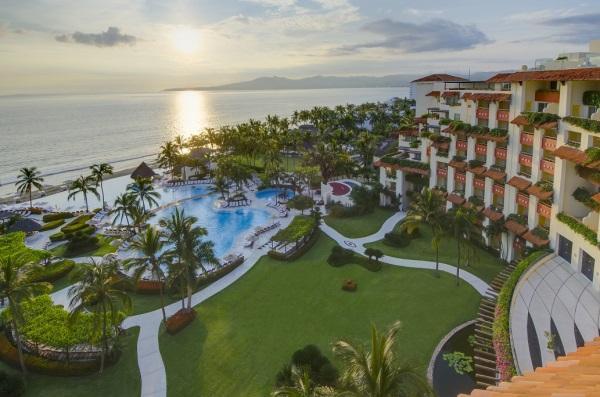
Travel + Leisure’s “500 World’s Best Hotels 2014” includes St. Regis Punta Mita Resort, Four Seasons Resort Punta Mita and Grand Velas Riviera Nayarit.
The Riviera Nayarit’s hotel infrastructure is one of the destination’s hottest attractions. Recently, top-tier magazine Travel + Leisure included three of its hotels in its “T+L World’s Best Hotels 2014.”

Grand Velas Riviera Nayarit, Four Seasons Resort Punta Mita and St. Regis Punta Mita Resort were chosen by T+L as the best of Mexico’s Pacific Treasure.

These three resorts are the only ones in the destination to have received the prestigious 5 Diamond award from AAA, and all are members of the Virtuoso luxury travel network.

“It’s an honor to be counted among the best hotels in the world; it not only promotes the resorts but also positions the Riviera Nayarit as one of the top destinations in the world, especially in a magazine as important as Travel + Leisure,” commented Marc Murphy, Managing Director of the Riviera Nayarit Convention and Visitors Bureau.

There also exists a “Top 50” within this worldwide listing, where St. Regis appears as the hotel with the best position in the Riviera Nayarit at number 45. The list was divided into eight regions; Mexico is on the list for Latin America, representing 20 out of the 33 hotels in this particular region.

The readers of Travel + Leisure are in charge of choosing and voting for the best 500 hotels out of the thousands available around the globe. Travel + Leisure was founded in 1971 and circulates in print as well as on the Web to millions of people.

The Riviera Nayarit CVB would like to extend its congratulations to Grand Velas, Four Seasons and St. Regis for being selected to this world-class list, which gives the destination massive exposure to travelers around the planet.

To view the complete listings, please click here:
Travelland Leisure

esta estu casa

(Reuters) - Mexico's largest state mortgage lender Infonavit in August will raise the maximum amount it can lend to would-be home buyers by 76 percent, in a bid to shore up the battered housing sector, the government said on Tuesday.

Infonavit said it will raise its top loan amount to 850,000 pesos ($65,700) from 483,000 pesos ($37,300).

The state lender next month will also start granting loans denominated in pesos at a fixed rate and for up to 30 years.

Currently, loans in pesos are reserved for borrowers who earn more than 5.5 times the minimum wage, while loans for lower earners are denominated in multiples of the minimum wage.

"We are not just giving out more loans. This is about guaranteeing access to decent housing for all Mexican families," Infonavit Chief Executive Officer Alejandro Murat said at an event in Mexico City.

The agency, which is funded through employer contributions, loan recovery and debt issuance, this year expects to grant 560,000 loans for new and used homes, as well as remodeling.

But loans granted by Infonavit for new homes in the January to May period are down 22 percent due to a weak economy and Mexicans' preference for acquiring used properties or revamping their current homes, hammering the country's homebuilders.

Mexican homebuilders have struggled with heavy debt and slumping home sales since the government shifted to a policy that prioritizes apartment purchases, hurting sales of cheap houses built far from cities by Geo, Homex, and Urbi.

Geo and Homex have both filed for bankruptcy.

($1 = 12.9472 Mexican Pesos) (Writing by Alexandra Alper; Editing by Lisa Shumaker)

[readon1 url="http://in.reuters.com/article/2014/07/16/mexico-housing-idINL2N0PQ2UD20140716"]Source:in.reuters.com[/readon1]

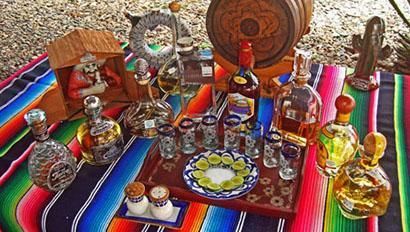
LasAlamandas-TequilaTasting410Las Alamandas in Costalegre between Puerto Vallarta and Manzanillo offers a three-day tequila immersion getaway through Oct. 31.

The 16-suite beachfront resort has the highest certification, called the Agave de Oro, from the Tequila Regulatory Council of Mexico, due to the high number of tequila brands (120) it offers and the tequila-based dishes it prepares to accompany the drink.

“Tequila is truly the country’s iconic beverage, and to experience it to the fullest is part of a complete holiday at Las Alamandas,” said Isabel Goldsmith Patino, founder and CEO.

The three-night package features tastings of five tequilas each day, followed by a private dinner with dishes concocted with tequila.

The package price starts at $1,000 for two with accommodations and daily a la carte breakfast.

For details, visit Alamandas

[readon1 url="http://www.simplyvallarta.com/5-reasons-rainy-season-in-puerto-vallarta/"]Source:www.simplyvallarta.com[/readon1]

Top-Tourist-Attractions-in-Puerto-Vallarta-for-Honeymoons

Becomes MPI Preferred Member and continues work with Mexico Tourism Board

Puerto Vallarta, one of Mexico’s premiere business travel destinations, has restructured its Convention and Visitors Bureau (CVB) in an effort to increase outreach, assistance and promotion of the destination through meetings, incentive travel and conference markets.

The entity will be headed by Executive Director Miguel Andres Hernandez, who served as President of the Puerto Vallarta’s Hotel Association Tourism Board from 2010 to 2012, and GM of Puerto Vallarta’s Garza Blanca Preserve, Resort & Spa from 2009 to 2012. The CVB will promote tourism development in the region and act as a liaison between international and local businesses and governments as a way to facilitate and attract international meetings, conferences, events and incentive travel to the city.

The Puerto Vallarta Tourism Board has been promoting the city’s infrastructure in the business travel market as part of its promotions and public relations campaigns. As a result, Puerto Vallarta is currently in an alliance with the Mexico Tourism Board, participating in conferences and events such as AIBTM, IMEX and MPI in 2013 and this year and becoming an MPI Preferred Partner in April.

The CVB will take these initiatives further by providing meeting planners a direct contact to work with when bringing events and programs to Puerto Vallarta. Hernandez and his team will be able to offer presentations on the destination’s infrastructure and offerings, support and answer RFP’s, provide welcoming collateral and assist in obtaining permits within the city and support from local, State and Federal governments for bigger conferences or events.

This year the destination will once again be holding Vallarta Meetings, Puerto Vallarta’s special educational trip for US and Canadian meeting planners, from November 10-15.

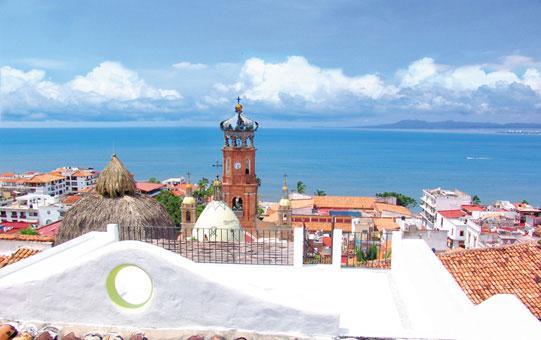
Located on Mexico’s Pacific Coast in the state of Jalisco, Puerto Vallarta turned 96 this year; while it has grown to be a world-class destination, at its center it still remains a charming Mexican pueblo with colonial architecture and cobblestone streets. Its 120 miles are surrounded by the Bay of Banderas and the Sierra Madre, making it Mexico’s most diverse and most Mexican destination. The sea port where the Charros (Mexican cowboys) play, adventure seekers zipline and foodies taste one of over 360 restaurants.

The city of Puerto Vallarta started a series of remodeling projects six years ago, and in the past two years has re-opened its iconic Malecon, or boardwalk, the historic Pier Los Muertos was refurbished and the streets of the downtown area were widened, making it one of the few tourist zones in Mexico to be pedestrian friendly and wheelchair accessible.

In the past 6 months, two hotels have opened in Puerto Vallarta - Hotel One, with 125 rooms & Holiday Inn Express, with 115 rooms – both are conveniently located less than 10 minutes away from Puerto Vallarta’s a state-of-the-art International Convention Center, airport (PVR) and downtown. By the end of 2015 three other hotels will have opened, the Hyatt Ziva and Hotel Mousai in the Mismaloya area and the Altamar in the Romantic Zone. In addition, the Puerto Vallarta Fiesta Americana will be converting to an All-Inclusive in October.

As of 2013, the Puerto Vallarta Tourism Board has been proactively working on its connectivity and increasing flights to the destination from the United States and Canada as well as Europe and South America. This includes direct flights from St. Louis, Seattle, San Francisco, Los Angeles, Atlanta, Vancouver, Chicago and Oregon, resulting in a 17% increase in international arrivals for the first 6 months of this year.


[readon1 url=http://www.incentivetravel.co.uk/news/agency-news/21188-puerto-vallarta-reinforces-commitments-to-business-travel-with-restructuring-of-cvb"]Source:www.incentivetravel.co.uk[/readon1]