





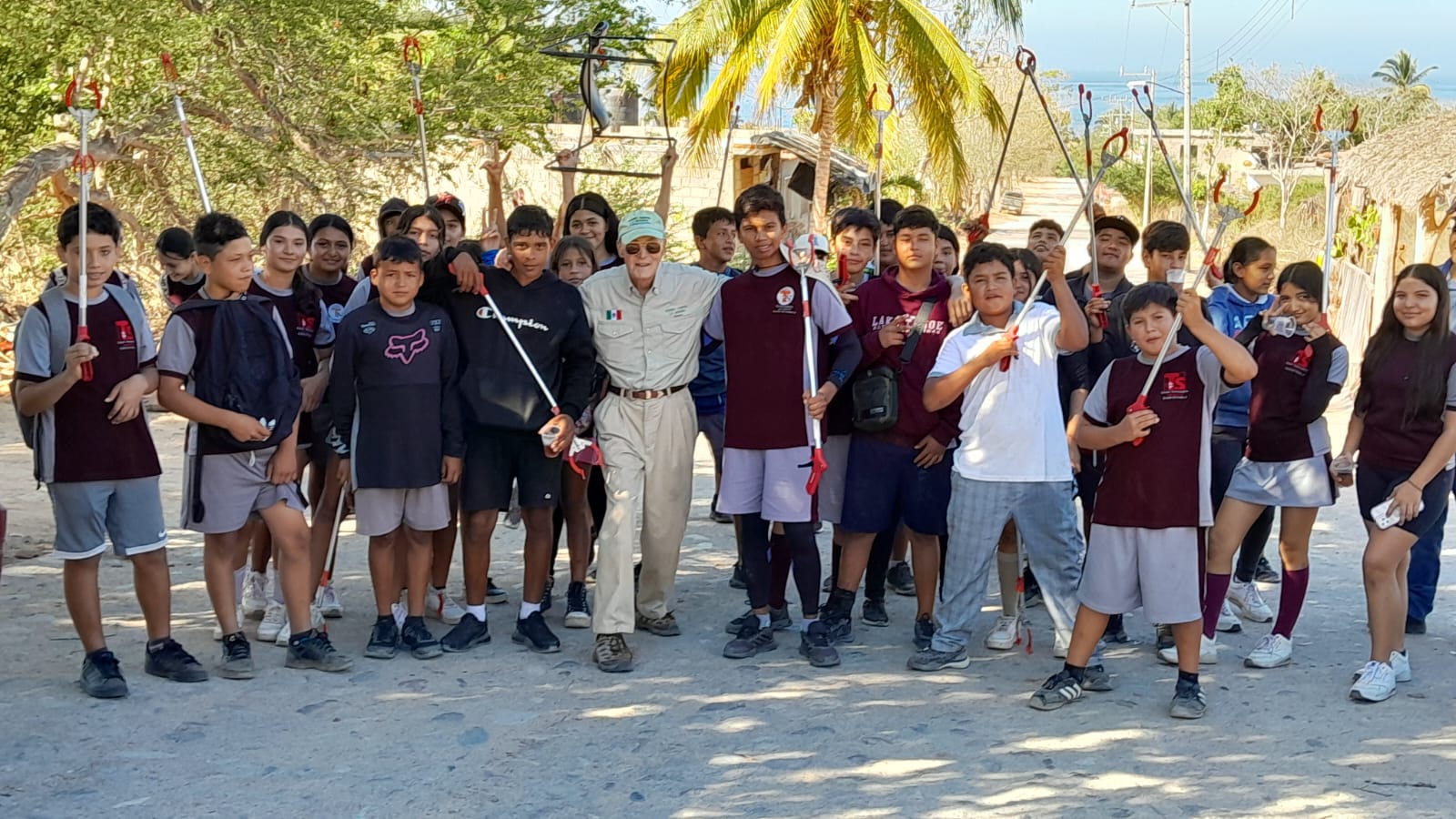
Puerto Vallarta, Jal. - At the end of a very busy holiday period - Holy week and Easter- private associations, hotels and restaurants personnel; students, street and beach vendors, volunteers and public officials got busy cleaning up Puerto Vallarta’s beaches, visited by thousands of local beach goers and tourists who, after enjoying the beaches, our scenery and our open air areas, left debris that could contaminate and endanger the environment.
Thirteen beaches were simultaneously cleaned; from Boca de Tomates to Boca Tomatlan, (from north to south).
The cleanup work involved 265 people from 22 institutions, who collected and removed wastes that were found on sand, rocks and vegetation; as well entrances and roads to the beaches.
More than 5,276 pounds of waste were picked up. Such rubbish could have been washed away by the tide and could have contaminated the ocean. Among the many things that were picked up it is worth mentioning: plastic bottles, cans, plates, glasses and Styrofoam coolers; caps, cigarette butts and cigarettes packs, plastic bags, disposable diapers, clothing and footwear, condoms, plastic toys, cartons, wrappers, etc.
The city cleaning crew, who also participated in this task, reported that during the holidays, trash collectors pick up 100 tons of trash a day more than what is picked up, on a daily base, in Puerto Vallarta. They also pointed out that, no matter how hard they work during busy holiday seasons, greater collaboration of all citizens is required in order to keep the town clean.
Cleaning Work was coordinated by the city Environment and Ecology Office. The Director of this Institution, Juan José Navarro Amaral, said that cleaning will continue for as long as, and wherever necessary. He also mentioned that employees of Starbucks, different hotels and kiosk shops, will provide special teams for this purpose.
According to the National Academy of environmental Education AC, what is more frequently thrown into the ocean is plastic. Some studies indicate that a plastic bottle takes 450 years to decompose in ocean waters.
Discarded plastics represent a mortal threat to sea life by the serious problems caused to the natural world. Up to two million seabirds and 100,000 marine mammals die each year after swallowing or becoming entangled in plastic. Sea turtles drown with plastic bags because they mistake them for jellyfish. Birds swallow pieces of plastic floating on the surface, confusing them with fish eggs or worms. Some marine mammals looking for food get entangled in discarded old fish nets and they starve to death; and young seals also get entangled playing with them.
The amount of this type of waste in the ocean will probably increase, because plastic productions double approximately every 12 years.
Some recommendations for people visiting the beaches:
• Show consideration for the flora and fauna and the marine environment.
• Don't buy coral or objects made of Carey and other sea turtle products. It is a crime.
• Do not throw garbage o tanning, blockers and repellents containers into the ocean.
• Do not leave trash on the beach. The tide drags it offshore.
• Comply with authorities’ recommendations and instructions to preserve the beaches.[readon1 url="index.php?option=com_sobipro&pid=1&sid=703:mar&Itemid=212"]Source:www.VallartaToday.com-by MAR Translation Services[/readon1]
Puerto Vallarta Cleans Up After a Busy Holiday Season
Typography
- Smaller Small Medium Big Bigger
- Default Helvetica Segoe Georgia Times
- Reading Mode





 How to resolve AdBlock issue?